
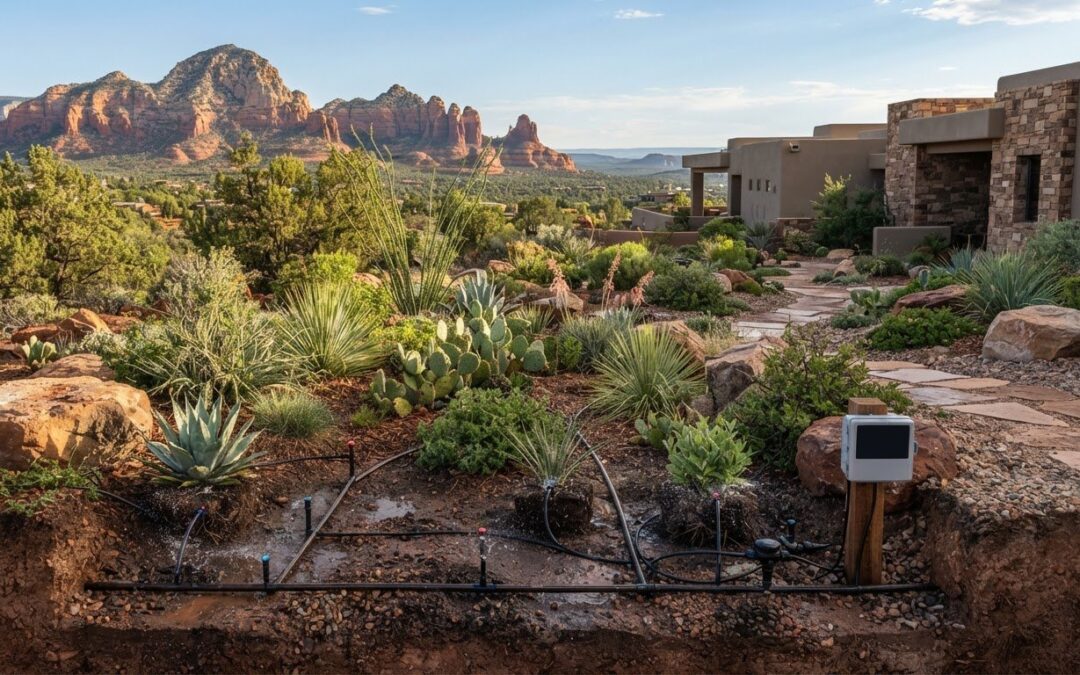
The system that uses the least water on paper isn’t automatically the most efficient choice for your yard. In Northern Arizona, water-efficient irrigation systems work best when they’re matched to the landscape’s plants, soil, slopes, and changing weather.
It’s understandable to worry about wasted water and utility bills, especially when it’s unclear whether drip lines, spray heads, or smart controls are right for your property. No single setup suits every landscape. Even a well-chosen system can waste water if its schedule or components aren’t adjusted to real conditions.
This guide explains how to compare irrigation approaches and choose one suited to your planting and site. You’ll learn how to spot leaks, clogged emitters, overspray, and runoff on sloped ground, and how to review schedules as conditions change. We’ll also cover when professional troubleshooting of drip lines or irrigation controllers may help restore reliable operation and support a thoughtful, sustainable landscape.
Key Takeaways
- Evaluate planting zones, existing equipment, water access, and site conditions before choosing an irrigation method.
- Water-efficient irrigation systems depend on suitable coverage and regular adjustment, not simply choosing drip over sprinklers.
- Inspect the system in a consistent order: observe operation, look for leaks, check water distribution, then adjust.
- Review watering schedules as weather and plant conditions change instead of relying on one fixed calendar.
- Professional drip system repair or controller troubleshooting can help identify problems that are difficult to diagnose on your own.
Why Water-Efficient Irrigation Systems Matter in Northern Arizona
In Northern Arizona, an irrigation plan needs to fit the landscape it serves. A sunny bed on a slope, a shaded planting area, and a lawn or garden with different soil conditions may need different watering approaches, even on the same property.
Water-efficient irrigation means delivering the appropriate amount of water to the intended plants, with minimal avoidable loss, through suitable design, scheduling, and maintenance. The goal isn’t simply to water less. Plants still need enough moisture to remain healthy. Efficiency comes from reducing water that misses roots, escapes through leaks, or runs off before it can soak in.
What makes an irrigation system water-efficient?
Efficiency depends on targeted application, a flow rate suited to the planting area, functioning components, and a schedule that reflects plant needs and site conditions. Overspray onto paths, leaking connections, clogged or damaged emitters, and runoff where water is applied faster than soil can absorb it can all waste water.
Equipment alone can’t correct a poorly designed layout or neglected upkeep. Even drip irrigation, which delivers water near plants through tubing and emitters, needs suitable placement and regular checks. The right method is the one that puts water where it’s needed and can be maintained reliably.
Why local site conditions change irrigation needs
Northern Arizona isn’t one uniform growing environment. Elevation, sun exposure, wind, slope, soil, and seasonal weather can differ between properties and between planting zones in the same yard. These factors affect how quickly soil dries, whether water reaches roots evenly, and how readily it runs downhill.
Sedona, Cottonwood, Camp Verde, Flagstaff, and Prescott are reminders to assess each property rather than rely on one regional schedule. A sloped or exposed area in Sedona may need different coverage than a sheltered bed in Cottonwood or Camp Verde. Flagstaff’s higher-elevation setting can bring different seasonal conditions than lower-elevation sites, while Prescott properties also vary with terrain and exposure. Treat these as reasons to observe your own site, not as fixed watering rules. Check the soil, plants, sun and shade, and system performance before adjusting.
Separate areas with different needs instead of treating the whole landscape as one zone. Watch how water moves during operation, look for dry or oversaturated patches, and adjust based on what the plants and soil show. This helps support healthy growth while limiting avoidable water loss.
How Drip Lines, Sprinklers, and Smart Controllers Deliver Water
Each irrigation method has a different job. Drip lines place water near plants, sprinklers distribute it across a broader area, and manual watering gives you direct control over where and how much to apply. The right choice depends on the planting, spacing, coverage area, wind exposure, slope, and how closely the system can be monitored.
The U.S. Department of Energy’s water-efficient irrigation best practices offer a useful reference for considering low-volume delivery along with thoughtful operation and upkeep. No method is automatically efficient in every setting. The system needs suitable zones, working components, and schedules that can be adjusted to actual conditions.
When drip irrigation fits, and when it may not
Drip can work well in planting beds where plants with similar water needs are grouped and tubing can deliver water near their root areas. But clogged emitters, damaged tubing, poor placement, or uneven flow can leave some plants too dry while wasting water elsewhere. Drip still needs a sound layout and regular maintenance.
What smart irrigation controllers can and cannot do
Controllers manage watering schedules. Depending on the model, some may use weather information or sensor input to help adjust operation. Features and compatibility vary, so check the controller’s documentation rather than assuming it supports a particular sensor or function. Automation can’t fix poorly grouped zones or a leak, and settings still need periodic review.
| Method | May suit | Limitations and maintenance checks |
|---|---|---|
| Drip lines | Grouped beds and plants with compatible watering needs | Check emitters, tubing, placement, and even flow. |
| Spray or rotor zones | Larger, open areas that need broader coverage | Look for overspray, blocked heads, uneven coverage, and wind drift. |
| Manual watering | Small areas or occasional, targeted watering | Results depend on consistent attention and applying water where plants need it. |
| Smart controller | Managing schedules for compatible irrigation zones | Confirm available features, review settings, and inspect the system itself. |
Plant type and spacing help determine whether water should reach individual plants or cover a continuous area. Wind can disrupt spray patterns, while slopes may let water run downhill before it reaches the root zone. Consider these factors when comparing water-efficient irrigation systems and deciding whether different parts of a landscape need separate zones.
If drip lines or controller settings aren’t working as intended, Green Earth’s irrigation repair and controller troubleshooting may help identify the issue as part of a considered landscape plan.
Which Water-Efficient Irrigation System Fits Your Landscape?
Choosing drip doesn’t automatically make watering efficient. A drip line can miss roots, clog, leak, or serve plants with different needs on the same zone. The best choice depends on the plants, layout, existing equipment, water source, and how well the system performs in place.
Decision rule: Select irrigation methods by plant needs, site conditions, and observed system performance. Start by mapping areas with similar watering needs, then note slopes, drainage paths, sunny exposures, wind shelter, and access to irrigation components. The Arizona water-efficient landscaping guidelines can also help homeowners explore regional planting considerations.
Match irrigation zones to plants and property layout
Where practical, group plants with similar water needs so one schedule can serve the zone appropriately. Turf, established trees, and planted beds often call for different watering approaches. Broad coverage may suit turf, while trees and beds may need water directed to their root areas. The right setup depends on plant placement and existing equipment.
Look beyond plant type. Water may run downhill on a slope or collect along a drainage path, while sunny exposures and wind-sheltered corners dry differently. For a residence, this review can clarify how different planting areas should be managed. Commercial properties and HOAs may also need consistent coverage across shared grounds and a practical way to oversee multiple zones, without assuming every area has identical needs.
Compare retrofit, repair, and redesign options
A problem doesn’t always mean the whole system needs replacing. If a drip zone has dry patches, inspect its emitters, tubing, and placement. If watering times don’t seem suited to the landscape, review the controller settings and how zones are grouped. Troubleshooting existing drip systems or controllers may identify a specific issue to address.
A broader assessment may help when different plantings share a zone, coverage remains uneven, or the property’s layout and landscape needs have changed. Reviewing the water source, equipment, slope, and access can help distinguish a repair from a larger design mismatch. Avoid choosing replacement equipment before identifying the cause. Green Earth, LC offers irrigation drip system repair and controller troubleshooting to help investigate system performance as part of a sustainable landscape plan.
How to Improve Irrigation Efficiency Through Scheduling and Maintenance
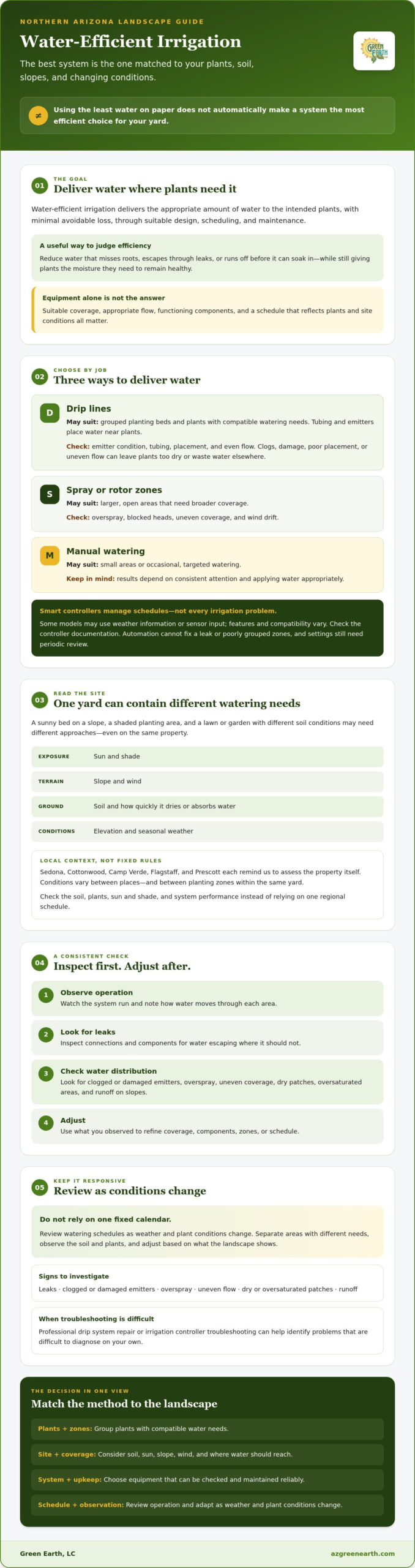
A consistent maintenance routine makes it easier to spot waste before it becomes a recurring problem. Inspect the system in the same order each time: observe each zone while it runs, look for leaks or damaged parts, check whether water reaches the intended areas, then adjust settings or address the fault. This sequence helps distinguish a scheduling issue from a distribution problem.
A practical irrigation inspection routine
Run zones individually so you can see how each performs. Look for leaking connections, blocked drip emitters, damaged tubing, broken sprinkler heads, or areas receiving noticeably less water than others. Watch for spray landing on pavement and water pooling or flowing downhill on a slope. Note recurring problems and record controller settings before changing them. Keeping a record helps you compare results and describe the issue if you need troubleshooting.
Adjust watering without using a one-size-fits-all schedule
Review schedules when weather shifts, seasons change, or new plants alter the landscape’s needs. Check soil moisture and how plants are responding instead of relying on a generic calendar. If plants show signs of stress, first check whether water is reaching their root areas. Simply increasing run time may worsen overspray or runoff. Local recommendations and numeric watering guidance can change, so verify current advice for your location before applying it.
Review controller settings regularly, especially after a schedule change or system repair. Confirm that the selected zones and run times reflect the areas they serve. For drip lines, check that water flows from the intended emitters and that tubing remains in place. For spray zones, watch coverage during operation and adjust only after identifying the cause of gaps or overspray.
For broader context on matching a landscape to its environment, explore desert landscape design in Northern Arizona. The same attention to plants and site conditions supports effective upkeep of water-efficient irrigation systems.
If an inspection points to a persistent drip-line or controller problem, professional troubleshooting may help identify the cause. Ask Green Earth about irrigation drip system repair and controller troubleshooting as part of a considered landscape maintenance plan.
Plan a Water-Efficient Irrigation Assessment with Green Earth
A property-specific review can help clarify whether uneven watering comes from a damaged drip line, a controller setting, a leak, or zones that no longer suit the landscape. An assessment can consider how irrigation areas are grouped, how the controller is set, whether drip lines are working as intended, and how the system relates to the plants and site conditions. Understanding the cause first can help determine whether repair, adjustment, or a broader landscape review is appropriate.
Green Earth, LC is locally owned, based in Cornville, and serves the Verde Valley and nearby Northern Arizona communities. The company offers irrigation drip system repair and controller troubleshooting, with an emphasis on sustainable practices. Because no single schedule or setup fits every property, a useful review focuses on the landscape in front of you.
What to prepare before requesting irrigation help
A few observations can make a conversation more useful. Note which zones are affected, where you see leaks or uneven watering, and whether the landscape has changed recently. If available, gather the controller’s make and model, current settings, and a simple description of the planting areas. Mention slopes, sunny or sheltered spots, and any areas where water pools or runs onto hardscape.
For HOA or commercial properties, identify access needs and recurring management concerns, such as a zone that repeatedly fails to cover a shared area. Clear notes help connect visible symptoms with the equipment and landscape conditions that may contribute to them.
When professional troubleshooting may be useful
Consider professional help if repeated adjustments don’t resolve dry or overwatered areas, a leak persists, drip flow remains uneven, or the controller isn’t operating as expected. Green Earth’s services include irrigation drip system repair and irrigation controller troubleshooting. The appropriate next step depends on what the system and site assessment reveal.
For location-specific information, see irrigation repair in Flagstaff. If you have concerns about your own water-efficient irrigation systems, discuss the affected areas and symptoms with Green Earth to determine whether repair or controller troubleshooting may be relevant.
Make Your Next Irrigation Adjustment Count
Healthy landscapes don’t depend on one irrigation method or a fixed watering calendar. Match each zone to its plants and site conditions, then check how well the system distributes water. Regular inspections for leaks, uneven flow, overspray, and runoff can reveal when a schedule adjustment or repair is needed.
Choosing water-efficient irrigation systems is an ongoing process. Weather, plant growth, and landscape changes can all affect system performance. Observe the results and adjust thoughtfully rather than assuming the original setup will always fit.
Green Earth, LC is committed to sustainable practices and was recognized as a statewide runner-up in Green Living Magazine’s “Best Sustainable Landscape Designer” category.
If you have persistent drip-line, leak, or controller concerns, contact Green Earth to discuss irrigation drip system repair or controller troubleshooting.
Frequently Asked Questions
What is the most water-efficient irrigation system for a desert landscape?
There’s no single system that’s most efficient for every desert landscape. Drip irrigation may suit grouped planting beds, while sprinklers may better serve open areas that need broad coverage. Manual watering can work for small or occasional needs. In Sedona, Camp Verde, Cottonwood, Flagstaff, and Prescott, assess each property’s plants, soil, slope, sun exposure, and wind conditions before choosing a method.
Is drip irrigation always more water-efficient than sprinklers?
No. Drip irrigation can deliver water close to plants, but clogged emitters, damaged tubing, poor placement, or mismatched schedules can lead to waste or uneven watering. Sprinklers can suit broad areas, but overspray, wind drift, or poorly adjusted heads may send water onto hardscape. Compare methods by the plants they serve, site conditions, and how effectively the system distributes water during operation.
How can I tell if my irrigation system is wasting water?
Run each zone and watch for leaking connections, broken sprinkler heads, blocked emitters, or uneven coverage. Look for spray landing on paths, water pooling, or runoff flowing downhill before it can soak into the soil. Also note persistently soggy areas or plants that appear stressed despite regular watering. These signs can point to a leak, distribution problem, or schedule that needs review.
Can a smart irrigation controller reduce unnecessary watering?
A smart controller may help manage schedules, and some models can use weather information or sensor input to adjust watering. Features and compatibility differ, so check the controller’s documentation before relying on a particular capability. Automation can’t correct a leak, poorly grouped zones, or misplaced drip lines. Review settings periodically and observe how the landscape responds, even if the controller adjusts schedules automatically.
How often should I check or adjust my irrigation schedule in Northern Arizona?
Check system operation regularly, and review the schedule when weather shifts, seasons change, or plantings are added or altered. There isn’t one calendar that fits every property across Northern Arizona. A shaded bed in Cottonwood, an exposed slope in Sedona, and a Flagstaff planting area may respond differently. Check soil moisture and plant condition, and verify current local watering guidance before using specific schedules or numeric recommendations.
What should I check before upgrading an existing irrigation system?
First identify what isn’t working: note affected zones, leaks, uneven coverage, overspray, runoff, and controller settings. Consider whether plantings have changed and whether plants with different needs share a zone. Check the water source, slopes, and access to components. A site-specific diagnosis can show whether repairs or adjustments may address the issue, or whether a broader redesign should be considered.
When should I call a professional for irrigation system troubleshooting?
Consider professional troubleshooting if leaks persist, drip flow remains uneven, a controller doesn’t operate as expected, or repeated adjustments fail to resolve dry or overwatered areas. Green Earth, LC provides irrigation drip system repair and irrigation controller troubleshooting. The locally owned company serves the Verde Valley and Northern Arizona, including Sedona, Camp Verde, Cottonwood, Flagstaff, and Prescott.
Recent Comments