
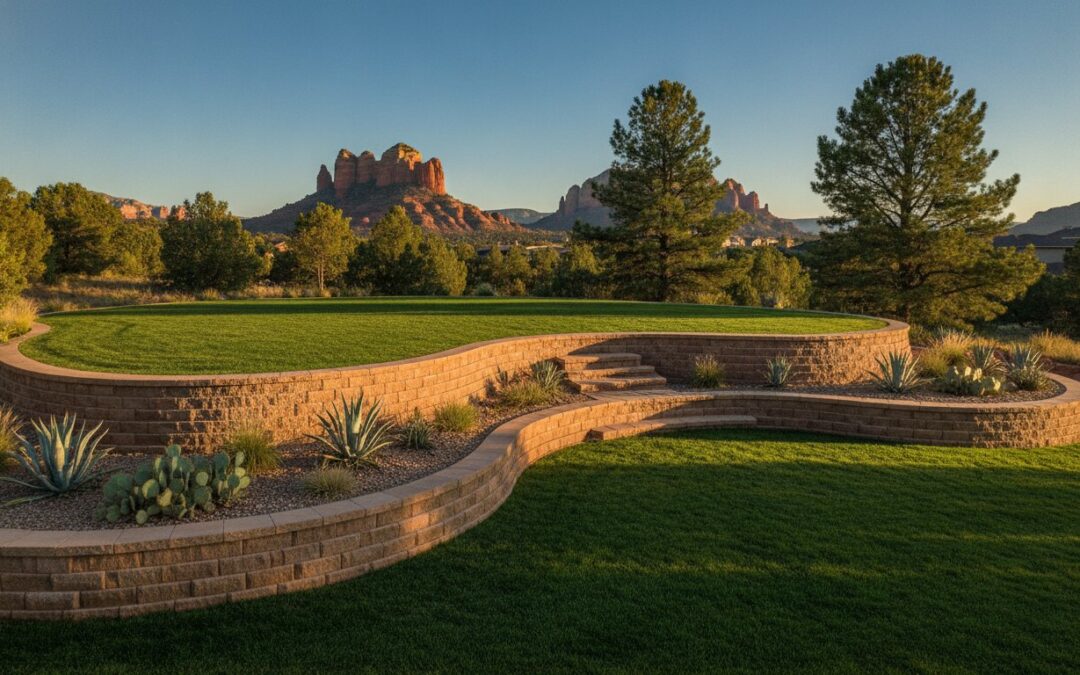
Why does a retaining wall that looks perfectly solid in June so often end up leaning, cracked, or crumbling by the time the February snow melts? If you’ve lived through a few seasons in Flagstaff or the Verde Valley, you’ve likely seen the results of “quick-fix” solutions that simply weren’t built for our terrain. It’s a common frustration for homeowners to watch their investment fail under the weight of hydrostatic pressure or the relentless expansion of frozen soil. When it comes to professional retaining wall installation Northern Arizona requires a strategy that treats the structure as a vital part of the local ecosystem rather than just a stack of blocks.
We’ve spent over 47 years refining our approach to this unique landscape, and we’re here to share that expertise with you. This 2026 guide will help you master the essentials of durable construction, from selecting materials that survive the high-desert freeze-thaw cycle to engineering for heavy monsoon runoff. You’ll learn how to transform steep slopes into usable flat space while increasing your property value and staying compliant with the latest Firewise and HOA standards. We’ll cover everything from the 2026 permit requirements in Coconino County to the structural secrets that keep your yard from washing out during the next big storm.
Key Takeaways
- Learn why managing hydrostatic pressure is the most critical factor for preventing structural failure during the intense Arizona monsoon season.
- Discover how to select high-durability materials, such as segmental blocks or natural stone, that are specifically engineered to withstand the high-desert freeze-thaw cycle.
- Understand the updated 2026 permit requirements and professional site analysis steps necessary for a successful retaining wall installation Northern Arizona homeowners can rely on for decades.
- Explore how strategic grading and structural wall design can reclaim sloped terrain to create functional outdoor living spaces that significantly enhance property value.
- Gain insight into the professional installation process, including subgrade compaction and drainage planning, to ensure your hardscape project remains stable and beautiful.
The Role of Retaining Walls in Northern Arizona Landscapes
Northern Arizona’s rugged terrain defines how we live and build. From the jagged cliffs of Sedona to the volcanic slopes of Flagstaff, the land is rarely flat, which makes retaining walls a structural necessity rather than a mere design choice. These barriers serve as the backbone of a high-desert landscape, holding back massive volumes of earth that would otherwise succumb to gravity and weather. By strategically managing these vertical changes, we help property owners reclaim their land and protect their investments.
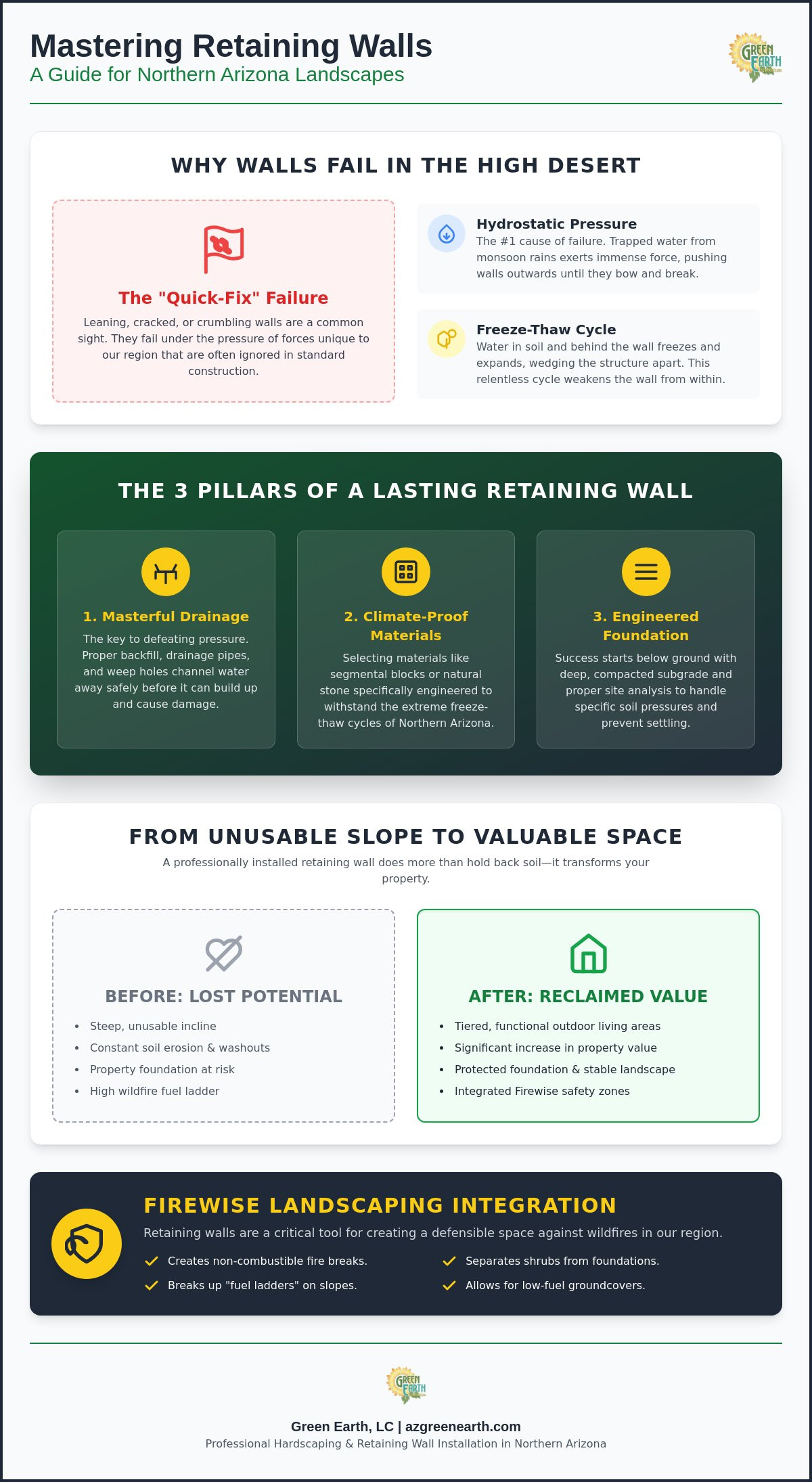
A professional retaining wall installation Northern Arizona project transforms a steep, unusable incline into a series of tiered, functional spaces. Instead of a “lost” slope that’s difficult to navigate or maintain, you gain flat ground suitable for outdoor kitchens, fire features, or sustainable gardens. This isn’t just about aesthetics; it’s about protecting the long-term integrity of your property’s foundation. By preventing soil from migrating toward or away from your home, these structures provide the stability needed for a permanent landscape. Our team has spent over 47 years mastering this delicate balance between geological engineering and environmental beauty.
During our intense monsoon seasons, these walls become your primary defense against yard washouts. Heavy rains can quickly turn a sloped backyard into a muddy ravine. A well-engineered wall system manages the velocity of water as it moves across your lot, preventing the deep gullying and topsoil loss that plague many unprepared properties in the region. This controlled drainage is essential for maintaining both the health of your soil and the clarity of local waterways.
Managing Slopes from Sedona to Flagstaff
The geological needs of Sedona’s red rocks differ significantly from the porous volcanic soils found in Flagstaff. Vertical elevation changes in the Verde Valley often require engineered solutions to stop “soil creep,” a slow but damaging process where earth moves down a slope over time. Without proper intervention, this movement can stress building foundations and underground utilities. When we design these structures, we distinguish between simple garden borders and true structural walls. A structural wall is a complex system designed to handle specific lateral earth pressures, ensuring your hillside stays exactly where it belongs for decades to come.
Firewise Integration: Walls as Fire Breaks
In our region, safety is as vital as stability. Masonry retaining walls are a powerful tool in creating a non-combustible zone around your home. By using stone or concrete blocks, you create a physical fire break that doesn’t provide fuel for a wildfire. These walls also help you manage vegetation density by separating planting beds from the main structure of the house. Integrating hardscaping into your defensible space is a core tenet of our Firewise landscaping guide. This approach allows you to maintain a lush, beautiful yard that satisfies local safety standards while significantly reducing fire risk. Effective Firewise integration includes:
- Establishing clear separation between flammable shrubs and the home foundation.
- Using stone terraces to break up continuous “fuel ladders” that allow fire to climb.
- Reclaiming sloped areas to install low-fuel groundcovers or gravel mulch.
Critical Engineering Factors: Why Walls Fail in Northern Arizona
Structural failure isn’t just an eyesore; it’s a safety risk that often stems from ignoring the unique geology of the high desert. Many property owners assume that weight alone keeps a wall standing, but the reality is much more complex. A successful retaining wall installation Northern Arizona project must account for forces that stay invisible during the dry months but become destructive once the seasons shift. We’ve spent nearly five decades diagnosing why walls fail in this region, and it almost always comes down to a misunderstanding of local soil and water behavior.
Hydrostatic pressure is the force exerted by standing or trapped water against the back of a wall, which can easily exceed the structural limits of even the heaviest masonry. During a heavy monsoon, soil becomes saturated and incredibly heavy. If that water has no escape route, it pushes against the structure with thousands of pounds of force. This is the primary reason walls begin to lean or bow over time. In Flagstaff, the challenge shifts to the freeze-thaw cycle. When water trapped in the soil freezes, it expands. This repeated expansion and contraction can snap rigid mortar joints and push blocks out of alignment if the wall hasn’t been designed to flex or drain properly.
Drainage Is Everything: Managing Monsoon Pressure
Effective water management is the difference between a wall that lasts fifty years and one that collapses in five. We follow the SRW Best Practices Guide to ensure every structure handles runoff efficiently. This involves backfilling the area directly behind the wall with clean, angular gravel rather than native dirt. We also install perforated drain pipes and strategically placed weep holes to give water a clear path out. If you’re concerned about how water moves across your property, our specialists can design a custom yard drainage solutions Sedona homeowners rely on to protect your hardscape.
Soil Dynamics: Clay vs. Volcanic Rock
The ground beneath your feet changes rapidly as you move through the Verde Valley. In Cottonwood and Camp Verde, we often encounter expansive clay pockets. This soil swells significantly when wet and shrinks when dry, creating a heaving effect that can destabilize shallow foundations. Conversely, Flagstaff’s rocky subgrades require heavy excavation equipment to reach the proper depth for a stable base. For any wall exceeding three feet in height, we utilize geogrid reinforcement. This high-strength grid material locks the soil and the wall units together, creating a unified mass that resists lateral pressure. This ensures every retaining wall installation Northern Arizona homeowners invest in remains stable under extreme pressure.
Choosing the Right Material: A Northern Arizona Comparison
Selecting the correct material for a retaining wall installation Northern Arizona homeowners can trust involves more than just picking a color. It’s a strategic decision that must account for the extreme temperature swings between 100-degree Sedona afternoons and sub-zero Flagstaff nights. While rigid materials like poured concrete or mortared brick are common in milder climates, they often fail here. The ground in our region is constantly in motion due to moisture and frost. A wall that cannot move with the earth will eventually crack and buckle under the strain. We focus on flexible, high-performance materials that provide long-term structural integrity while honoring the natural beauty of the high desert.
Sustainability is a core value in our design process. By using locally sourced materials, we reduce the carbon footprint associated with long-distance hauling and ensure the wall looks like it belongs in the landscape. Whether we’re utilizing volcanic Malpais rock from near Flagstaff or limestone from the Verde Valley, our goal is to create a partnership between the built environment and the natural world. This commitment to excellence is a hallmark of our 47-year history as a local industry leader.
Segmental Block Walls (SRW)
Segmental Retaining Walls are the modern industry standard for durability. These “dry-stack” systems don’t use mortar, which allows the individual blocks to shift slightly during the freeze-thaw cycle without compromising the wall’s strength. They offer incredible speed of installation and come in various textures that mimic the rugged red rock of Sedona or the cool grays of the Mogollon Rim. For HOA and commercial properties, these walls provide a maintenance-free solution that resists weathering and UV damage for decades. Their engineered interlocking design ensures they can handle significant loads while remaining aesthetically pleasing. This flexibility makes them the ideal choice for a retaining wall installation Northern Arizona project where soil movement is guaranteed.
Natural Stone and Boulder Walls
Nothing integrates a property into the desertscape quite like natural stone. Using native boulders creates a timeless, organic look that manufactured products can’t replicate. While working with raw stone requires a higher level of craftsmanship and labor, the result is a one-of-a-kind structure that grows more beautiful with age. We often use Malpais for its dark, dramatic tones or Limestone for its bright, classic appeal. It’s essential to weigh the pros and cons of each stone type based on your specific elevation and soil acidity. For more on how we balance aesthetics with environmental health, explore our sustainable outdoor living guide.
The Installation Process: What to Expect from a Professional Build
A successful retaining wall installation Northern Arizona homeowners can depend on requires a methodical, step-by-step approach that prioritizes structural integrity over speed. While the finished wall is what you see, the most important work happens below the surface. We treat every project as a unique engineering challenge, ensuring that the foundation and internal drainage systems are built to handle the specific soil pressures of your lot. Our process is designed to be transparent and disciplined, reflecting our 47 years of experience in the local landscape.
Every professional build follows a rigorous sequence of events to ensure longevity:
- Step 1: Site Analysis and Utility Marking: Before a single shovel hits the ground, we conduct a thorough site survey and coordinate with Arizona 811 (Blue Stake) to mark all underground utilities. This protects your property and ensures safety.
- Step 2: Excavation and Subgrade Compaction: We dig a trench to the required depth and use heavy-duty vibrating plate compactors to stabilize the native soil. This creates a firm “shelf” that prevents the wall from settling or leaning.
- Step 3: Base Installation: We never build on dirt. We use a thick layer of crushed aggregate (typically 3/4-inch minus) that is compacted to provide a level, well-draining foundation.
- Step 4: Layering and Drainage: As the wall rises, we install perforated drain pipes behind the first course. We backfill with clean, angular gravel to ensure water can move freely through the system.
- Step 5: Final Grading: The process concludes with precise grading of the surrounding soil. This ensures that surface water is directed away from the wall and your home foundation, preventing future erosion.
The Importance of Grading and Drainage
A retaining wall doesn’t exist in a vacuum; it’s a critical component of your property’s overall water management system. Without professional grading, even the strongest wall can become a dam that creates swampy patches or basement leaks. We ensure every retaining wall installation Northern Arizona project complies with local building codes and drainage requirements. By looking at the “big picture” of how water moves across your land, we prevent the yard washouts and hydrostatic pressure issues that lead to costly repairs. Properties in Sedona face particularly intense monsoon runoff, and pairing your wall with proven yard drainage solutions Sedona professionals recommend ensures comprehensive protection for your entire lot. If you’re ready to secure your hillside, contact our hardscape experts for a professional site evaluation.
Permitting and Engineering Requirements
In many parts of Northern Arizona, including the City of Flagstaff and Coconino County, building permits are legally required for any retaining wall that exceeds four feet in height. These taller structures often require stamped plans from an Arizona Registered Design Professional to ensure they can handle surcharge loads. Beyond city codes, most local HOAs have strict architectural committee guidelines regarding material colors and wall placement. We act as your visionary partner, navigating these bureaucratic hurdles and ensuring your project is fully compliant. Choosing professional oversight over a DIY approach eliminates the risk of expensive rework or legal issues with local authorities.
Why Green Earth, LC is Your Partner for Durable Hardscaping
Green Earth, LC has been a fixture in the local community since 1979. We bring more than 47 years of regional experience to every project we undertake. This longevity is vital because we’ve seen exactly how the high-desert climate tests outdoor structures over several decades. When you select us for your retaining wall installation Northern Arizona project, you’re partnering with a team that understands the weight of a Flagstaff winter and the intensity of a Sedona monsoon. We combine the disciplined reliability required for commercial contracts with the welcoming, neighborly warmth that residential homeowners deserve.
Our role as a “Visionary Partner” means we don’t just build walls; we solve complex land management problems. We analyze your property’s unique grading, drainage, and soil composition to create a solution that is as beautiful as it is durable. We take immense pride in our history and our reputation for excellence in craftsmanship. We’ve spent nearly five decades refining our techniques to ensure that every stone placed and every trench dug contributes to a permanent, sustainable landscape.
Our Commitment to Sustainability
We believe that professional hardscaping should protect and enhance the local environment. As a statewide runner-up for Best Sustainable Landscape Designer, we prioritize practices that reduce ecological impact. This includes selecting materials that honor the natural aesthetics of the Verde Valley and designing systems that prevent topsoil erosion. We integrate drainage solutions that manage runoff effectively, which reduces water waste and protects the health of your surrounding vegetation. Our approach ensures that your retaining wall installation Northern Arizona project serves as a responsible guardian of the local terrain.
Partnering for Your Property’s Future
Whether you’re a homeowner, an HOA board member, or a commercial property manager, we provide a comprehensive suite of services to ensure your landscape thrives for the long term. Our expertise extends beyond structural walls to include specialized irrigation repair in Flagstaff. We understand the specific needs of high-altitude systems and how they interact with your hardscape elements to prevent subsurface water damage.
By choosing a partner with nearly five decades of regional experience, you ensure your investment is protected by a team that remains deeply rooted in the community. We invite you to experience the difference that professional design and environmental stewardship can make for your property. Contact us for a professional site evaluation today to begin transforming your outdoor space into a functional, sustainable reality.
Building for the Next Generation of Arizona Landscapes
Securing your property against the unique geological challenges of the high desert is a long term investment in both safety and beauty. We’ve explored how a successful retaining wall installation Northern Arizona homeowners can trust depends on managing hydrostatic pressure and selecting flexible materials that survive our intense freeze-thaw cycles. By integrating professional grading and structural engineering, you don’t just hold back the earth; you transform steep slopes into functional, valuable living space that remains stable for decades.
Since 1979, Green Earth, LC has served as a visionary partner for residents and commercial managers across the Verde Valley and Flagstaff. As a statewide runner-up for Best Sustainable Landscape Designer, we take pride in creating structures that honor the local environment while meeting strict Firewise and HOA standards. Our deep roots in the community ensure that every project is handled with the precision of a seasoned industry leader and the care of a neighbor. It’s time to build a landscape that stands the test of time and weather. Request Your Custom Retaining Wall Consultation and let us help you protect your property’s future today.
Frequently Asked Questions
Do I need a permit for a retaining wall in Northern Arizona?
In the City of Flagstaff and Coconino County, a building permit is required for any wall taller than 4 feet, measured from the bottom of the footing to the top of the structure. Walls under 4 feet generally don’t require a permit unless they support a surcharge load, such as a driveway or a fence. We always recommend checking with your specific local building department to confirm current 2026 ordinances before starting construction.
How much does retaining wall installation cost in Sedona or Flagstaff?
The total investment for a project varies based on material choice, site accessibility, and the complexity of the necessary drainage systems. Factors like the height of the wall and the presence of rocky subgrade or expansive clay also influence the final project scope. A professional site evaluation is the most reliable way to receive an accurate estimate tailored to your property’s specific geological needs and elevation.
How long do segmental block retaining walls last?
When built to modern engineering standards, segmental block walls are designed to last between 50 and 100 years. Their “dry-stack” nature allows them to remain structurally sound despite the soil movement common in our high-desert environment. This durability makes them a preferred choice for residential and commercial retaining wall installation Northern Arizona projects that require long-term stability and minimal maintenance over several decades.
Can a retaining wall help with my yard drainage issues?
Yes, a professionally designed wall is a primary tool for managing yard runoff and preventing erosion on sloped lots. By combining the wall with strategic grading and internal drainage pipes, we can redirect water away from your home’s foundation and toward safe exit points. This prevents the “ponding” and washouts that often occur during the intense Arizona monsoon season, protecting both your landscape and your home.
What is the best material for a retaining wall in a freeze-thaw climate?
Segmental Retaining Wall (SRW) blocks or natural dry-stack stone are the most effective materials for the climate in Flagstaff and the surrounding mountains. These systems are flexible, meaning they can shift slightly as the ground freezes and thaws without cracking or losing structural integrity. Rigid materials like poured concrete or mortared stone are far more susceptible to damage from the repeated expansion of frozen soil.
How high can I build a retaining wall without an engineer?
Most local jurisdictions in Northern Arizona allow walls up to 3 or 4 feet in height to be built without a structural engineer’s stamped plans. However, if the wall will support significant weight at the top, such as a parking area or a steep slope, an engineer is often required regardless of the height. Professional oversight ensures the wall is safe and compliant with the latest 2024 International Building Code adopted locally.
Does a retaining wall increase my property value?
A high-quality wall increases property value by reclaiming unusable slopes and creating flat land for outdoor living, gardens, or kitchens. Beyond the functional benefit, well-designed hardscaping significantly improves curb appeal and provides essential structural security for the lot. It’s a key feature that savvy buyers look for when purchasing homes on the rugged, sloped terrain found throughout the Verde Valley and Flagstaff. Pairing your retaining wall with a comprehensive approach to landscaping Flagstaff AZ professionals recommend can further maximize your property’s appeal and long-term resilience.
How do I maintain my retaining wall over time?
Maintenance is typically minimal but involves regularly inspecting weep holes and drainage outlets to ensure they aren’t clogged with soil or debris. You should also check for any signs of settling or unusual bulging after heavy rain events or the spring snowmelt. Keeping large trees with aggressive root systems away from the base of the wall helps prevent structural shifts as the vegetation matures and the roots expand.
Recent Comments