
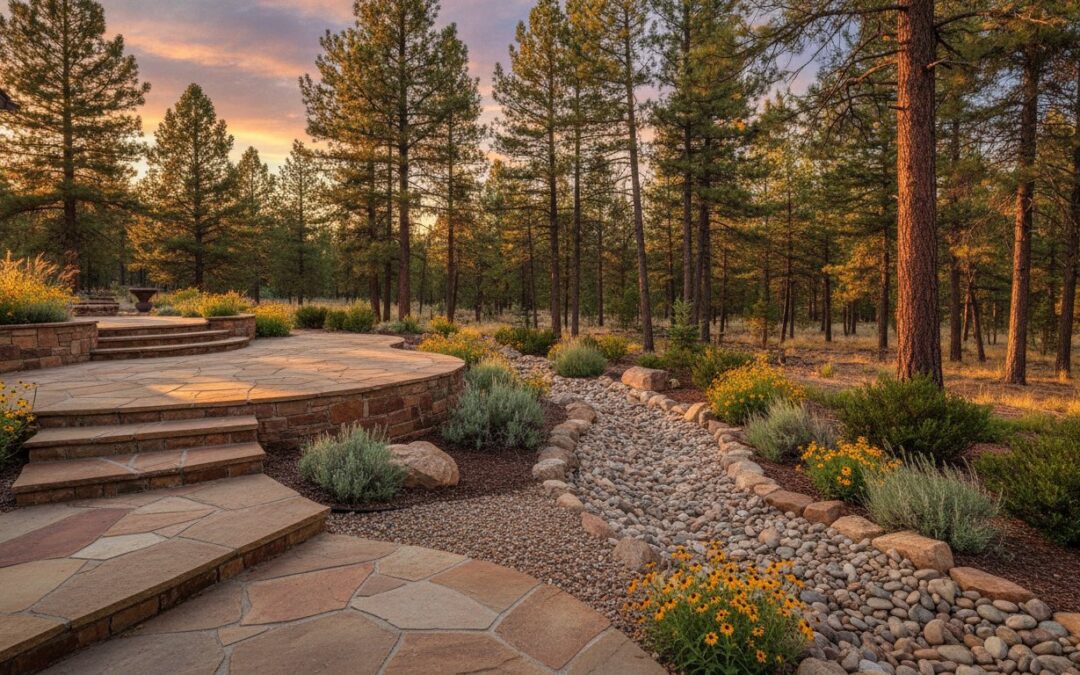
What if your outdoor living space could serve as a primary defense against wildfires while elegantly managing the heavy runoff of a summer monsoon? For those investing in professional landscaping Flagstaff AZ, the high-altitude environment presents challenges that go far beyond simple gardening. You likely understand the frustration of seeing delicate plants succumb to the thin air or watching precious topsoil wash away during the spring snowmelt. It is a common struggle in our unique climate, where the beauty of the Ponderosa pines comes with the vital responsibility of maintaining Firewise defensible space.
We believe that a truly successful landscape should be as resilient as it is beautiful. This article provides a roadmap for building a property that balances sophisticated design with high-altitude engineering and ecological stewardship. You will discover how to implement functional drainage, install durable hardscapes, and select vegetation that thrives at 7,000 feet. We will also detail how to align your property with the latest 2026 fire safety standards and water conservation ordinances, ensuring your home remains a safe, sustainable sanctuary for years to come.
Key Takeaways
- Learn how Flagstaff’s unique Zone 6 climate and high-altitude conditions dictate specific plant selections and construction materials.
- Understand the technical importance of sub-base preparation for pavers and retaining walls to withstand Northern Arizona’s intense freeze-thaw cycles.
- Discover how professional grading and drainage solutions safeguard your home’s foundation from heavy monsoon rains and rapid snowmelt.
- Explore the principles of Firewise defensible space to protect your property from wildfire risk while maintaining aesthetic beauty with native plants.
- See how 47 years of local experience ensures your project meets the highest standards for sustainable landscaping Flagstaff AZ.
The Unique Challenges of Landscaping in Flagstaff, AZ
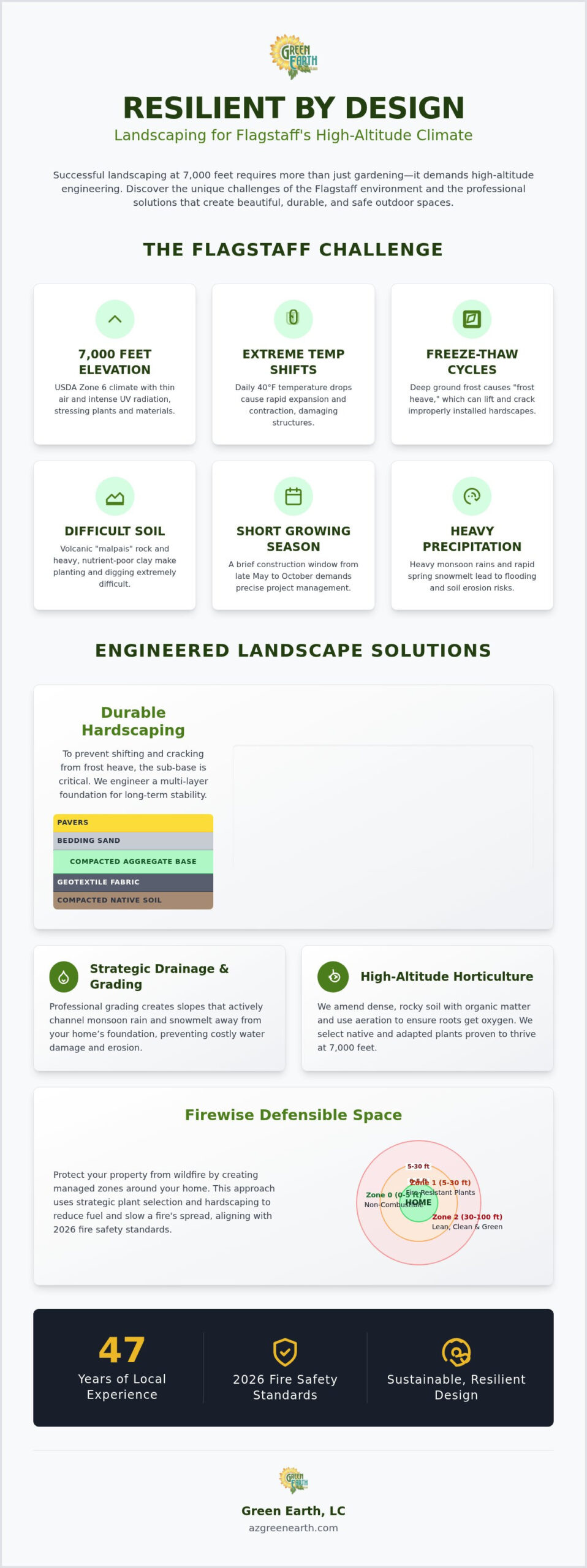
Successful landscaping Flagstaff AZ requires a deep understanding of the high-altitude environment that sets Northern Arizona apart from the rest of the state. While many homeowners are familiar with the “xeriscaping” methods used in the desert, those techniques often fail at 7,000 feet. Here, we aren’t just managing heat; we are designing for a USDA Zone 6 climate characterized by extreme temperature fluctuations, intense UV radiation, and significant winter snow loads. Resilient design in this region is less about decoration and more about structural engineering that respects the natural terrain.
The primary driver of these challenges is Flagstaff’s semi-arid climate. The combination of thin air and low humidity means plants lose moisture rapidly, while the soil undergoes intense freeze-thaw cycles. Professional construction must account for these forces to prevent stone features from shifting or delicate root systems from drying out. Building a landscape here means creating a sustainable ecosystem that can withstand a forty-degree temperature drop in a single afternoon.
Understanding Flagstaff’s Growing Season
Our window for planting and major construction is notoriously brief, typically stretching from late May through October. This short season demands precise project management and a “right the first time” approach to installation. A major risk during the winter months is frost heave, where moisture in the soil freezes and expands, physically lifting hardscapes that lack a proper sub-base. Unlike the stable ground in Phoenix, Flagstaff’s earth is constantly in motion. We use specific drainage and base-layer techniques to ensure that pavers and retaining walls remain level despite the deep frost line.
Soil Conditions and High-Altitude Nutrients
The ground beneath Flagstaff is dominated by volcanic “malpais” rock and heavy clay. This soil is often acidic, nutrient-poor, and incredibly difficult to penetrate. Successful plant establishment depends on aggressive soil amendments to improve organic matter and drainage. Because the soil is so dense, aeration becomes a critical service to ensure oxygen and water reach the root zones of trees and shrubs. Without these professional interventions, even native species can struggle to thrive in the compacted, rocky earth that defines our mountain landscape.
Comprehensive Landscape Construction and Hardscaping
Structural hardscaping is the backbone of any high-altitude property. While plants provide the color, elements like pavers, retaining walls, and outdoor kitchens provide the function and value. Professional landscaping Flagstaff AZ demands more than just aesthetic placement; it requires engineering that survives 100-inch snow years and the relentless freeze-thaw cycles of the Colorado Plateau. By investing in high-quality stone and masonry, you aren’t just creating an outdoor living space; you’re increasing your property’s usable square footage and long-term resale value.
A common failure in amateur installations is neglecting the sub-base. In Flagstaff, the ground can freeze several feet deep. Without a meticulously compacted base of varied aggregate, pavers will shift and crack as the moisture in the soil expands. When executing landscaping Flagstaff AZ, we apply forty-seven years of local experience to every build. This ensures structural elements remain as level and secure as the day they were installed. Integrating custom fire features also allows homeowners to enjoy their investment during crisp October nights or even mild winter afternoons. The University of Arizona Cooperative Extension provides excellent guidance on using Firewise Plant Materials and hardscaping to create defensible space around these heat sources.
Pavers and Hardscape Design for Mountain Homes
Selecting the right materials is vital for durability. We prioritize high-density concrete pavers and natural stone that resist damage from de-icing salts and heavy snow shoveling. Permeable paving is an increasingly popular choice for eco-conscious homeowners because it allows snowmelt to filter directly into the ground rather than creating icy sheets on your driveway or walkways. For those looking at different regional styles, our guide to hardscape construction Cottonwood AZ offers additional inspiration for stone textures and patterns that complement Northern Arizona’s rugged beauty.
Retaining Wall Installation and Structural Support
Flagstaff’s mountainous terrain often results in sloped yards that are difficult to use and prone to erosion. Retaining walls are essential for carving out flat, functional terraces for patios or gardens. However, these walls must do more than just look good; they have to hold back thousands of pounds of saturated soil during the monsoon season. Proper engineering involves integrated drainage pipes and gravel backfill to prevent hydrostatic pressure from causing wall failure. If you are planning a complex project on a steep grade, you can find detailed technical insights in our resource on retaining wall installation Northern Arizona. If you’re ready to transform your slope into a masterpiece, consider a professional design consultation to map out your vision.
Solving Flagstaff’s Drainage and Grading Issues
In the context of landscaping Flagstaff AZ, drainage is perhaps the most critical technical component. While the aesthetic features of a property capture the eye, it is the grading and water diversion systems that preserve the structural integrity of your home. Flagstaff faces a dual threat: the high-velocity deluge of the summer monsoon season and the slow, heavy saturation of spring snowmelt. Failing to manage these effectively doesn’t just lead to muddy yards; it risks foundation damage and soil erosion that can compromise your entire investment.
Effective water management begins with a landscape that works with gravity rather than against it. We design systems that capture and direct runoff before it has a chance to pool or penetrate your home’s perimeter. This involves a combination of subsurface engineering and surface-level features that blend seamlessly with your property’s natural beauty. When planning landscaping Flagstaff AZ, we prioritize long-term stability over quick fixes.
Monsoon-Ready Yard Drainage Solutions
During a typical monsoon, several inches of rain can fall in less than an hour. A simple trench won’t suffice in these conditions. We utilize a variety of advanced techniques, including French drains, swales, and dry creek beds, to move water efficiently across the property. Dry creek beds are particularly effective because they serve as a beautiful stone feature during the dry months and a functional river during a storm. It is vital to divert this water in a way that protects your structures without negatively impacting downhill neighbors. For a deeper look at how these systems compare in similar high-desert environments, you can review our yard drainage solutions Sedona guide.
Grading for Foundation Protection
Proper grading is the first line of defense for any home. A professional grade should maintain a minimum 2% slope away from the foundation, ensuring that water moves at least ten feet from the house before it is allowed to soak into the ground. This becomes even more important during the winter when snow accumulates against the walls. As that snow melts, it can seep into basement walls or crawl spaces if the ground isn’t correctly sloped. We use professional laser-grading equipment to achieve precise levels that manual shoveling simply cannot match. This precision prevents “dead spots” where water might otherwise sit and stagnate.
Beyond protection, we also focus on the “Authoritative Environmentalist” approach by implementing passive water harvesting. By directing runoff into rain gardens or specific planting zones, we keep the landscape hydrated naturally. This keeps your Firewise plant materials healthy and resilient, reducing the amount of supplemental irrigation needed during the dry June heat. For homeowners who want to understand the full technical scope of how professional drainage grading Arizona specialists protect foundations from monsoon runoff and comply with 2026 building codes, our comprehensive guide covers every critical detail. This methodical approach ensures your property remains functional and environmentally responsible year-round.
Planning Your Landscape: Plants and Firewise Safety
Selecting vegetation for landscaping Flagstaff AZ requires a shift in perspective. You aren’t just choosing colors and textures; you’re managing fuel loads and water budgets. In a city where wildfires most often occur in May and June, your plant choices and their placement act as a critical safety barrier. A well-designed landscape in Northern Arizona must balance the lush beauty of the high country with the disciplined requirements of USDA Zone 6 survival and Firewise compliance. This approach ensures your property remains an asset to the local ecosystem rather than a liability during the dry season.
Ecological responsibility is at the heart of our design philosophy. Since 1988, the City of Flagstaff’s Water Conservation Program has helped residents reduce water use by 50%, and your landscape plays a major role in continuing that trend. By utilizing native species and efficient irrigation, you can qualify for the city’s low-water-use rebate, which currently offers $1.00 per square foot for lawn-to-xeriscape conversions. This sustainable approach doesn’t mean sacrificing aesthetics; it means choosing plants that are genetically programmed to thrive in our thin air and rocky soil.
High-Altitude Plant Selection and Maintenance
Successful mountain gardens rely on hardy specimens like Ponderosa pines, Quaking Aspens, and Gambel Oaks. These species handle the intense UV rays and heavy snow loads that characterize our winters. Maintenance for these plants involves strategic pruning and consistent mulching to retain moisture in the semi-arid soil. For those interested in how these principles apply across different Northern Arizona elevations, our guide on desert landscape design Northern Arizona provides a comprehensive look at sustainable beauty in varying climates. We focus on establishing deep root systems early so your trees can withstand the inevitable dry spells of early summer.
Firewise Defensible Space Strategies
Creating a Firewise property involves managing three distinct zones. Zone 0, the area within five feet of your home, should be an ember-resistant zone entirely free of flammable materials. Here, we utilize non-combustible mulch options like river rock, gravel, or decomposed granite. Zone 1 extends to 30 feet, where trees must be spaced at least 10 feet between crowns and limbed up to 10 feet from the ground to prevent ground fires from reaching the canopy. For a detailed breakdown of these safety protocols, see our resource on firewise landscaping Cottonwood AZ. Protecting your home is a technical process that requires professional foresight and local expertise.
If you’re ready to secure your property with a professionally designed defensible space, contact Green Earth, LC today to schedule a Firewise assessment.
Why Choose Green Earth, LC for Your Flagstaff Project?
Choosing a partner for landscaping Flagstaff AZ requires more than just finding a contractor; it requires finding a steward for your land. Since our founding in 1979, Green Earth, LC has dedicated over 47 years to mastering the complex interplay between high-altitude construction and environmental health. We don’t just build landscapes; we engineer resilient outdoor environments that respect the unique ecology of Northern Arizona. Whether you’re a homeowner looking for a private retreat or a commercial manager needing strict compliance, our deep local roots ensure your project is handled with professional authority and neighborly warmth.
Our comprehensive approach bridges the gap between visionary design and long-term maintenance. We understand that a landscape is a living investment that changes with the seasons. By managing every phase, from the initial grading and drainage engineering to the final Firewise-compliant planting, we provide a seamless experience for our clients. This holistic method prevents the communication gaps that often occur when multiple contractors are involved, ensuring that the structural integrity of your hardscape and the health of your flora are prioritized from day one.
A Legacy of Sustainable Craftsmanship
We take immense pride in our role as an “Authoritative Environmentalist” within the community. Our commitment to eco-friendly practices earned us the statewide runner-up position for sustainability from Green Living Magazine. This recognition isn’t just a trophy; it is a reflection of how we approach every project. We prioritize materials and methods that promote longevity, such as permeable pavers and native plant palettes that require minimal chemical intervention. Our history in the Verde Valley and Flagstaff allows us to predict how your landscape will age over decades, not just years, allowing us to build for the next generation of Northern Arizona residents.
Custom Solutions for Every Property Type
Every property in Northern Arizona has its own set of challenges, from volcanic malpais soil to steep, erosive slopes. We specialize in tailoring our services to meet the specific needs of residential estates, commercial developments, and HOA communities. Our expertise in HOA compliance is particularly valuable for homeowners in wooded neighborhoods where Firewise standards and aesthetic consistency are strictly enforced. We invite you to explore our comprehensive resource on outdoor living space construction Arizona to see how we blend functionality with high-status aesthetics. If you’re ready to start your journey toward a more resilient and beautiful property, contact Green Earth, LC for a Flagstaff consultation today.
Secure Your Vision for a Resilient Northern Arizona Landscape
Building a property that thrives at 7,000 feet requires a delicate balance of technical engineering and ecological sensitivity. We have explored how proper grading protects your foundation from monsoons and why Firewise safety is a non-negotiable standard for wooded neighborhoods. Achieving this balance ensures your outdoor living space remains a sanctuary that enhances your home’s value and safety. When you invest in professional landscaping Flagstaff AZ, you’re choosing a legacy of craftsmanship that withstands the test of time and climate.
Green Earth, LC brings over 47 years of local expertise to every project, serving as a statewide runner-up for sustainable design. Our specialists in high-altitude hardscaping understand the unique demands of our terrain and are ready to help you navigate them. We invite you to Request a Professional Landscape Consultation for Your Flagstaff Property to begin planning your next project. Let’s work together to create a beautiful, fire-safe, and sustainable outdoor environment that you can enjoy for decades to come.
Frequently Asked Questions
What is the best time of year for landscaping in Flagstaff?
The optimal window for planting and construction in Flagstaff is between late May and October. This timeframe avoids the late spring frosts and ensures projects are completed before the first heavy snows arrive in November. Because our growing season is short, we recommend scheduling design consultations during the winter or early spring to ensure your project is ready for the first thaw.
Do I need a permit for a retaining wall in Flagstaff, AZ?
Most structural landscaping projects in Flagstaff, including retaining walls over a certain height, require building permits from the city or county. Any structure that alters the natural slope of the land or supports significant soil pressure typically needs official approval to ensure safety and code compliance. We manage the permitting process for our clients to ensure every installation meets local engineering standards and safety regulations.
What are ‘Firewise’ plants and why are they important for my home?
Firewise plants are species that are naturally more resistant to ignition and do not provide “ladder fuels” that allow fires to climb into the tree canopy. In our region, this often includes deciduous trees like Aspens and Gambel Oaks, which have higher moisture content than dense evergreens. Selecting these plants is a critical part of landscaping Flagstaff AZ properties to create a defensible space that protects your home from wildfire risk.
How do I fix drainage issues caused by heavy snowmelt?
Fixing snowmelt drainage requires professional grading to ensure water flows away from your foundation at a minimum 2% slope. We often install French drains or subsurface catch basins that remain functional even when surface temperatures are near freezing. These systems prevent water from pooling against the home and seeping into foundations or crawl spaces during the heavy soil saturation of a spring thaw. For a complete overview of how drainage grading Arizona professionals engineer these solutions to meet 2026 compliance standards, our detailed guide walks through every step of the process.
Can you install an outdoor kitchen that survives Flagstaff winters?
We design and install outdoor kitchens specifically engineered to survive the intense freeze-thaw cycles of Northern Arizona. This involves using non-porous stone surfaces, weather-rated stainless steel appliances, and reinforced concrete sub-bases that prevent shifting when the ground freezes. Proper winterization of water lines is also a standard part of our design process to prevent pipe bursts during sub-zero winter nights.
What is the difference between landscaping in Flagstaff vs. Sedona?
The primary difference lies in the climate zones; Flagstaff is a high-altitude Zone 6 environment, while Sedona is a warmer, mid-elevation desert. Landscaping in Flagstaff must account for heavy snow loads and deep frost lines, requiring different plant species and more robust structural engineering. While Sedona designs focus on heat-tolerant succulents, Flagstaff projects prioritize cold-hardy natives like Ponderosa pines and drought-tolerant mountain shrubs.
Does Green Earth, LC provide commercial landscape maintenance in Flagstaff?
Yes, Green Earth, LC provides comprehensive commercial and HOA landscape maintenance throughout the Flagstaff area. We specialize in ensuring that large-scale properties remain compliant with city water restrictions and Firewise safety ordinances. Our teams are experienced in managing the unique needs of business parks, retail centers, and residential communities, focusing on long-term sustainability and professional curb appeal for every client.
How much does professional landscaping cost in Northern Arizona?
The cost of landscaping Flagstaff AZ properties varies significantly based on the project’s scope, terrain complexity, and material choices. Factors such as the need for volcanic rock excavation or advanced drainage systems can influence the final investment. We provide detailed, transparent estimates after a thorough site evaluation to ensure your budget aligns with the structural and aesthetic goals of your specific property.
Recent Comments