
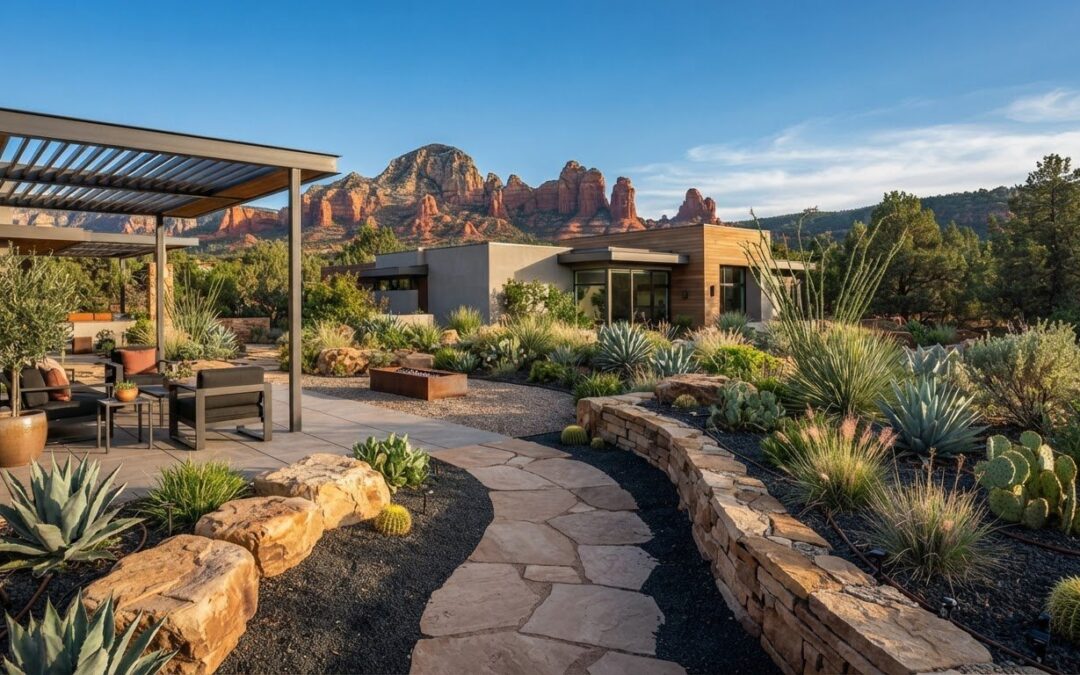
A modern desert yard should feel inviting, not stark or difficult to live with. The best modern desert landscaping ideas do more than create clean lines and striking contrast: they respond to the property, make room for everyday outdoor living, and suit the surrounding Northern Arizona landscape. A beautiful design can also feel overwhelming when inspiration photos don’t explain how planting, paving, shade, and water use fit together.
You don’t have to choose between a polished look and a practical yard. Thoughtful plant groupings, well-chosen hardscape, and defined outdoor areas can work together to create a cohesive setting that feels connected to home and place.
This guide explores adaptable ideas for bringing modern desert style into your yard, from sculptural planting and natural materials to comfortable outdoor rooms. You’ll also learn what to consider about your property, irrigation, drainage, and local conditions before planning a project. With custom design, each element can serve a purpose while contributing to a landscape that feels distinctly yours.
Key Takeaways
- Modern desert landscaping ideas can balance clean forms with layered texture, climate-aware planting, and useful outdoor space.
- Explore eight design concepts that bring visual interest and practical purpose to planting, paths, hardscape, and gathering areas.
- Compare minimal, richly textured, and outdoor-living-focused styles to identify an approach that suits your property.
- Use a five-step planning process to assess your yard, prioritize essential functions, and decide which design details matter most.
- See how Green Earth’s custom-tailored design-build approach can connect planting, hardscape, and outdoor living in a cohesive plan.
What Makes Modern Desert Landscaping Ideas Work in Northern Arizona?
Modern desert landscaping is a considered blend of clean forms, climate-aware planting, and outdoor spaces designed for everyday use. Its appeal comes from how these elements work together, not from removing every plant or covering the yard in gravel. Texture, contrast, and carefully composed planting can give a restrained layout warmth and character.
In Northern Arizona, the setting matters as much as the style. A home’s sun exposure, slope, views, existing features, and intended uses all shape what will work. Conditions can vary from one property to another, even within the same community, so a design that suits one Sedona yard may need a different balance of planted areas, hardscape, and shade elsewhere. Xeriscaping principles offer useful context for planning a landscape around climate-aware choices, while a successful design still needs to respond to the particular site.
How modern desert design differs from a rock-only yard
A uniform gravel surface can look orderly at first, but it doesn’t provide the visual depth of a landscape with considered combinations of materials and planting. Modern design uses contrast intentionally: a defined path might meet a planted bed, while a focal point draws the eye and open space gives each feature room to register.
Grouping plants creates visual order without making every area look identical. Repeating shapes or textures in selected places can help connect different parts of a yard, while negative space keeps the composition from feeling crowded. The right mix depends on the property and how people use it. A yard centered on gathering may need more usable hardscape; another may call for a stronger connection to its views.
Start with the setting, not a photo
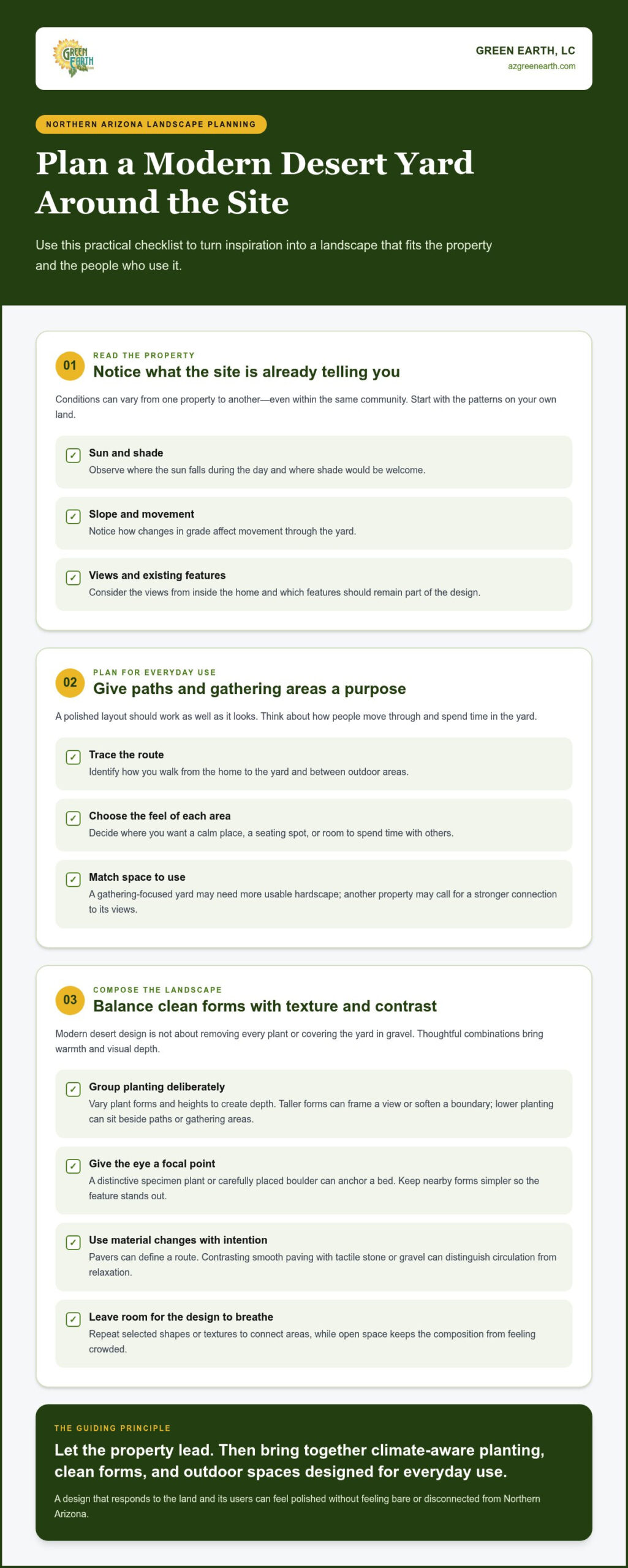
Before choosing a look, spend time observing the property. Notice where sun falls during the day, where shade is welcome, how the slope affects movement, and which existing features should remain part of the design. Pay attention to views from inside the home, too. Those observations help determine where planting, paths, and gathering areas will make sense.
Think about circulation as well as appearance. Where do you walk from the house to the yard? Which areas should feel calm, and where would you like to sit or spend time with others? Answering these questions helps turn inspiration into practical choices instead of a direct copy of a photo. For broader guidance on shaping a landscape around local conditions, explore the Northern Arizona desert landscape design guide.
The strongest modern desert landscaping ideas are tailored to the land and the people who use it. Begin with the property’s patterns, then choose forms, materials, and planting that support those needs. That approach can make a yard feel polished without making it feel bare or disconnected from Northern Arizona.
8 Modern Desert Landscaping Ideas That Combine Style and Function
The most useful modern desert landscaping ideas give every element a job as well as a visual purpose. These concepts can be adapted to different properties, with plant choices and placement guided by the site’s conditions and how you want to use the yard.
Layered textures enliven a desert yard by bringing contrast, depth, and visual warmth to a carefully composed space. Use that principle to build interest without crowding the layout.
- Group planting by form and height. Arrange suitable plants in deliberate clusters, varying their shapes and scale to create depth. Place taller forms where they can frame a view or soften a boundary, with lower planting beside paths or open gathering areas. Choosing plants for the specific site helps the composition feel at home rather than copied from a photograph.
- Choose one sculptural focal point. A distinctive specimen plant or carefully placed boulder can anchor a bed and give the eye a clear destination. Set it where it can be appreciated from a window, entrance, or seating area. Keep surrounding forms simpler so the feature stands out without making the yard feel busy.
- Define a route with pavers. A clear path makes movement between the home, patio, and other yard areas feel intentional. Pavers can establish a strong line through a planted space or create a direct connection to an entry. Green Earth’s pavers hardscape work can help make routes part of the overall landscape design.
- Contrast hardscape textures. Pair a smooth paved surface with a more tactile stone or gravel area to distinguish different zones. The visual change can signal a transition from circulation to relaxation without adding a physical barrier. Use contrasts selectively, repeating materials where you want separate spaces to feel connected.
- Add shade to a seating area. A shaded place to sit makes an outdoor space more inviting during sunny hours. Position seating where it supports the way you use the yard, such as near a view or close to the home. Integrate it with planting or a paved surface so it feels planned rather than placed as an afterthought.
- Create an outdoor room. Give dining, relaxing, or socializing areas a clear sense of place through their layout and materials. An outdoor kitchen or fire feature can serve as a focal point for gathering when it suits the household’s needs. Plan circulation around the area so people can move through the yard comfortably.
- Use a retaining wall to shape a slope. On a property with changes in grade, a retaining wall can define a level area and introduce a strong structural line. It can also create a boundary between a path, planting bed, and patio. Its placement should respond to the site’s grading and how the space will be used.
- Use lighting to guide attention. Carefully positioned outdoor lighting can help make paths and gathering areas easier to navigate after dusk, while highlighting a focal point or textured surface. Keep the arrangement intentional: emphasize key features rather than illuminating every corner equally.
These ideas work best when planting, hardscape, and outdoor use are planned together. Green Earth creates custom-tailored landscape designs that connect those elements; explore its Northern Arizona landscape design approach for inspiration shaped around your property.
Which Modern Desert Landscape Style Fits Your Property?
Modern desert landscaping isn’t limited to one look. Some homeowners prefer a quiet, open composition; others want more visible planting texture or a yard centered on outdoor living. These directions can also overlap. The best fit depends on your property’s conditions, available space, and how you want to use it, rather than a style label alone.
Minimal, textured, or outdoor-living focused?
Use this comparison to identify a starting point, not a rigid template. Each direction can be adjusted to suit the site, and selected features from different approaches can work together when the layout supports them.
| Direction | Appearance | Functional emphasis | Questions to consider |
|---|---|---|---|
| Restrained and minimal | Clear lines, a limited material palette, and open areas give the yard a calm, uncluttered feel. | Defined movement and usable open space take priority; planting and focal details are used selectively. | Do you value visual simplicity? Which areas need to stay open for access or everyday use? |
| Richly textured | Varied foliage forms, layered planting, and contrasting hardscape create a more expressive composition. | Planting beds and material transitions add character and help distinguish parts of the yard. | Would you enjoy more visual variety? What can the site support, and how much ongoing care suits your routine? |
| Outdoor-living focused | Patios, seating, and gathering areas become central features, with planting and paths shaping the spaces around them. | Comfortable circulation and areas for relaxing or socializing guide the layout. | Where would you gather? How should people move between the home and different outdoor areas? |
How to balance appearance, maintenance, and water use
A modern yard doesn’t have to be plant-free or difficult to maintain. The amount and placement of planting, the needs of the selected plants, and the irrigation plan all influence how the landscape is cared for. Material choices matter, too: paving can define a patio or route, while open planting areas create room for a softer, more varied look. No single combination suits every property.
Think of maintenance and water use as design considerations, not guaranteed outcomes. Sun exposure, slope, soil, plant selection, irrigation setup, and care practices can all affect how a landscape performs over time. A restrained design may still need attention, while a more richly planted yard can be planned around the conditions of its individual spaces. Your priorities can help determine where to simplify and where to add detail.
Hardscape can help establish the character and function of each area, from a defined walkway to a patio for gathering. To understand how pavers and other hardscape choices can shape a project, explore this hardscape construction guide for Cottonwood. The right modern desert landscaping ideas can blend styles, provided the choices work with the property and support the way you want to live outdoors.
How to Turn Desert Landscaping Inspiration Into a Practical Plan
Saved images can help clarify your preferences, but a photograph rarely shows the conditions that shaped the design. A practical plan starts with your property and the activities it needs to support. Use these five steps to sort inspiration into decisions you can act on, while keeping essential functions separate from decorative extras.
Five steps from saved images to a coherent design
- Identify what appeals to you. Review saved images and note specific details: straight or curved lines, planting patterns, material textures, focal points, or places to gather. Separate the individual features you like from the whole scene, so you can adapt the ideas instead of trying to reproduce a yard that may have very different conditions.
- Observe and map the property. Mark the home, existing paths and patios, changes in slope, and features you want to retain. Notice where sun and shade fall, which views you want to frame, and how people currently move through the yard. These observations help reveal opportunities and constraints before you choose materials or planting.
- Set priorities for how the yard should work. List essential needs first, such as a clear route to the entry, a place to sit, or space for outdoor dining. Then identify optional details, such as a decorative focal point or an additional material accent. This distinction helps keep visual extras from displacing everyday functions.
- Choose a design direction. Decide whether the overall feel should be restrained, richly textured, or centered on outdoor living. Use that direction to guide your choices, then select a few complementary features from your inspiration. A consistent palette and repeated forms can help separate areas feel connected.
- Coordinate planting, irrigation, and hardscape. Treat these as related parts of the layout, not separate decisions made at different times. Plant choices should suit the conditions in their intended locations, while irrigation planning should account for the planting layout. Paths and patios should connect naturally to the home and gathering areas.
Plan for slope, runoff, and movement
Pay close attention to how the property’s grade affects the design. Slope and runoff can influence where paths, patios, planting areas, or retaining walls make sense. A route that looks appealing on a plan still needs to work with the site’s movement and drainage patterns. Green Earth’s Arizona drainage grading guide offers more context on considering grading as part of landscape planning.
There isn’t one regional formula for every yard. Site conditions, intended use, plant selection, and material choices all shape the final plan, including its maintenance needs and water use. Thoughtful modern desert landscaping ideas begin with those specifics, then use inspiration to refine the design.
Green Earth brings planting, hardscape, drainage, and outdoor use together through custom-tailored landscape design. Plan a landscape design for your property with a team rooted in Northern Arizona.
Bringing Modern Desert Landscaping Ideas Together With Green Earth
A cohesive landscape takes more than selecting attractive plants or paving. Planting, hardscape, drainage, irrigation, and outdoor living features need to be considered in relation to one another and to the property. Green Earth, LC brings these elements together through custom-tailored designs for Northern Arizona homes, helping translate a homeowner’s priorities into a landscape concept shaped around the site.
A custom design-build approach for Northern Arizona
Each property calls for its own response. A sloped area may make grading and a retaining wall important to the layout, while a patio plan may need to account for paths, planting areas, and how people move between the home and outdoor gathering spaces. Pavers, irrigation, and drainage also have roles beyond appearance: their placement should support the way the landscape is intended to function.
Green Earth’s integrated design-build process is managed by a single team, connecting design decisions with construction. That coordination can help keep the project’s parts aligned as the plan takes shape. Designs are tailored to the property rather than drawn from a standard template, so the selected forms, materials, and outdoor features can respond to the site and the people who use it.
Local experience informs that work. Green Earth has served Northern Arizona for 47 years and emphasizes eco-friendly practices and environmental responsibility. The company was runner-up in Green Living Magazine’s Best of AZ competition for Best Sustainable Landscape Designer. These details reflect its local roots and commitment to thoughtful landscape work, without suggesting that one design approach fits every yard.
Explore a landscape concept for your property
As you refine your modern desert landscaping ideas, bring together the practical requirements and the visual qualities that matter most to you. Consider which areas need a clear route, where gathering should happen, and how planting and hardscape can support those uses. A property-specific design can then connect those priorities into a coherent plan, with construction elements considered alongside the landscape rather than as separate additions.
Green Earth works in Sedona and other Northern Arizona communities, including Cottonwood, Camp Verde, Clarkdale, Village of Oak Creek, Rimrock, Prescott/Prescott Valley, and Flagstaff. If you’re ready to explore how a custom landscape concept could respond to your property, visit Green Earth’s website to learn more about its design and construction work.
Take the First Step Toward a Yard That Feels Like Yours
A landscape project doesn’t need to begin with a fully formed design. Start by deciding what you want your yard to make possible, whether that’s a comfortable place to gather, a more defined route through the property, or a setting that feels connected to its surroundings. Those priorities can become a clear starting point for shaping modern desert landscaping ideas around your home.
Green Earth’s custom design and construction work brings property needs and personal preferences into the planning process. The company is rated 4.5 stars based on 41 reviews, reflecting feedback from customers who have worked with the team. A conversation about your goals can help turn inspiration into a landscape concept tailored to your property and how you want to use it.
Explore Green Earth’s custom landscape design and construction and take a thoughtful next step toward an outdoor space that feels functional, distinctive, and truly your own.
Frequently Asked Questions
What are modern desert landscaping ideas?
Modern desert landscaping ideas are ways to combine a clear layout, complementary materials, and planting chosen for the site. For example, a front yard might use a defined entry route and a small planted focal area, while a backyard could give more space to a patio and gathering zone. The style doesn’t require bare ground or uniform rock. It’s the deliberate relationship between features that gives the landscape a contemporary feel.
How do I make a desert landscape look modern?
Start by choosing a simple visual structure, such as a strong route from the entry or a clear edge between a patio and planting area. Then limit competing material colors and repeat a few shapes or textures to tie the view together. Before settling on details, look at the landscape from inside the home as well as outdoors. A design should feel composed from the places you regularly see it.
Can modern desert landscaping include lots of plants?
Yes, a modern landscape can be richly planted if the composition and site conditions support it. Rather than scattering plants evenly, consider how different areas function and whether their exposure and soil conditions suit the intended planting. A more planted corner can create a sense of enclosure beside a seating area, while an open section can preserve a view. Plant suitability varies across Northern Arizona, so avoid assuming one selection fits every part of a yard.
What materials work well in a modern desert landscape?
Pavers, gravel, stone, and retaining walls can all contribute, depending on the property and how each area will be used. Compare materials beside the home’s exterior and near the planting, not just as isolated samples. For instance, a path material should read clearly against its edges, while a patio surface should suit the way the space will be used. On sloped ground, grading and wall placement are important parts of the material plan.
Does modern desert landscaping have to be low maintenance?
No particular style guarantees a specific level of upkeep. Maintenance needs depend on the plants selected, the irrigation plan, the amount of planted area, and the care the landscape receives. Before choosing a design, decide what routine work feels manageable for your household. Ask that preference to shape choices from the beginning, including how much planting to include and how the irrigation system will be organized for those areas.
How can I make a desert yard feel welcoming rather than barren?
Give the yard clear signs of use and a sense of human scale. A comfortable place to pause near an entry, a path that leads naturally to the patio, or a focal detail visible from a window can make the space feel purposeful. Repeating a material or plant form in more than one area can also create continuity. Keep the arrangement connected to the home, rather than treating the yard as a separate scene.
Are modern desert landscaping ideas suitable for Northern Arizona?
Yes, the design approach can be adapted, but the choices should respond to the individual site. Sun, slope, existing vegetation, and intended use can vary between properties, so inspiration from another area may need adjustment. A yard in Sedona, Camp Verde, Cottonwood, Flagstaff, or Prescott still calls for site-specific planning. Use reference images to identify features you like, then assess how those features fit your own property.
Recent Comments