
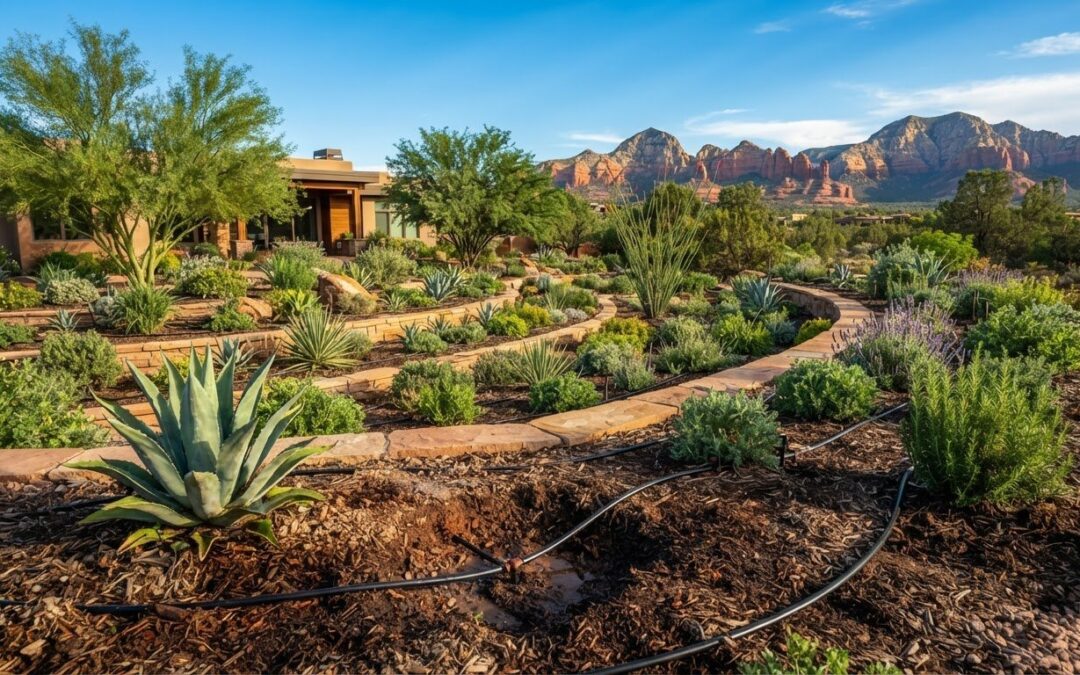
A successful drip system starts with the landscape, not the hardware. For drip irrigation system installation Cottonwood homeowners should first consider what’s growing, how planting areas differ, and where water needs to reach. A layout that suits established trees may not suit garden beds or new plantings.
It’s common to wonder whether drip irrigation fits existing plants or how to divide a property into zones. Planning around plant groupings, bed boundaries, and existing irrigation components helps direct water to the intended areas. Green Earth, LC brings 47 years of local experience to Irrigation Service, including installation and drip systems.
This guide explains what installation involves and which site details can shape the system plan. You’ll learn how planting areas influence zones, why existing irrigation equipment matters, and how your goals for the property can guide decisions. A landscape-specific plan gives you a clearer basis for choosing an approach for your Cottonwood property.
Key Takeaways
- Plan drip irrigation system installation Cottonwood around planting areas and landscape layout, not a one-size-fits-all design.
- Understand how landscape assessment, zone planning, installation, and an operation review fit into the project.
- Compare targeted drip delivery with sprinkler coverage for broader areas.
- Prepare notes about existing irrigation components, access, and areas with different watering needs.
- Learn how Green Earth, LC’s Irrigation Service and 47 years of local experience can support your Cottonwood project.
Why consider drip irrigation system installation in Cottonwood?
A landscape has distinct planting areas, and those areas may need water delivered in different ways. Drip irrigation carries water through distribution lines to selected planting areas instead of applying it across a broad surface. For planted beds and other defined areas, this targeted approach lets the system layout follow the plant locations.
For a Cottonwood property, start with the site: what is planted, how the beds are arranged, and what you want the landscape to support over time. Drip irrigation system installation Cottonwood projects should not rely on one universal layout. A system suited to one bed may not fit another area with different plants, spacing, or access. Assessing the property helps identify where drip lines make sense and where another watering approach may be more appropriate.
What does a drip irrigation system do?
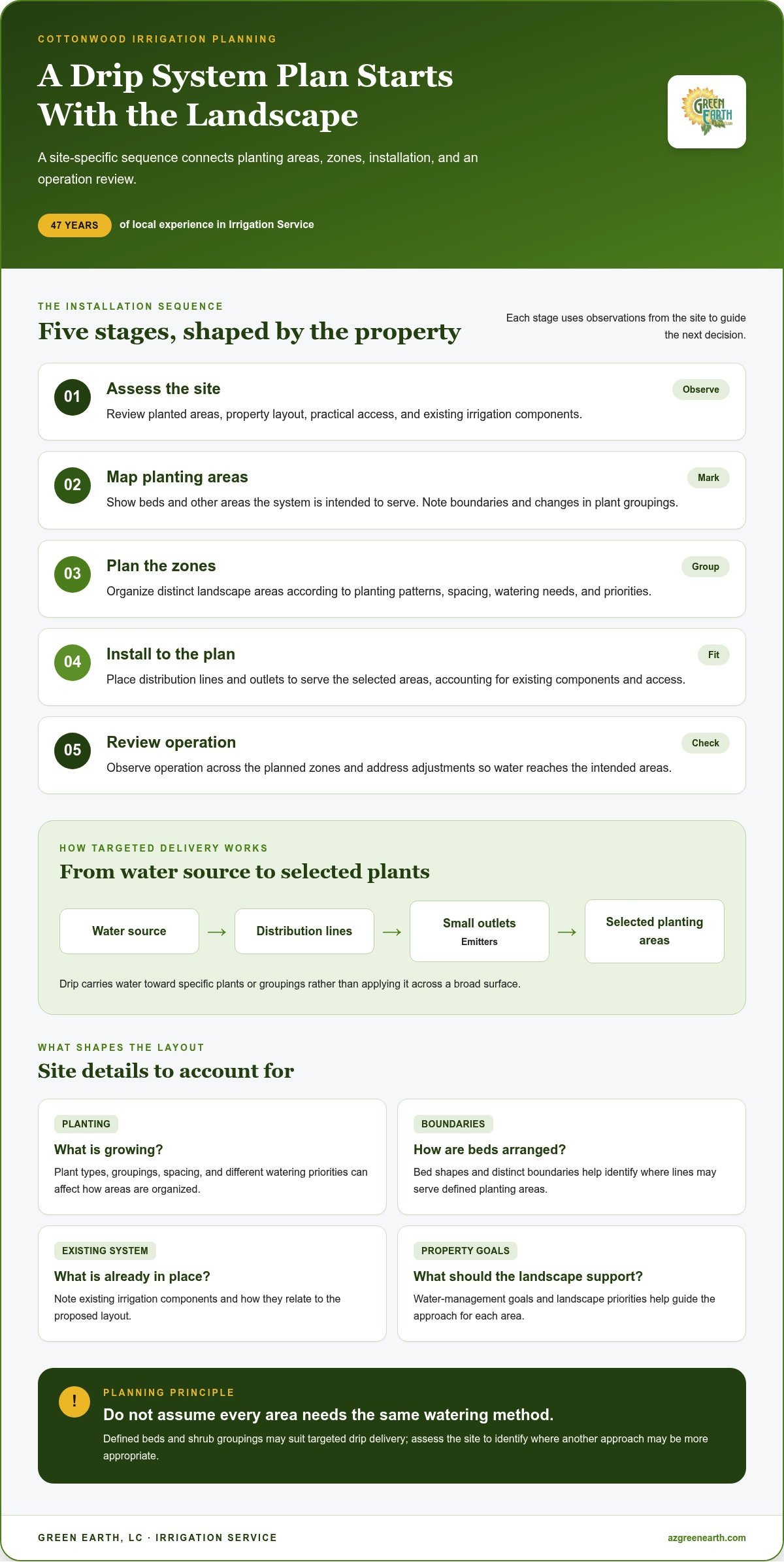
A drip system connects a water source to distribution lines that carry water toward selected planting areas. Small outlets called emitters release water at points along the lines. Instead of watering a broad area at once, the system directs delivery toward specific plants or groupings. The drip irrigation systems overview explains common components and how the method works.
Which Cottonwood landscape areas may suit drip irrigation?
Planted beds, shrub groupings, and other clearly defined areas are possibilities to consider, not an automatic fit for every plant. Different groupings may have different watering needs or spacing, so a landscape plan may divide them into separate zones. A zone is an area managed as a distinct part of the irrigation system.
Before choosing a layout, consider how planting areas relate to each other and to existing irrigation components. A site assessment can account for bed shapes, plant locations, and practical access for installation and maintenance. It can also help identify areas that may need different delivery methods, rather than extending drip lines across the property by default.
- Mark beds and shrub groupings with distinct boundaries.
- Note where plant types or spacing change from one area to another.
- Identify existing irrigation components and landscape priorities.
This site-first approach helps homeowners and property managers decide where targeted irrigation may fit. It also connects water-management goals to the actual planting design, rather than assuming every area should receive water in the same way. The result is a plan shaped around the landscape’s layout and purpose.
How is drip irrigation system installation planned for a Cottonwood property?
A thoughtful installation follows the landscape’s existing patterns instead of imposing a standard layout. For drip irrigation system installation Cottonwood, planning starts with understanding the site, then uses that information to map planting areas, organize zones, install the system, and review its operation. Each stage helps connect the design to the property and its water-management priorities.
A planned installation assesses the landscape, maps planting areas, organizes zones, installs the system, and reviews its operation. This sequence keeps design decisions grounded in the conditions on the property.
How does a site assessment shape the system?
The assessment considers planted areas, their arrangement, access, and existing irrigation components. It helps determine where lines could serve planting areas and how the property’s layout may affect installation. These observations shape a plan around the site rather than assumptions. They can also show how existing components relate to the proposed layout and which areas may need attention.
Mapping follows. A simple site plan can distinguish one bed from another, show changes in plant groupings, and flag areas with different watering priorities. This gives the installation plan a clear reference point and connects each proposed zone to a specific part of the landscape.
How are drip irrigation zones planned?
A zone is a distinct area organized within an irrigation plan. Grouping areas according to planting patterns and watering needs can make the layout easier to manage. For example, a planted bed could be planned separately from another landscape area rather than treating both as one continuous section. The actual divisions depend on the plants, layout, and water-management goals identified during assessment.
Installation then follows the site-specific layout. Distribution lines and outlets are placed to serve the selected planting areas, with existing irrigation components and access needs taken into account. Reviewing operation across the planned zones helps determine whether water is reaching the intended areas and whether adjustments are needed.
- Assess: Review planting areas, property layout, access, and existing irrigation components.
- Map: Mark the beds and other areas the system is intended to serve.
- Plan zones: Group landscape areas according to their planting patterns and priorities.
- Install: Place the system according to the site-specific plan.
- Review: Observe operation across the zones and address needed adjustments.
This methodical process helps avoid a one-size-fits-all design. Green Earth, LC provides Irrigation Service, including installation and drip systems, with plans shaped around the landscape. Learn more about Green Earth’s Irrigation Service and how it can support a system planned for your property.
Drip vs Sprinklers in Cottonwood: Comparing Options
Choosing between drip irrigation and sprinklers starts with the area you need to water. Drip systems direct water to selected planting areas through distribution lines and emitters. Sprinklers apply water across a broader zone. Neither approach is automatically right for every part of a property. Let the plants, layout, and desired coverage guide the decision.
Use this comparison as a starting point for evaluating landscape areas, then consider how the choices fit into a site-specific plan.
| Landscape area | Water-delivery approach | Planning considerations |
|---|---|---|
| Defined planted beds | Drip can direct water to selected planting areas. | Consider bed boundaries, plant locations, and groupings. |
| Shrub groupings | Drip lines can serve selected plants or groupings. | Assess spacing and whether the grouping has distinct needs. |
| Broad lawn or planted area | Sprinklers cover a wider zone. | Consider the area’s size and the coverage the landscape requires. |
| Properties with varied areas | A mix of approaches may suit distinct zones. | Plan each area according to its planting and intended coverage. |
When may drip irrigation be the better fit?
Drip may suit a defined bed where plants are arranged in groups and targeted delivery fits the layout. It may also be appropriate for shrub areas with clear planting boundaries. The decision depends on plant locations, grouping, and the property’s water-management goals. For drip irrigation system installation Cottonwood, comparing the site’s different areas helps identify where drip may fit without assuming every bed is alike.
When should a property consider sprinkler irrigation?
A broad lawn or planted area may call for sprinklers when the goal is to cover a wider zone. Consider the area’s size and shape, along with the coverage its plants require. A defined bed and an open lawn have different layouts, so the same delivery method may not be practical for both.
Some properties have both kinds of landscape areas. For example, a lawn may need broad coverage while an adjacent bed contains distinct plant groupings. Planning those areas separately can make the irrigation design more responsive to each part of the landscape. The system should follow the planting plan, not force unlike areas into the same approach.
Before deciding, identify the area’s boundaries, the plants it contains, and whether the goal is targeted or broad coverage. Then consider how it connects to nearby zones and existing irrigation. This gives homeowners and property managers a clear framework for setting priorities and choosing an approach suited to the actual landscape.
What should you prepare before drip irrigation installation in Cottonwood?
A little preparation can make an irrigation site review more productive. Before drip irrigation system installation Cottonwood, identify the areas you want the system to serve, what irrigation is already in place, and what matters most for the landscape’s care. These details help shape a plan around your property rather than assumed conditions or a standard layout.
What information helps shape an installation plan?
Walk the property and note the areas you’d like included, such as planted beds or shrub groupings. Record any existing irrigation components you know about, along with concerns such as sections that don’t seem to serve their intended areas or places where the landscape has changed. You don’t need a technical drawing. Clear observations are a useful starting point for the site review.
Use this checklist to organize your notes:
- Planting areas: List beds, shrub groupings, and other areas you want considered for drip irrigation.
- Different watering approaches: Mark places that may need a distinct delivery method, such as a defined bed beside a broader lawn area.
- Existing irrigation: Note visible components, past changes, or concerns that could affect how a new plan relates to the current system.
- Access: Identify gates, narrow paths, or landscape features that may affect access to the work areas.
- Project priorities: Describe what you want to support, such as caring for established plantings, planning new beds, or improving water management across selected areas.
How can you plan around an existing landscape?
Existing plants, bed boundaries, paths, and other landscape features help define where irrigation lines may fit. Installation needs vary with site layout and project scope, so identify features you want preserved and areas that may change. This context helps connect the irrigation plan to the landscape’s current form and future goals.
It can also help to consider how irrigation fits into the broader landscape. Green Earth’s Northern Arizona desert landscape design guide offers related context for considering landscape choices as part of a cohesive property plan.
Bring your notes together before discussing the project. A simple sketch can show how planting areas relate to one another, while a written list can capture priorities that aren’t obvious from the layout alone. You don’t need to design the system yourself. The goal is to make the property’s needs and your priorities clear during planning.
Green Earth, LC provides Irrigation Service, including installation and drip systems, with plans tailored to the landscape. Discuss your Cottonwood irrigation project with Green Earth to take the next step toward a site-specific plan.
Green Earth Irrigation Service for drip system installation in Cottonwood
A drip irrigation project is one part of caring for a landscape over time. Green Earth, LC provides Irrigation Service in Cottonwood, including installation and drip systems, with a landscape-specific approach. The company brings 47 years of local experience to irrigation work, helping homeowners and property managers consider both installation and the ongoing needs of their system.
That broader perspective is useful when an installation relates to existing equipment, changing planting areas, or water-management goals. Irrigation audits and seasonal services can help owners understand and care for their systems beyond the initial project. The right scope depends on the property and its priorities.
What does Green Earth’s Irrigation Service cover?
Green Earth’s Irrigation Service includes installation, repair, drip systems, irrigation controller troubleshooting, and irrigation audits. Related services include water-management, winterization, startup, and seasonal maintenance. These offerings address different parts of irrigation care, from installation to seasonal transitions and troubleshooting.
- Installation and drip systems for irrigation projects shaped around the landscape.
- Irrigation drip system repair for system issues that need attention.
- Controller troubleshooting to address concerns with irrigation controls.
- Irrigation audits and water-management to support informed system care.
- Winterization, startup, and seasonal maintenance for recurring seasonal needs.
These services can be useful at different stages. An audit can help assess an existing irrigation setup, while installation focuses on creating a system for the property’s planting areas. Seasonal maintenance and water-management keep irrigation needs in view as conditions and landscape priorities change. Green Earth also provides professional irrigation repair in Flagstaff, extending its irrigation service to another Northern Arizona community. Green Earth serves Northern Arizona communities including Sedona, Cottonwood, Camp Verde, Clarkdale, Village of Oak Creek, Rimrock, Prescott/Prescott Valley, and Flagstaff.
How can Cottonwood customers take the next step?
Start with a clear description of the areas you want to irrigate, any concerns with the existing system, and the landscape goals guiding your project. These details help frame a useful conversation about drip irrigation system installation Cottonwood and how the work can fit the property. Green Earth serves Cottonwood and brings local experience to its Irrigation Service.
Call or text Green Earth, LC at (928) 634-4375. Business hours are Monday – Friday, 7 AM – 3:30 PM. To move forward, discuss your drip irrigation installation with Green Earth.
Shape an Irrigation Plan for the Landscape Ahead
Your landscape may change as plants mature, beds are refreshed, or outdoor priorities shift. Keep those future plans in mind as you consider drip irrigation system installation Cottonwood. Sharing what you want the property to become can help guide choices that suit its current planting areas while keeping long-term goals in view.
Before moving forward, gather a few notes about the parts of your landscape you want to support and any changes you’re considering. You don’t need a finished design. A clear sense of what matters most is a useful starting point for planning an irrigation system around your property.
Green Earth, LC provides Irrigation Service, including installation and drip systems, with plans tailored to the landscape. Plan your Cottonwood drip irrigation installation with Green Earth and take the next step toward an irrigation plan shaped around your goals.
Frequently Asked Questions
Is drip irrigation a good choice for a Cottonwood landscape?
Drip irrigation can suit selected parts of a Cottonwood landscape, but the planting plan should guide the choice. For example, a property with newly planted shrubs beside established beds may need those areas considered separately. With drip irrigation system installation Cottonwood, reviewing plant groupings and water-management priorities helps identify where drip may fit and where another approach may work better.
Can drip irrigation be installed in an existing landscape?
Yes. An existing landscape can be considered when planning a drip irrigation installation. The review can account for established plants, hardscape features, current irrigation components, and access to the areas involved. Note recent landscape changes or features you want considered during planning. The installation approach depends on the site and project scope, so don’t assume every existing feature will remain untouched or that work will involve no disruption.
Can drip irrigation and sprinklers be used on the same property?
Yes, a property may need more than one irrigation approach for different areas. For instance, an owner might assess a garden bed separately from a larger area intended for broad coverage. The layout and system design determine how those approaches can be organized together. Considering each area separately helps clarify the plan, while the actual arrangement should reflect the property rather than assumptions.
How often should a drip irrigation system be checked?
There isn’t one inspection interval that fits every drip system and landscape. Watch for visible changes, such as water not reaching an expected planting area, a noticeable leak, or an emitter that appears blocked. Seasonal transitions and landscape changes can also be prompts to review operation. Green Earth’s Irrigation Service includes audits and seasonal maintenance to support ongoing system care, though routine service does not guarantee that every issue will be prevented.
Does drip irrigation work for trees and shrubs?
Drip irrigation may be considered for trees and shrubs, depending on their placement and the overall landscape plan. A tree in an open area and shrubs grouped along a bed edge may call for different layouts. Note where plants are located and whether any have recently been added or moved. A site assessment can help determine how these areas fit into the design, rather than assuming one arrangement suits every plant.
What happens if a drip irrigation system has a leak or stops working?
Note where the problem appears and whether it seems limited to one planting area or affects more of the system. A visible leak, an emitter that isn’t delivering water, or a controller concern can point to different parts of the irrigation setup. Don’t assume the cause from one symptom alone. Green Earth’s Irrigation Service includes drip system repair and irrigation controller troubleshooting for these concerns.
Recent Comments