
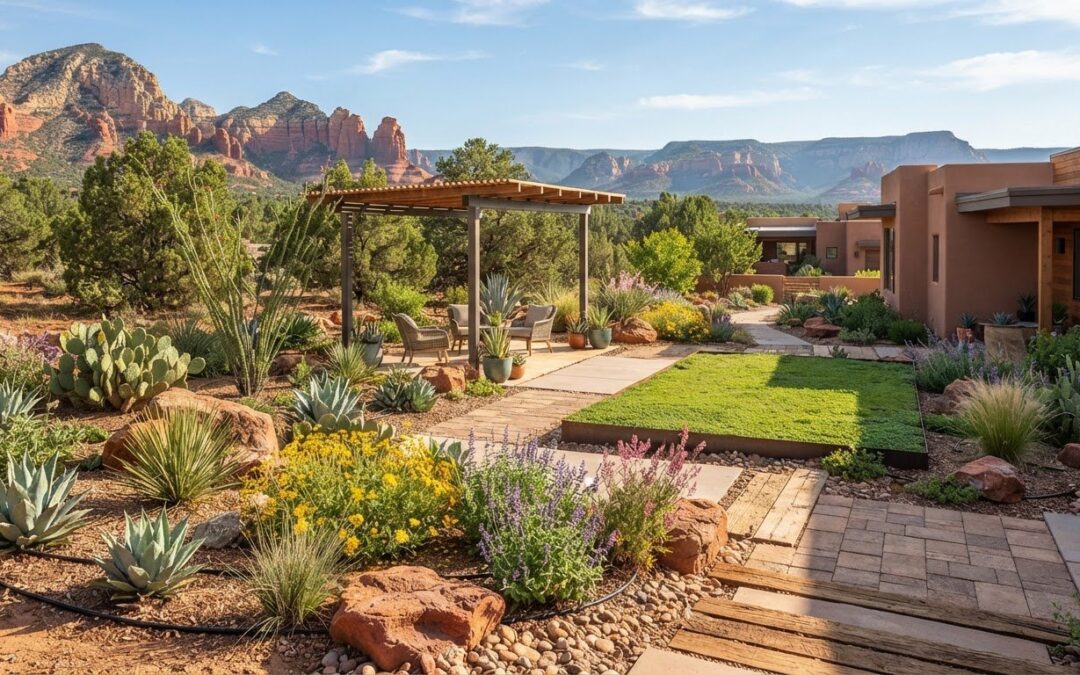
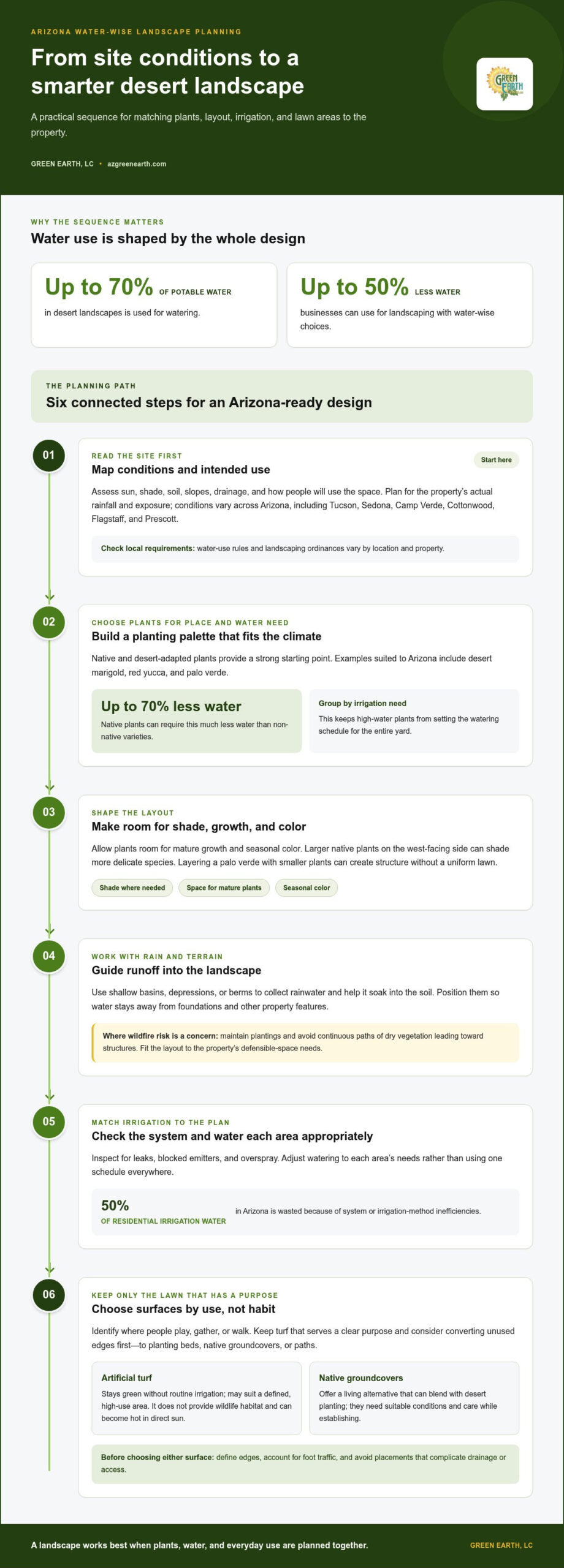
Up to 70% of potable water in desert landscapes is used for watering. Eco-friendly landscape design in Arizona starts by grouping plants with similar water needs, choosing regionally suited species, and planning irrigation to limit waste. For businesses, these choices can reduce landscaping water use by up to 50% while keeping outdoor spaces attractive and functional.
Eco friendly landscape design Arizona homeowners and businesses can use doesn’t mean giving up shade, seasonal color, or useful lawn areas. The key is to fit the design to Arizona’s climate and how people use the space, whether it’s a home garden or commercial property.
This guide explains where to begin, how plant selection and irrigation work together, and what to consider when managing desert lawns. It also covers reclaimed wood, recycled concrete, and permeable pavers, along with practical benefits sustainable landscaping can bring to Arizona businesses. Use these considerations to plan an outdoor space that balances appearance, everyday use, and responsible water management.
Key Takeaways
- Start with the site’s sun, shade, soil, and intended use, then group plants with similar water needs to shape a practical desert-adapted design.
- Decide whether lawn areas serve a clear purpose; thoughtful care or selective removal can make room for lower-water planting and usable outdoor space.
- Consider reclaimed wood, recycled concrete, and permeable pavers for landscape features that support resource-conscious design.
- For business landscapes, connect water-wise planting and irrigation choices with the property’s appearance, daily use, and long-term maintenance needs.
- When an HOA or commercial property needs ongoing landscape care or drip-system repair, Green Earth, LC offers services suited to those needs.
Creating a Sustainable Landscaping Design: Where Should You Start?
Start by assessing sun, soil, slopes, drainage, and how the space will be used. Then match plants, hardscape, and irrigation to the site. Xeriscaping and locally suitable plants can help reduce water demand while keeping outdoor areas functional.
Xeriscaping With Native Plants
Xeriscaping is a design approach that reduces landscape water needs through suitable plants, efficient irrigation, and careful layout. In Arizona’s desert climate, native and desert-adapted species provide a strong starting point because native plants can require up to 70% less water than non-native varieties.
Desert marigold, red yucca, and palo verde are examples suited to Arizona. Group plants with similar water needs, and allow room for mature growth and seasonal color. A restrained planting scheme can pair these forms with geometric patios and walkways, creating clean lines without relying on expansive lawns.
Low-Water Plant Selection
Choose plants suited to the local climate, then group them according to irrigation needs. This prevents high-water plants from setting the watering schedule for the entire yard, while leaving room for shade, flowers, or food plants where site conditions support them.
Arizona has six Active Management Areas, or AMAs, with management plans that reference low-water-use plant lists. Those lists apply to landscaping in medians and public rights-of-way irrigated with any amount of groundwater, among other situations specified in AMA plans. Desert marigold, red yucca, and palo verde are native examples, but suitable choices still depend on the specific site.
Local Rules and Climate Differences
Arizona water-use requirements and local landscaping ordinances vary by location and property. State low-water-use plant lists apply to specified situations, including certain medians and public rights-of-way using groundwater. Homeowners should also account for the requirements that apply to their city or community.
Plant recommendations vary with local climate and site conditions. Tucson has long periods of arid heat punctuated by monsoon rains, while Sedona, Camp Verde, Cottonwood, Flagstaff, and Prescott each have their own conditions. Choose plants and plan drainage and irrigation for the property’s rainfall, exposure, and soil rather than assuming one planting palette suits all of Arizona.
Managing Heat, Erosion, and Wildfire Risk
To reduce heat around a home, consider placing larger native plants on the west-facing side, where shade can protect more delicate species. A palo verde can anchor the planting plan, with smaller plants beneath it creating layers without requiring a uniform lawn.
To manage runoff and erosion, use shallow basins, depressions, or berms to collect rainwater and help it soak into the soil. Position them to keep water away from foundations and other property features. Where wildfire risk is a concern, maintain plantings and avoid continuous paths of dry vegetation leading toward structures. Fit the layout to the property’s defensible-space needs.
Desert lawn care and lawn removal
A lawn’s purpose matters as much as its irrigation demand. In Sedona, Camp Verde, Cottonwood, Flagstaff, and Prescott, consider how residents use each grass area before deciding whether to maintain it, remove part of it, or choose another surface.
Replacing Desert Lawns
Replacing a desert lawn means converting some or all turf into planting beds, paths, or other useful outdoor areas. Removing grass that serves no clear purpose can make room for a landscape better suited to local rainfall and site conditions.
First, identify which parts of the lawn residents use for play, pets, or seating. Keep turf that serves a clear purpose, and consider converting unused edges first. This gradual approach can make room for native groundcovers, planting beds, or paths without removing every green area at once.
Desert Botanical Garden classes can help residents learn about desert plants and landscape choices. Apply what you learn by considering the property’s sun exposure, soil, and intended use. A design inspired by the surrounding desert can combine natural-looking planting with defined spaces for walking and gathering.
Artificial Turf and Native Groundcovers
Artificial turf provides a consistently green surface without routine irrigation, while native groundcovers offer a living alternative that can blend with nearby desert planting. Turf may suit a defined, high-use area, but it doesn’t provide wildlife habitat and can become hot in direct sun. Groundcovers can create a more natural appearance, though they need suitable conditions and care while establishing.
Choose a surface based on how the area will be used. Turf may suit a small play zone, for example, while groundcovers can soften a path border. Plan for either option by defining edges, accounting for foot traffic, and avoiding locations where the surface could complicate drainage or access.
Water-wise lawn care also starts with the irrigation system. Residential irrigation systems in Arizona waste 50% of water because of system or irrigation-method inefficiencies. Inspect for leaks, blocked emitters, and overspray, then adjust watering to the needs of each area rather than using one schedule everywhere. These checks matter whether turf remains or the yard is being converted.
The rebates described for Arizona support rainwater harvesting and gray-water systems, not lawn removal itself. Consider whether these water-saving improvements could complement a turf conversion, such as by directing captured runoff toward planted areas.
For shared properties, consistent landscape care can help maintain usable grounds as lawn areas change. HOA landscape maintenance supports the ongoing care of common outdoor spaces.
Recycled and sustainable landscape materials
Material choices affect how an Arizona landscape looks, functions, and holds up to daily use. Reclaimed wood, recycled concrete, and permeable pavers can be used in paths, seating areas, and outdoor spaces. Each material is most useful when its characteristics match the intended role and the property’s layout.
Choose Materials for Their Use
Match each material to its purpose. Reclaimed wood can form a seating edge or planter detail, while recycled concrete can create a path or define a planting area. Permeable pavers are an option for surfaces where water needs to pass through. Consider use, exposure, and upkeep together to conserve resources and avoid decorative features that don’t serve the site.
For example, a Cottonwood courtyard could use recycled concrete for a defined walkway and reclaimed wood for a small seating border. Choose materials suited to outdoor exposure and the intended use. To keep the look cohesive, repeat a few finishes across paths and gathering areas instead of introducing a different material at every turn.
Design for Lower Maintenance
Low-maintenance landscaping comes from coordinating materials, planting, and site use, not simply choosing one durable surface. A path that follows a natural route can reduce trampling in planting beds. Defined seating can concentrate foot traffic, while permeable paving can complement areas designed to absorb rainwater.
Plan edges and transitions carefully. A clear boundary where recycled concrete meets gravel or planting helps keep each surface in place during routine care. Use reclaimed wood where its appearance and maintenance needs suit the setting. These choices can reduce unnecessary repairs and help the design remain functional as plants mature.
Apply Sustainable Design Principles
A sustainable layout considers how people move, where water flows, and which features need durable materials. In a Sedona yard, that could mean connecting an entry path to a patio with permeable pavers. Recycled concrete could define a clear route between seating and planted areas in a shared courtyard.
Keep the material plan focused. Choose finishes that work with the architecture and surrounding landscape, then repeat them where practical for visual continuity. Pair hardscape with planting suited to the site, and leave enough room for plants to grow without covering paths or obstructing access.
Plan for Commercial Landscapes
Commercial landscape design needs to account for foot traffic, clear access, and a consistent appearance across public areas. Permeable pavers can suit walkways or gathering spaces, recycled concrete can provide a defined surface, and reclaimed wood can add a natural detail to seating zones.
Before choosing finishes, map entrances, walking routes, and places where visitors pause. This helps direct materials to areas where they have a purpose. For HOA and commercial properties, include paths, edges, and seating features in planned maintenance alongside planting care. A coherent palette can help keep the landscape orderly without adding unnecessary complexity.
Benefits of eco-friendly landscaping for Arizona businesses
For Arizona businesses, sustainable landscaping connects water conservation with a property’s daily performance. Non-residential landscapes, including parks, golf courses, sports fields, and resorts, use millions of gallons of water annually, so design choices can have an impact across large outdoor sites.
Manage Water Use and Operating Needs
Businesses can reduce landscaping water use by up to 50% by adopting eco-friendly solutions. Water-efficient irrigation systems can also save businesses up to 40% on water bills. These figures point to two related opportunities: reduce demand through suitable planting, then deliver water where and when the landscape needs it.
For a Sedona office property, assess planting areas, irrigation coverage, and unused lawn separately. Drip irrigation and weather-based controllers are options for efficient watering. Reviewing controller settings and fixing leaks can help avoid watering pathways or running systems during unsuitable weather. The plant mix and irrigation design determine how these measures work together.
Support a Distinctive, Useful Property
Native plants can give a business landscape a stronger connection to its Arizona setting while providing habitat for local wildlife, including birds and pollinators. A pollinator-friendly garden can bring seasonal interest to an entrance or courtyard. A well-designed pollinator garden could increase foot traffic by as much as 20%, making it a potential part of a welcoming customer experience.
Good planting design takes more than adding flowers. Place plants where visitors can notice them without blocking entrances, accessible routes, or signs. Choose flowering species with staggered bloom times to maintain visual interest through different seasons. A Sedona business might use a planted courtyard as a calmer waiting area, while a retail property could highlight a pollinator bed near its main walkway.
Consider Cost by Project Scope
The cost of eco-friendly landscaping in Arizona per square foot depends on project scope, site preparation, plant choices, irrigation needs, and materials. A reliable price is provided after a quote request, since converting a small planting bed differs from redesigning an entire commercial property.
To define the project, identify priority areas, current water challenges, and the features the landscape needs to support. A property might prioritize shade near seating, lower-water planting around its perimeter, or improved irrigation around existing beds. These requirements shape the design and work involved, so a per-square-foot figure alone doesn’t describe the full project.
For business owners, assess landscape performance alongside appearance. Track where irrigation is used, note which outdoor areas support customer or employee activity, and identify plantings that contribute habitat. These observations help direct sustainable improvements toward water conservation, a stronger visitor experience, and a more purposeful landscape.
What are the principles of eco-friendly landscape design in Arizona?
Arizona landscape design works best when plants, irrigation, shade, and drainage respond to local conditions. A practical plan connects these elements so water reaches planting areas, rainfall can soak in, and outdoor spaces remain useful.
Start with irrigation. Drip systems deliver water near plant roots, while weather-based controllers can adjust schedules to weather conditions. Soil moisture can also guide watering decisions. In an existing yard, inspect emitters and controller settings, then correct overspray onto paving or areas without plants. Watering between sundown and sunrise can reduce evaporation, and adjusting frequency for seasonal weather avoids a fixed schedule that ignores changing conditions.
Plant placement matters, too. Larger native plants on the west side can shade more delicate species from afternoon sun. Water trees near their drip line rather than against the trunk to direct moisture toward the root area. In a courtyard, shade trees beside seating and smaller plants nearby can make the space more comfortable without shading every bed equally.
Rainwater can be part of the irrigation plan. Arizona homeowners can capture roof runoff in rain barrels and reuse it for landscape watering. At ground level, depressions, berms, and basins can slow runoff and help water infiltrate the soil. Position these features to direct water toward planting areas, not foundations or other property features.
Gray water is another possible landscape resource. In Arizona, it is wastewater collected separately from sewage from a clothes washer, bathtub, shower, or sink, excluding kitchen sinks, dishwashers, and toilets. For landscape irrigation, it must be applied so it doesn’t run off the user’s property. Directing it into suitable planted areas helps manage runoff.
A Tucson yard designed to absorb rainfall shows how grading and planting can work together. Rather than allowing water to pool or flood, the layout directs it into the soil. The same principle can inform a home garden, shared property, or commercial landscape: observe where water naturally travels, then use planting areas and landform to guide it.
- Use drip irrigation and weather-based controllers to match water delivery to site conditions.
- Adjust schedules with seasonal weather and soil moisture.
- Capture roof runoff and guide it into planted areas with suitable grading.
- Place larger native plants west of more fragile species for afternoon shade.
For a property with changing irrigation or landscape needs, plan your landscape maintenance around plant health, water delivery, and seasonal conditions.
Green Earth, LC: HOA Landscape Maintenance
Green Earth, LC provides landscape maintenance for HOA and commercial properties where irrigation performance, plant health, and a consistent appearance matter. Turn to its landscape maintenance for ongoing care of shared grounds, or for irrigation drip system repair to support more effective water delivery.
When fire-conscious upkeep is a priority, Green Earth, LC’s Firewise Defensible Space service can address landscape conditions around the property. The company also provides irrigation controller troubleshooting when schedules or system operation need attention. These services support the practical care of outdoor spaces as water-wise design choices are put into use.
Contact Green Earth, LC to discuss landscape maintenance, irrigation, or defensible-space needs for your property.
Shape a Landscape That Works for the Years Ahead
Eco-friendly landscape design in Arizona works best when choices fit how people use and care for a property. Set a clear priority for your next step, such as improving a shared outdoor area, making commercial grounds easier to maintain, or addressing defensible space. A focused goal turns broad sustainability aims into practical decisions suited to your site.
Green Earth, LC provides HOA Landscape Maintenance, Commercial Landscape Maintenance, and Firewise Defensible Space. These services help property owners and communities care for outdoor areas as needs evolve, while keeping function and environmental responsibility in view.
Start by identifying the area that needs attention and the outcome that matters most to you. Then take the next step with a team whose work connects landscape care and local conditions. Contact Green Earth, LC to get started, and move toward an outdoor space that serves your property with care.
Frequently Asked Questions
Does Eco-Friendly Landscaping Require Considerable Maintenance?
Water-wise landscapes often need less routine irrigation and mowing, but still require regular observation. While new plants establish, check for stress, remove weeds before they seed, and inspect emitters for blockages. Later, prune when needed, clear dry debris, and adjust watering after seasonal weather changes. Regular inspections help protect plant health without treating every part of the yard the same way.
Why Switch to a Sustainable Landscape in Sedona, Flagstaff, and Northern Arizona?
A sustainable Northern Arizona landscape can make outdoor areas better suited to local temperature fluctuations, intense sun, and seasonal water conditions. Shade near a walkway or seating area can make the space more comfortable, while locally appropriate planting connects a property with its high-desert or mountain setting. Native plants can also provide habitat for birds and pollinators. For a property in Sedona, Cottonwood, Camp Verde, Flagstaff, or Prescott, a thoughtfully planted outdoor space can make arrival more pleasant and add visual interest beyond the building.
Which Native and Drought-Tolerant Plants Grow Best in Arizona Landscapes?
Desert marigold, red yucca, and palo verde are native examples suited to Arizona’s climate. The best fit for a particular yard depends on sun exposure, soil, elevation, and intended use. A sunny border may suit flowering plants, while a tree can provide shade near a gathering area. Grouping plants by water needs helps create areas with compatible care requirements.
How Much Water Can Xeriscaping Save in Arizona?
Xeriscaping can reduce water use in Arizona landscapes by up to 40%. The result depends on what the design replaces, the plants selected, and how irrigation is managed. Replacing thirsty turf with desert-adapted planting can change demand, but inefficient emitters or overspray can still waste water. Compare the yard’s current watering patterns with the needs of its new planting areas to understand where savings can come from.
How Should Arizona Landscapes Use Rainwater Harvesting, Swales, and Permeable Surfaces?
Direct rainwater toward planted areas where it can soak into the soil, rather than letting it pool or flow toward structures. Roof runoff can be collected in rain barrels for irrigation, while shallow swales or basins can slow water across a site. Permeable pavers allow water to pass through paved areas. Match the layout to the property’s slope and drainage patterns so runoff is managed without being redirected onto neighboring areas.
Which Irrigation Systems Are Most Efficient for Arizona Landscapes, and What Do They Cost?
Drip irrigation and weather-based controllers are water-efficient options for Arizona landscapes. Drip systems deliver water near plant roots, while controllers can help align schedules with weather. Costs depend on coverage, site conditions, system components, and whether the work involves repair or a new system; a project price is provided after a quote request. Inspect emitters and controller settings regularly to catch leaks, overspray, or schedules that no longer suit the planting.
What Are the Steps to Plan and Maintain a Sustainable Arizona Landscape?
Begin by noting how each outdoor area is used, where sun and shade fall, and where rainwater flows. Choose plants suited to those conditions and group them by watering needs. Plan irrigation around those groups, then choose paths and surfaces that support movement through the yard. After planting, regularly inspect plant health, irrigation performance, and drainage, adjusting care as seasonal conditions and landscape use change.
What rebates or incentives are available for Arizona homeowners replacing grass with desert landscaping?
The rebates described support rainwater harvesting and gray-water systems, not lawn removal itself. Homeowners can consider these water-saving improvements alongside a turf conversion.
Recent Comments