
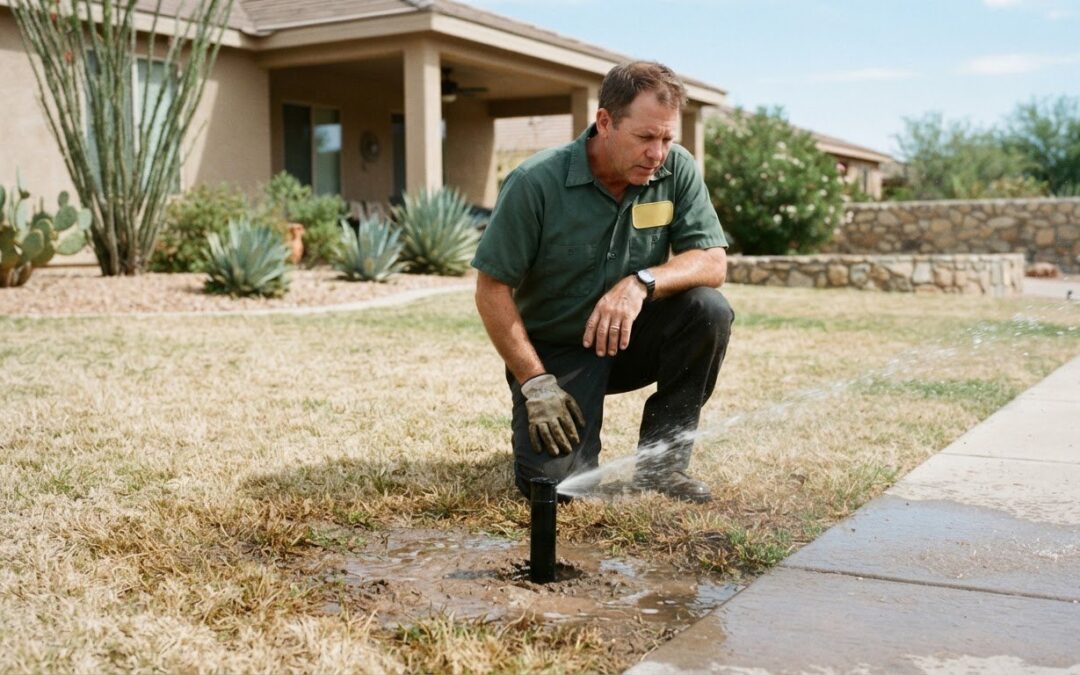
A broken irrigation system is easier to fix when you identify the source first, whether it’s a leak, damaged sprinkler head, or controller issue. For an irrigation system check up near me, run each zone and watch for weak or sputtering spray, uneven coverage, pooling water, or heads aimed at sidewalks. These signs help pinpoint what needs attention before you adjust settings or replace a part.
It’s frustrating to find a dry patch beside soggy ground, especially when the sprinklers seem to run on schedule. If you’re looking for an irrigation system check up near me, this guide explains how to inspect sprinkler heads, review controller settings, spot clues to leaks, and decide when professional troubleshooting may help. Use these steps to narrow down the likely problem and choose a practical next step for healthier landscaping and more efficient watering.
Key Takeaways
- Run sprinkler zones one at a time and note weak spray, misaligned heads, or uneven coverage to narrow down likely trouble spots.
- Review the controller’s clock, schedule, and zone settings when watering doesn’t match what the landscape needs.
- Use soggy patches and unexpected changes in water use as clues that a leak may need attention.
- Recognize when a problem points beyond a simple adjustment and may call for irrigation drip system repair.
Sprinkler system symptoms that may need repair
Run each irrigation zone and watch how its sprinkler heads perform. Uneven coverage, pooling water, sputtering spray, or weak heads can signal a problem.
- Trace active zones by watching which heads operate together. Run one zone at a time, or use the controller’s test cycle, and note any heads that fail to spray or water the wrong area. Groups of four, five, or six heads often share a zone. Their pattern may suggest a buried line’s route, but it doesn’t confirm the pipe’s exact path.
-
Inspect sprinkler heads and nozzles
Watch each sprinkler head while its zone runs, and check whether the nozzle sprays evenly across the intended area. Note heads that are tilted, blocked, or aimed at pavement instead of planting beds. A head spraying a sidewalk may need a simple alignment adjustment. Record each issue’s location to distinguish an isolated head problem from zone-wide coverage trouble.
-
Check for broken or clogged heads
Look closely at sprinkler heads that sputter, fail to pop up, or leave a nearby dry patch. Broken or clogged heads are common irrigation problems. A visible crack, trapped debris, or interrupted spray may help identify the cause. Compare the affected head with others in the same zone. If several heads perform poorly, the problem may extend beyond one clogged nozzle.
-
Diagnose sprinkler pressure problems
Compare spray strength across heads operating in the same zone. Excessive pressure may create fine mist instead of a clear spray, while low pressure can reduce coverage or keep a sprinkler from popping up fully. Note whether the symptom affects one head or several. A single weak head suggests a local issue; a broader pattern may call for further system troubleshooting.
Controller power, clock, wiring, and seasonal schedules
A system checkup reviews controller settings and overall operation, while a sprinkler repair addresses a specific fault, such as a damaged component. Check the system before the watering season and again halfway through it to catch issues as conditions change.
-
Check controller power and settings
Start at the controller and confirm its display is on and readable. Review the active program, zone run times, and scheduled start times. An unnecessary start or excessive run time can waste water. If the controller uses a backup battery, replace it annually. Note a blank display or settings that won’t save, as these symptoms may point to a power or controller issue.
-
Review clock, wiring, and seasonal schedules
Check that the controller clock shows the correct time, then compare the schedule with the current season and landscape needs. Run a zone test cycle for about three minutes to observe operation and note any repairs. Controller wires can help locate valves, but they don’t show the full route of every buried sprinkler pipe. Don’t treat wire locations as a complete pipe map.
-
Identify controller and zone definitions
Read the controller’s zone labels and match each one to the area it operates. A zone is a group of sprinklers activated together, while the controller sets when and how long that group runs. Mismatched labels can complicate troubleshooting, so record which areas respond to each setting. If labels conflict with what you observe, include that detail in your repair notes.
- Contact an irrigation contractor when power or wiring problems persist, several zones fail, or settings don’t explain the symptoms. Complicated electrical or plumbing repairs can cause further damage if handled incorrectly. For controller issues that need technical troubleshooting, irrigation controller troubleshooting can help identify the next repair step.
Monitoring soggy lawn areas and water bills
Use wet patches and monthly water use as clues, then compare them with the controller schedule. Local watering rules vary by municipality, so follow your city’s permitted watering days and times rather than another city’s calendar.
-
Track soggy lawn areas and water use
Walk the landscape after a watering cycle and note any spots that stay soggy. A persistent wet patch may indicate an irrigation leak, especially if nearby areas remain dry. Compare this month’s water bill with the previous month or the same period last year. A sudden increase can also point to a leak. No single monthly-use threshold proves a system is faulty, so look for a change from the property’s usual pattern.
-
Review watering days and times
Open the controller schedule and compare each start time with your municipality’s current watering rules. Confirm watering occurs only on permitted days and times, then check each zone’s run time. Early morning or evening watering can reduce water lost to evaporation. If a zone runs during a restricted time, adjust its schedule rather than adding extra cycles to compensate for dry areas.
-
Conserve water and lower bills
Match irrigation to the landscape’s needs instead of relying on unnecessary start times or lengthy cycles. These settings can contribute to water waste, so review them when a bill rises. If one area stays wet while another dries out, don’t extend every zone’s run time. Record the affected areas and schedule details to help distinguish a timing issue from a possible leak or coverage problem.

How do you fix a broken irrigation system?
First locate the fault, then inspect the related valve, sensor, filter, or controller. Before an inspection, make affected areas accessible and note the symptoms and schedule details.
-
Prepare for an irrigation inspection
Clear access to valve boxes and the controller before testing begins. Note which areas stay wet or dry, when symptoms appear, and any recent schedule changes. During a residential inspection, each irrigation station can be run to measure flow and calculate water use under the current schedule. These details help connect observed symptoms with system operation.
-
Inspect valves, sensors, and components
Run the affected station and observe whether its valve opens and closes as expected. Open irrigation valves slowly to help prevent damaging pressure surges. Check rain or freeze sensors, which can stop automatic watering during rain or freezing temperatures. Sensors need a clear, open location away from overhanging branches and vegetation to respond properly.
-
Inspect and clean the filter
Inspect the irrigation filter for debris that could restrict flow, then clean it according to the system’s design. Check the filter screen element and replace it if needed. After cleaning, run the affected station and see whether flow and spray pattern improve. If operation remains weak, another component may be the cause.
-
Conduct a routine residential inspection
Schedule a system inspection once each year to identify leaks, clogs, broken heads, and spray patterns that need adjustment. A homeowner can often replace a sprinkler head, but complicated electrical or plumbing repairs call for professional troubleshooting to avoid further damage. For a drip-line fault or persistent system issue, arrange irrigation drip system repair to address the affected components.
Green Earth, LC: Irrigation Drip System Repair
Green Earth, LC provides irrigation drip system repair for leaking drip lines, clogged emitters that disrupt watering, and damaged components. If basic checks haven’t resolved uneven delivery, describe the affected landscape areas and symptoms you observed. These details help focus troubleshooting on the part of the system that needs repair.
A persistent controller fault may call for controller troubleshooting rather than a drip-line repair. For shared properties, HOA Landscape Maintenance and Commercial Landscape Maintenance address broader landscape care, while Firewise Defensible Space meets a different need. Choose the next step based on the problem you found, not simply because sprinklers are involved.
Contact Green Earth, LC to discuss an irrigation drip system repair.
Keep Your Landscape Ready for the Season Ahead
Use the symptoms you’ve observed to choose a practical next step. If a controller issue or drip-line fault remains after basic checks, an irrigation system check-up near you can focus attention on the system and its effect on the landscape. Clear notes about affected areas and what you’ve already checked can make the discussion more useful.
Green Earth, LC also provides HOA Landscape Maintenance, Commercial Landscape Maintenance, and Firewise Defensible Space for properties with broader landscape needs. These services support different goals, from ongoing care for shared grounds to maintaining defensible space around a property.
Take the next step toward a well-maintained landscape by contacting Green Earth, LC to discuss your irrigation concerns. A thoughtful repair can help your landscape receive water where it’s needed and support a healthier outdoor space.
Frequently Asked Questions
What factors can impact the cost of irrigation repairs?
Repair cost depends on the problem and the work required to address it. A damaged sprinkler head, drip-system fault, and electronic controller issue involve different components and troubleshooting. The affected area and extent of the repair also shape the scope. Green Earth, LC provides pricing after a quote request, based on the specific repair needed.
What questions should I ask irrigation repair pros?
Ask which system component is causing the symptom, what repair is recommended, and whether the controller schedule needs adjustment afterward. Share when the problem occurs and which landscape areas are affected. For example, explain whether a drip line leaks continuously or only during a scheduled cycle. Clear observations help focus the diagnosis and make the proposed repair easier to understand.
When Is It Better to Call an Irrigation Professional?
Contact an irrigation professional for complicated electrical or plumbing faults, persistent leaks, or problems involving several system components. Tracing wiring or opening buried lines can be difficult without the right experience. If a basic head replacement doesn’t resolve the symptoms, stop before attempting deeper repairs that could damage connected irrigation parts.
Why Does Finding Sprinkler Lines Matter Before Yard Work?
Knowing where sprinkler lines run helps prevent damage when digging for fence posts or planting trees and large shrubs. Sprinkler-head patterns may suggest a pipe route, but they don’t prove its exact path. A metal detector won’t reliably locate plastic pipe, and a wire tracer follows electrical wire rather than mapping every water line. Get professional help before digging near suspected lines.
What does an irrigation system checkup include?
A thorough checkup records controller settings, takes a meter reading, and checks for leaks. Each irrigation station can be operated to assess flow and water use under the current schedule. The inspection also reviews the results and watering recommendations, then sets the controller to recommended settings. This gives you a clearer picture of system operation and adjustments that could improve performance.
How much does a sprinkler system inspection cost near me?
Inspection cost depends on the system’s condition, the areas to assess, and whether the visit identifies repairs beyond routine checks. A checkup focused on settings and leaks differs from work that also requires diagnosing a faulty controller or damaged components. Green Earth, LC provides pricing after a quote request, with the inspection scope and any required repairs shaping the quote.
Recent Comments