
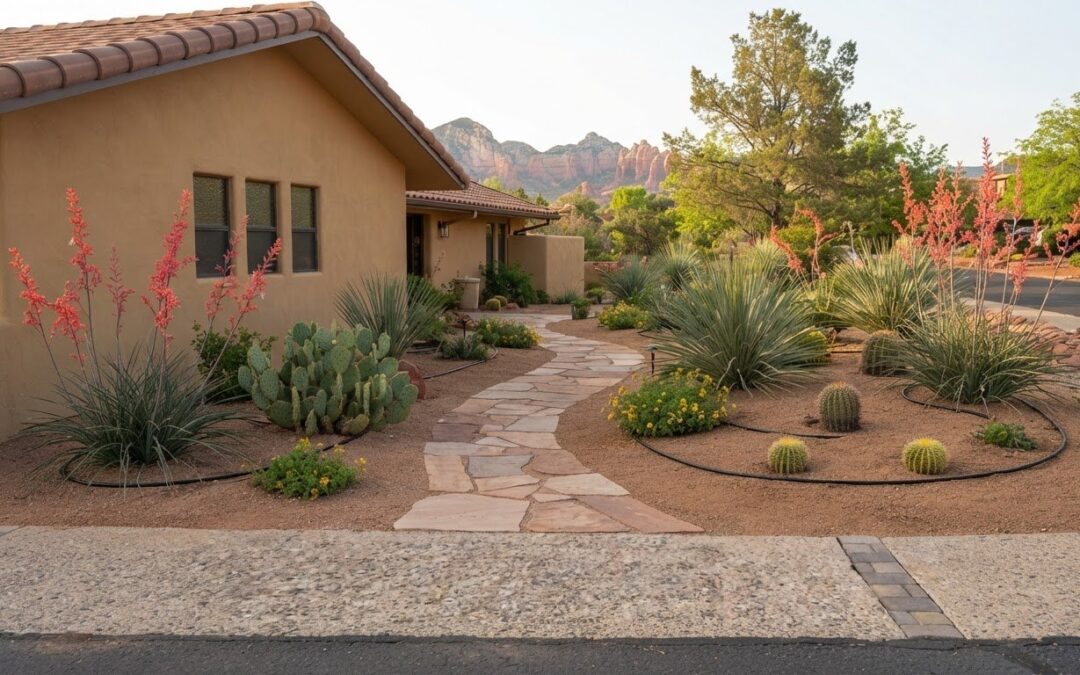
In the National Association of Realtors’ 2023 survey, 97% of real estate agents said curb appeal is important for attracting a buyer. If you’re preparing to list, focus first on landscaping ideas to increase property value that make the home look cared for and the outdoor space easy to use. You don’t need to redesign every corner to make a stronger first impression.
It’s reasonable to wonder whether landscaping work is worth doing before a sale. In the same survey, 92% of agents recommended that sellers improve curb appeal before listing, so targeted upkeep and thoughtful improvements can be a practical place to start.
This guide explains which updates can refresh your front yard, create inviting outdoor living areas, and support lasting landscape health. You’ll also learn how to weigh visual impact against maintenance and avoid features that may not suit your plans before listing.
Key Takeaways
- Prioritize tidy lawn care and region-appropriate, low-maintenance plants to create a cared-for look without adding unnecessary upkeep.
- Choose outdoor living improvements that suit how you use the space, and weigh their appeal against the work involved.
- Strengthen the front yard’s first impression with clear, welcoming paths and well-kept planting beds.
- Preserve healthy mature trees where they fit the property, while considering placement and potential effects on the home.
1. Which Landscaping Mistakes Can Hurt Home Value and ROI?
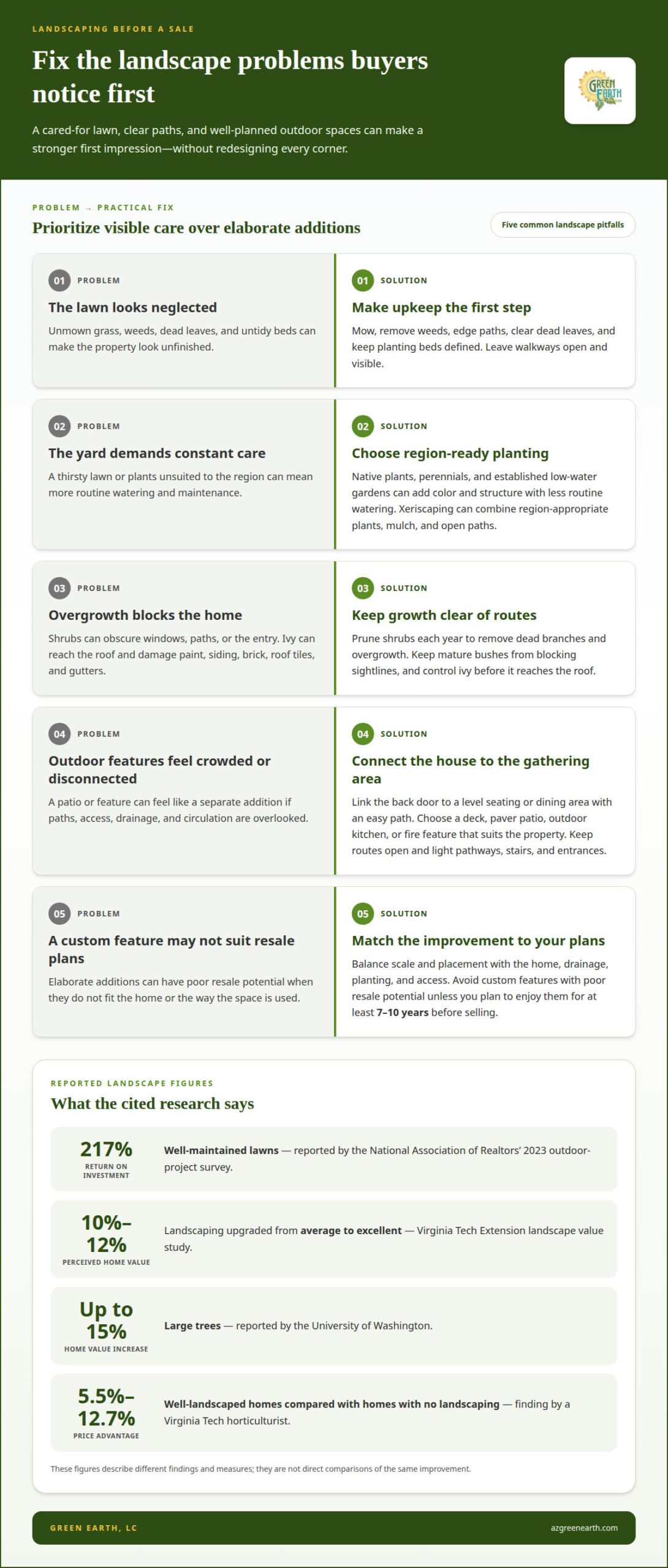
A neglected lawn can make a cared-for home look unfinished. Before listing, mow the grass, remove weeds, edge paths, and clear dead leaves. Keep backyard planting beds defined and walkways open. These landscaping ideas to increase property value start with visible upkeep, not elaborate additions. Avoid custom features with poor resale potential unless you plan to enjoy them for at least 7-10 years before selling.
Which low-maintenance plants and lawn alternatives appeal to home buyers? Native plants, perennial beds, and established low-water gardens can add color and structure with less routine watering. Xeriscaping can replace a thirsty lawn with region-appropriate plants, mulch, and open paths. When choosing landscaping ideas to increase property value, keep the layout orderly, with clear edges and purposeful groupings, so a lower-maintenance yard still looks intentional.
Plant choice affects upkeep over time. Native plants often need less maintenance because they thrive in their home region and generally require less watering. Suitable native choices can also reduce the need for pesticides and water. Perennials return each year with relatively little work.
Finish with practical care. Mulch helps retain moisture, limit evaporation, insulate soil, and keep root temperatures lower. Prune shrubs each year to remove dead branches and overgrowth, and keep mature bushes from blocking windows, paths, or the entry. Control ivy before it reaches the roof: vines can damage paint and siding, enter brick cracks, lift roof tiles, and pull gutters apart. These steps keep garden beds and lawn care manageable while preserving a maintained appearance.
2. Outdoor living spaces
A usable patio gives buyers a clear place to picture meals, conversation, and time outdoors. Start by connecting the back door to a level seating or dining area with an easy-to-follow path. Pavers can define the gathering space, while nearby flowers and shrubs soften its edges. Keep the layout open enough for people to move between the house, seating, and garden without weaving around obstacles.
Choose a feature that fits the property rather than filling every open area. A deck suits homes where an elevated platform connects naturally to the yard; a paver patio works well as a ground-level gathering area. An outdoor kitchen can make dining outside more practical, while a fire feature creates a focal point for seating. Keep the scale and placement in balance with the home, and leave room for comfortable circulation.
Outdoor lighting extends patio use after sunset and helps guests navigate pathways, stairs, and entrances. Plan illumination around those routes first, then add focused light near dining or seating areas. Avoid leaving a dark gap between the back door and the gathering space. Well-placed fixtures can also make the yard easier to see from inside the home, contributing to a more considered sense of security.
Before you install a new feature, consider how it will work with existing drainage, planting, and access. A well-planned outdoor living area feels connected to the house, not crowded by separate additions. Keep cooking and seating zones convenient to the door, and use shrubs or planting beds to frame the space without blocking its routes. Green Earth, LC offers outdoor kitchens and fire features for homeowners planning a more functional backyard gathering area.
3. Front-yard curb appeal
A clear, cared-for entrance gives buyers a strong first impression before they reach the front door. Start with a simple sequence: mow and edge the lawn, clear leaves from paths, remove dead growth, and tidy planting beds. Keep the walkway visible from the street and the entrance easy to approach. These practical steps make the yard look maintained without requiring a full redesign.
The National Association of Realtors reported a 217% return on investment for well-maintained lawns in its 2023 outdoor-project survey. That figure supports prioritizing lawn care before adding decorative features. Healthy grass, crisp edges, and repaired bare spots create a consistent frame for the home. If the lawn struggles, identify whether shade, drainage, or irrigation is affecting growth before adding more seed or fertilizer.
Planting can add color and structure without obscuring the house. Use a restrained mix of flowers and shrubs near the entry, keeping mature plants low enough to preserve sightlines to windows and the front door. Prune shrubs each year to remove dead branches and overgrowth. Before planting trees or bushes, verify the locations of gas, electric, cable, and sewer lines with the utility company.
A Virginia Tech Extension landscape value study found that upgrading landscaping from average to excellent can increase perceived home value by 10% to 12%. For a focused refresh, define bed edges, replace visibly tired plants, and keep mulch neat rather than spreading it over paths. Mature trees can anchor the view, while clear walkways and well-placed lighting help guide visitors toward the entrance. A fire pit belongs in a suitable outdoor gathering area, not where it crowds the front approach. Choose each improvement to support the home’s scale and keep the entry inviting.
4. Mature trees and landscaping as property-value improvements
Which landscaping improvements add the most value to a home? Healthy, well-placed mature trees and a cohesive landscape can strengthen appeal while offering shade and privacy. The University of Washington reports that large trees can increase a home’s value by up to 15%. A Virginia Tech horticulturist found a 5.5% to 12.7% price advantage for well-landscaped homes over homes with no landscaping.
Tree placement shapes both comfort and long-term function. Shade trees on the south or west side can reduce summer sun on the home, while suitable planting can screen nearby views without blocking windows. A mature canopy may also shelter outdoor seating, making a patio or kitchen more comfortable. Choose trees for the space they’ll occupy as they grow, and keep roots and branches away from structures and utility lines.
Landscaping can also help manage rainfall. Planting beds and native plants can slow runoff by letting water soak into the ground, while grading directs excess water away from the home. In climates with severe weather and high precipitation, native plants can direct runoff underground and help prevent water from seeping into basements. The effect depends on the site’s slope, soil, and drainage, so a beautiful planting plan should work with the property rather than against it.
Preserve healthy trees through attentive care instead of treating them as a quick addition before listing. Remove dead or damaged branches, maintain clear access around trunks, and avoid piling soil or mulch against them. A newly planted tree may take three to eight years to reach maturity, so existing trees can provide immediate landscape presence that new additions cannot. For buyers, a balanced yard with established shade, useful outdoor areas, and sound drainage can feel more complete than a collection of unrelated features. A fire pit or outdoor kitchen may add function, but it should fit the yard’s layout and leave circulation clear. Discuss your landscape improvement plans to create a coordinated design for your property.
Green Earth, LC
Green Earth, LC helps property owners connect landscape upkeep with a more attractive, functional property. For HOA communities and commercial sites, landscape maintenance can keep shared grounds orderly and welcoming. Firewise Defensible Space addresses vegetation management around properties, while Irrigation Drip System Repair can help resolve issues affecting targeted watering.
Consider these services when ongoing maintenance, water delivery, or defensible space needs are shaping your landscape priorities. A clear plan helps focus attention on practical improvements instead of adding features that don’t suit the property or its upkeep needs.
Contact Green Earth, LC to discuss your landscaping priorities.
Make your next landscape decision count
The strongest next step is to choose improvements that suit the property, its upkeep needs, and your plans for selling. Rather than changing everything at once, identify the areas that most affect how the home looks and functions. Clear priorities make it easier to direct time and effort toward cohesive work.
Use landscaping ideas to increase property value as a guide, not a checklist to complete in full. Consider how each change will look to potential buyers, how it fits the home, and whether it will remain practical to maintain. A considered plan can bring together appearance, outdoor use, and long-term landscape health without adding features simply for their own sake.
For help shaping your next steps, contact Green Earth, LC. A thoughtful approach can make your landscape a welcoming part of the home’s story.
Frequently Asked Questions
Should I Complete Landscaping Before Listing My House?
Complete visible repairs and cleanup before listing photos and showings, then consider larger projects based on their scope and timing. A damaged path, patchy planting bed, or poorly functioning irrigation system can distract from the home itself. Focus first on areas buyers see and use. Extensive construction may make more sense when it addresses a clear functional problem or supports your plans to enjoy the property before selling.
Which Landscaping Mistakes Can Hurt Home Value and ROI?
Overbuilding, neglecting drainage, and choosing features that need more care than you can provide can undermine a landscape’s appeal. For example, a large paved area may feel out of scale beside a modest home, while poor grading can leave water collecting near the house. Keep improvements coordinated with the home, yard conditions, and the maintenance routine a future owner will inherit.
What is the average return on investment for landscaping projects?
There isn’t one average that applies to every landscaping project. The National Association of Realtors’ 2023 outdoor-project survey reported that an overall landscape upgrade returned 100% of its cost at resale. That is a survey result for the overall upgrade category, not a return figure for each individual feature. Project type, condition before work, and the finished landscape all matter when interpreting ROI.
How much do common landscaping upgrades cost in the United States?
Costs depend on the project’s size, materials, site preparation, access, and any drainage or irrigation work involved. A small planting refresh differs substantially from constructing a patio or outdoor kitchen, so one average can be misleading. For landscaping work, the price depends on the project and is provided after a quote request. The scope and site conditions shape the estimate.
Do mature trees increase property value, and what are the risks?
Healthy mature trees can add established shade and character, but poor placement can create maintenance and property concerns. Some trees dry yard soil in spring and summer, which may contribute to ground shrinkage beneath a foundation. Roots can also grow into leaking water pipes, causing blockages or breaks. Preserve suitable trees, and consider their canopy, roots, and proximity to structures as part of ongoing care.
How do curb appeal improvements like walkways, lighting, and garden beds affect resale value?
These improvements help buyers understand how to approach and use the property. A continuous walkway makes the entrance easy to find, while lighting clarifies routes after dark. Defined garden beds can frame the home without hiding windows or doorways. Together, these details create a more coherent first impression and help potential buyers picture everyday access, upkeep, and outdoor use.
Recent Comments