
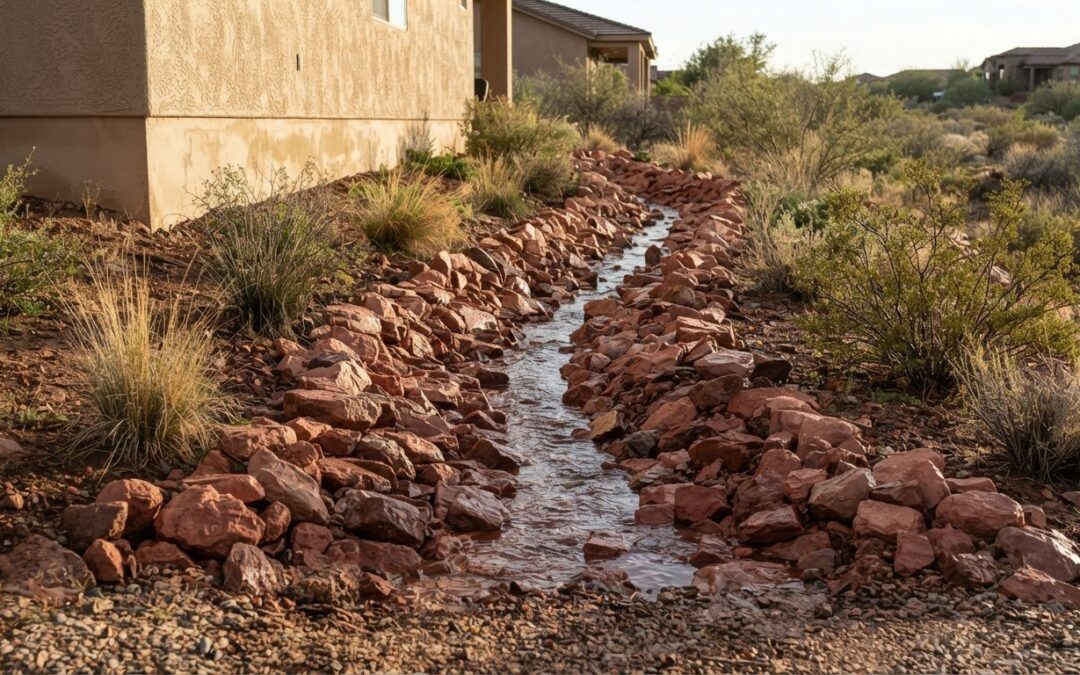
A landscape that handles Camp Verde’s dry conditions and runoff needs more than occasional cleanup. Landscaping services in Camp Verde, AZ can combine drainage grading, drought-tolerant landscaping, seasonal care, and ongoing maintenance to support both function and appearance. The right mix depends on the property’s slope, water flow, and landscape goals.
It’s understandable to focus on plants or a fresh appearance, but lasting results also depend on how water moves across the property and how outdoor spaces are cared for through changing seasons. Drainage problems can affect how you use the space, while maintenance needs change as plants grow and weather shifts.
This guide explains how drainage work can address runoff, what to consider in drought-tolerant landscaping, and how seasonal care and routine maintenance help keep residential and shared properties in good condition. You’ll also learn what shapes the scope of landscaping services in Camp Verde, so you can identify options that fit your property.
Key Takeaways
- Understand how drainage grading can direct runoff and support a more usable landscape.
- Choose drought-tolerant planting and thoughtful canopy coverage to suit the property’s conditions.
- Learn how seasonal care can address heat stress and prepare outdoor spaces for storms.
- Identify the maintenance tasks that help residential, commercial, and HOA landscapes stay orderly through the year.
Landscape drainage design and installation
In Camp Verde, drainage design starts with how water moves across the property, not with choosing a drain. A landscape professional assesses slopes, low spots, hard surfaces, and areas where runoff collects. For example, water crossing a patio may need a different route from runoff pooling beside a planting bed. These observations guide grading and help shape a plan around the site’s existing features.
Consultation turns those observations into a practical design. The property owner identifies priorities, such as keeping a walkway accessible or making room for outdoor dining. The designer then considers how planting beds, paths, and pavers will interact with water flow. Planning these elements together can prevent conflicts, such as placing a low point where people need to walk or sit.
Drainage grading adjusts the land’s contours to guide runoff along an appropriate route. Depending on the site, the plan may use shaped ground, drainage channels, or other landscape features to move water away from problem areas. During installation, the team follows the agreed layout, coordinates grading with hardscape work, and checks that transitions between surfaces function as intended.
Outdoor living plans also benefit from considering drainage early. An outdoor kitchen, fire feature, or paver area changes how water moves across the yard. A coordinated design accounts for these features alongside slopes and planting zones, rather than treating drainage as a last-minute addition. For landscaping services in Camp Verde, AZ, a clear sequence connects consultation, design, and installation: assess the site, set priorities, plan grades, then build the selected features together.
Before work begins, connect the drainage plan with other yard decisions. Confirm where runoff should travel, how grading meets patios and paths, and which areas must remain usable. If planting plans or other landscape services are part of the project, discuss their timing alongside drainage work so the intended layout stays clear. Ask who is responsible for each task and how transitions will be checked, especially where different surfaces meet.
If pesticide or fertilizer application is part of the project, clarify any applicable credentials as part of the discussion. The U.S. The U.S. Bureau of Labor Statistics notes that states may require licensing for workers who apply pesticides and fertilizers. Clarifying responsibilities alongside the design helps keep the agreed scope clear through installation.
Drought-tolerant plants, turf, and tree canopies
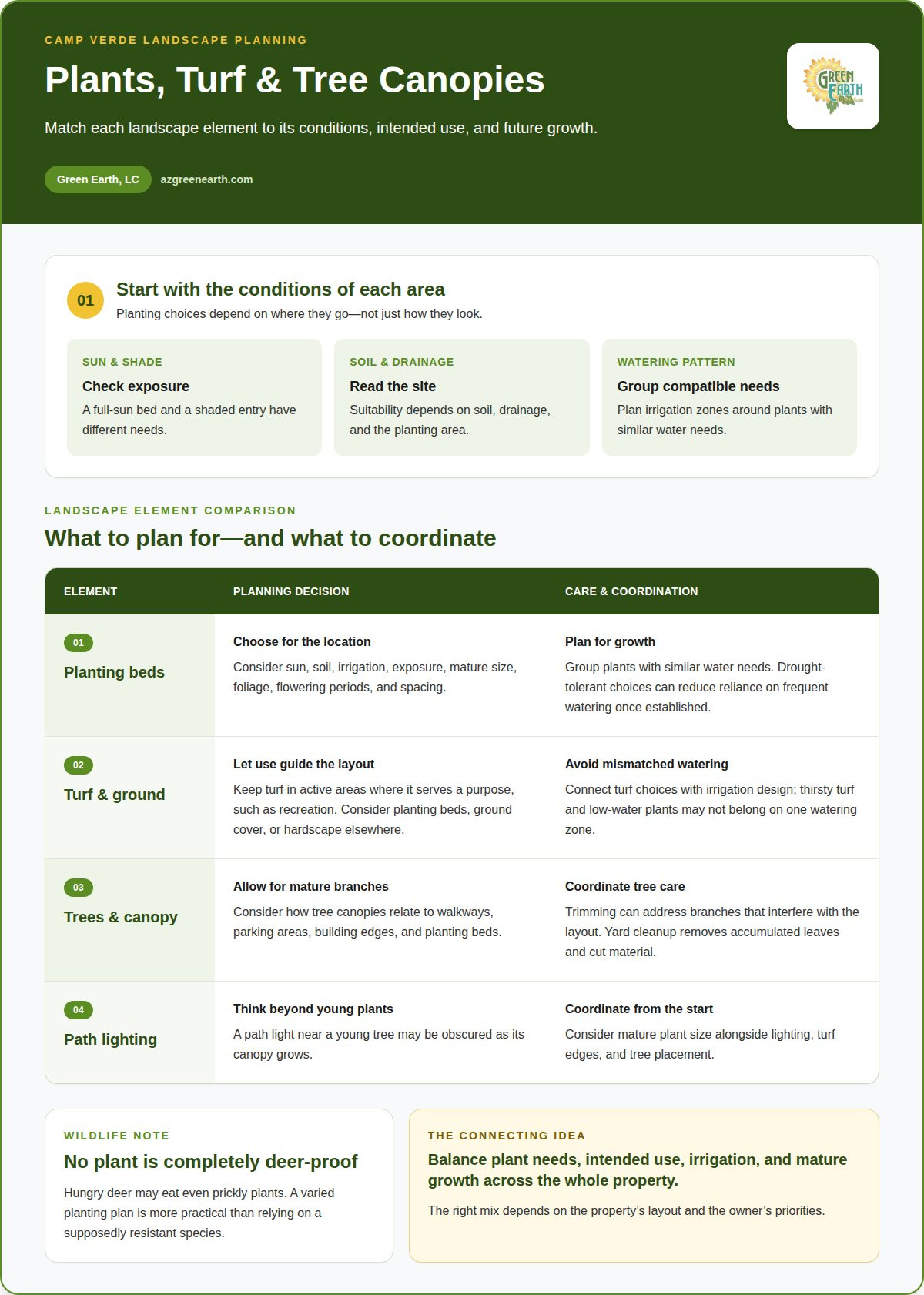
Plant selection in Camp Verde should start with each planting area’s sun, soil, and irrigation pattern. A full-sun bed beside a west-facing wall has different needs from a shaded entry. Landscape planning groups plants by similar water needs, allowing irrigation zones to serve compatible areas. Drought-tolerant choices can reduce reliance on frequent watering once established, but suitability still depends on exposure, drainage, and mature size. Designers also consider foliage, flowering periods, and spacing so beds stay balanced as plants grow. No plant is completely deer-proof; hungry deer may eat even prickly plants. A varied planting plan is more practical than relying on a supposedly resistant species.
Turf decisions should reflect how each part of the property is used. An open lawn, for example, may serve recreation, while narrow strips beside a driveway can add upkeep without offering the same use. A landscape plan can retain turf in active areas and shape other spaces with planting beds, ground cover, or hardscape. This approach connects plant selection with irrigation design and avoids mismatches, such as placing thirsty turf beside low-water plants on one watering zone. The right balance depends on the property’s layout and the owner’s priorities.
Tree canopies add shade and visual structure to residential and commercial landscapes. During a site review, a professional considers how mature branches relate to walkways, parking areas, building edges, and planting beds. Tree trimming can address branches that interfere with the intended layout, while yard cleanup removes accumulated leaves and cut material. For a commercial property, coordinated tree care and landscape maintenance can keep entrances and shared outdoor areas orderly without treating every planting zone alike.
Lighting also belongs in the planting plan. For instance, a path light placed near a young tree may become obscured as its canopy grows. A design that considers mature plant size can coordinate lighting, turf edges, and tree placement from the beginning. For shared properties, commercial landscape maintenance can help align recurring landscape care with the site’s planting and canopy needs.
Summer heat-stress and storm-season care
Camp Verde landscapes need seasonal care that responds to visible changes, not just a fixed calendar. During summer, professionals assess plants for wilting, dry leaf edges, and uneven color. These signs can point to heat stress, irrigation issues, or both. A landscape review can determine whether drip lines reach each planting zone and whether water distribution matches plant needs. For example, a dry bed beside a healthy lawn may need separate attention. Adjustments should reflect the plants, soil, and site conditions.
During storm season, attention shifts to runoff, debris, and damage after heavy weather. A professional can inspect planting beds, paths, and lawn edges for displaced soil or blocked drainage features. Fallen branches and accumulated leaves may need removal before they affect walkways or trap more debris. A clear path beside a building, for example, helps keep entrances usable after a storm. Seasonal assessments can also identify areas needing grading or drainage repairs, rather than treating every wet spot as a simple cleanup task.
Tree care requires a separate assessment of branch condition, canopy shape, and nearby structures. Pruning can remove selected branches that interfere with a roofline or walkway while preserving the tree’s intended form. Removal is a different decision, considered when a tree’s condition or position creates a landscape problem. A professional evaluates the tree and surrounding site before recommending work. This distinguishes routine pruning from removal and avoids treating every damaged branch as a reason to remove the entire tree.
Lawn care also changes with seasonal growth and weather. Mowing plans should account for turf condition, growth rate, and the lawn’s use, rather than applying the same schedule year-round. For example, a shared lawn near an entrance may need a different maintenance plan than a low-traffic area. After storms, professionals can assess uneven sections, scattered debris, and edges disturbed by runoff. Coordinating mowing, cleanup, and drainage observations helps keep the landscape functional as conditions shift through summer and storm season.
Landscape maintenance services in Camp Verde
Landscape maintenance works best as a planned cycle, not a one-time cleanup. Recurring service can include weeding, leaf removal, trimming, pruning, and cleanup. The right schedule depends on plant growth, leaf drop, irrigation performance, and how people use the property. An entry garden, for example, may need attention when weeds affect its appearance, while a shared walkway needs clear access and regular debris removal.
How often should lawns, trees, and desert landscapes be maintained in Camp Verde? There’s no single schedule for every site: growth, seasonal conditions, and how the landscape is used determine the needed visits. A professional maintenance plan can set recurring tasks, then adjust them when lawn growth changes, trees need pruning, or leaves collect in beds.
What permits or rules apply to landscaping, irrigation, and tree removal in Camp Verde? According to the Federal Trade Commission, some states require contractors to be licensed or bonded, so homeowners should check local requirements before hiring. Applicable rules depend on the work’s location and scope, so distinguish routine maintenance from irrigation changes, grading, or tree removal.
Which landscaping companies serve Camp Verde, AZ, and what are their reviews? Area providers serve residential, commercial, and HOA properties; the average homeowner rating for Camp Verde landscaping services is 4.4. A rating is a broad snapshot, so consider whether the provider’s work matches your needs, such as recurring cleanup or irrigation troubleshooting.
Before hiring, define the property areas, requested tasks, and expected service frequency. For example, specify whether the plan covers lawn mowing, tree pruning, leaf removal, or drip-system concerns. Also discuss how schedule changes and seasonal shifts will be handled. These details make the scope easier to understand and help prevent gaps between visits.
For an HOA or commercial site, align maintenance tasks with shared access and appearance priorities. A clear recurring plan can coordinate weeding, trimming, pruning, and cleanup across the property. Arrange landscape maintenance suited to your property’s needs.
Green Earth, LC
Green Earth, LC helps property owners connect landscape care with their site’s needs. Turn to the team when drainage, irrigation, seasonal upkeep, or shared-property maintenance calls for professional planning. Services include HOA and commercial landscape maintenance, Firewise defensible space, drip irrigation repair, and irrigation controller troubleshooting.
For an HOA, recurring maintenance can support orderly common areas; for a commercial site, it can keep outdoor spaces suited to how the property is used. Irrigation repairs address system issues affecting landscape care, while Firewise defensible-space work supports different site priorities. Describe the property and the work you need, such as recurring upkeep or a drip-system repair, to start the conversation.
Contact Green Earth, LC to discuss the landscape work your property needs.
Plan the next improvement for your property
A useful next step is to identify which outdoor space needs attention first and how people use it. A shared entrance, commercial grounds, and a home’s defensible space have different priorities. Defining the main goal helps shape a practical scope of work, whether you need ongoing care or a focused landscape improvement.
Green Earth, LC provides HOA Landscape Maintenance, Commercial Landscape Maintenance, and Firewise Defensible Space. These services support property owners and associations seeking professional care aligned with their site’s needs. For landscaping services in Camp Verde, AZ, clear priorities create a practical starting point for discussing the work and how it fits the property.
Take the next step with a conversation about your landscape priorities. Contact Green Earth, LC to discuss a suitable path forward, and begin planning an outdoor space that works well for your property.
Frequently Asked Questions
What landscaping services are available in Camp Verde, AZ?
Green Earth, LC provides landscape services including HOA and commercial maintenance, Firewise defensible space, drip irrigation repair, controller troubleshooting, drainage grading, pavers and hardscape, retaining walls, and outdoor kitchens and fire features. Property owners in Camp Verde can consider these options for upkeep, irrigation concerns, or outdoor improvements. Services also support properties in Sedona, Cottonwood, Flagstaff, and Prescott.
Do Camp Verde landscapers provide free estimates or consultations?
Green Earth, LC does not promise that estimates or consultations are free. Consultation is part of its design process, and pricing is available upon request. For a useful project discussion, describe the property, the areas involved, and the outcome you want, such as resolving a drip irrigation issue or planning a hardscape improvement. Scope and project requirements inform the pricing.
Recent Comments