
Imagine waking up on June 5th in Flagstaff to see your new perennials blackened by a sudden, biting frost. It’s a frustrating reality for many who call this region home. You’ve likely felt the sting of a “false spring” or watched healthy shrubs wither during the parching winds of a dry June. Determining the best time to plant in Northern Arizona requires more than just reading a seed packet; it demands a deep respect for our dramatic elevation changes and unique microclimates.
We understand that a vibrant landscape is an investment in your home’s beauty and the local ecosystem’s health. This 2026 seasonal guide provides the precision you need to master our short, intense growing windows. You’ll discover the specific frost dates for high-altitude areas like Flagstaff and the mid-elevation timing required for success in Sedona or Cottonwood. We will also explore how professional irrigation management and Firewise strategies turn a vulnerable yard into a resilient, sustainable sanctuary.
Key Takeaways
- Identify your specific elevation zone to avoid the “false spring” trap that often leads to premature plant loss in high-altitude climates.
- Master the best time to plant in Northern Arizona by aligning your project with the 2026 frost dates for Flagstaff, Sedona, and the surrounding Verde Valley.
- Prepare your landscape for the challenging “Dry June” period with strategic irrigation troubleshooting and professional soil preparation techniques.
- Explore why fall is often the superior season for installing large trees and shrubs; this allows root systems to establish before the winter freeze.
- Integrate Firewise defensible space principles into your seasonal maintenance to ensure your beautiful landscape remains a safe and sustainable environment.
Understanding Northern Arizona’s “Climate of Extremes”
Northern Arizona’s landscape is a study in contrasts. While Phoenix residents might start their spring planting in February, those of us in the high country are often still digging out from late winter storms. This region is defined by Arizona’s diverse climate zones, which shift rapidly from the low desert heat to alpine forests. Because our terrain rises from 3,000 to over 7,000 feet, determining the best time to plant in Northern Arizona is a matter of elevation rather than a single date on a calendar. We manage USDA Hardiness Zones ranging from Zone 5 in Flagstaff to Zone 9 in parts of the Verde Valley. It is a complex puzzle that requires local expertise to solve.
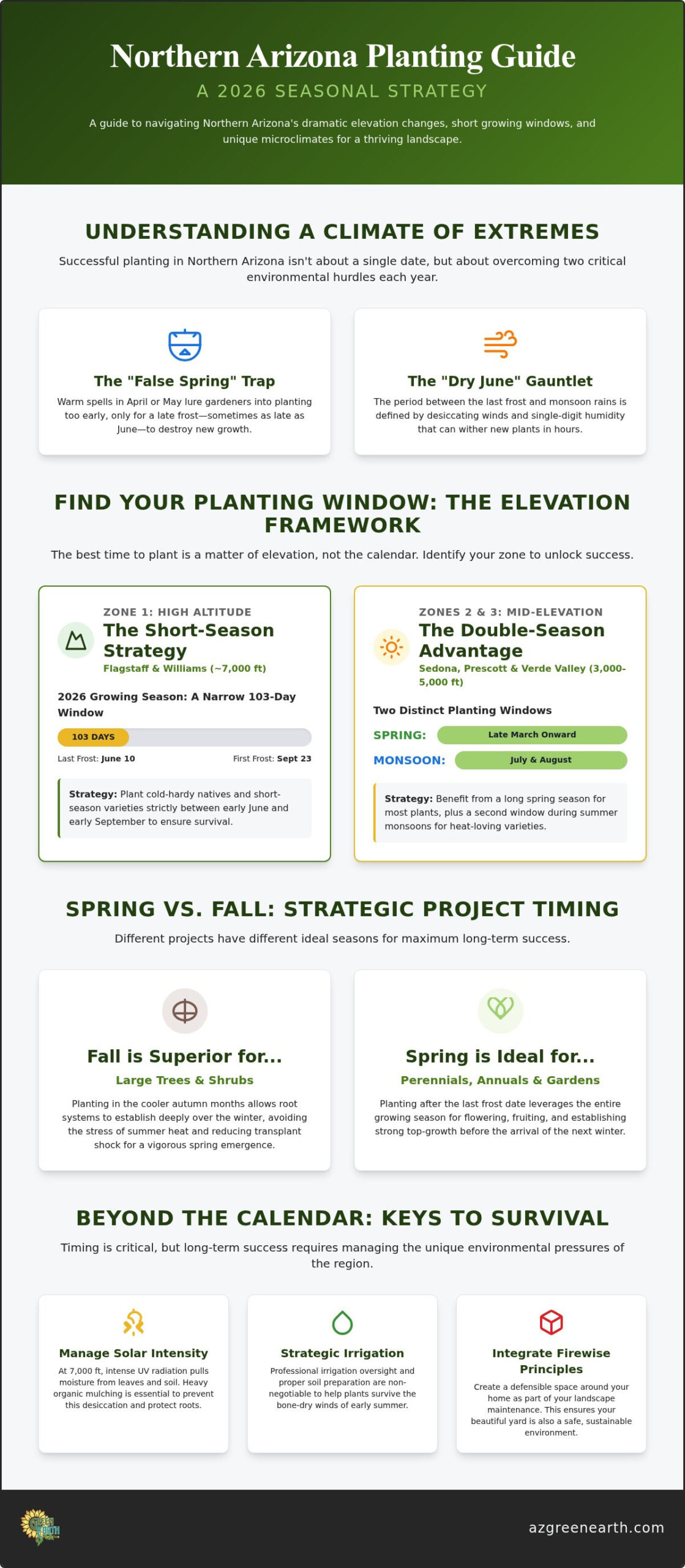
The most dangerous period for new growth isn’t actually the winter freeze; it is the “Dry June” phenomenon. This window between the last spring frost and the arrival of the July monsoons is characterized by single-digit humidity and desiccating winds. Without established root systems or professional irrigation oversight, new plants can succumb to moisture loss in a matter of hours. For 2026, the average growing season in Flagstaff is expected to be just 103 days. Successfully timing your project means understanding that Northern Arizona planting seasons are elevation-dependent rather than just date-dependent.
The Impact of High-Altitude Solar Intensity
In areas like Flagstaff and Williams, solar radiation is significantly more intense than at sea level. At 7,000 feet, the atmosphere is thinner, allowing higher UV levels to reach plant tissue. This intensity causes rapid desiccation, where moisture is pulled directly from leaves. We emphasize the use of heavy organic mulching to combat “sublimation,” a process where soil moisture turns directly into vapor before the plant can use it. Protecting tender perennials requires more than just water. It requires strategic placement to avoid the harshest mid-day sun that can scorch even hardy species.
Microclimates in the Verde Valley
The geography of the Verde Valley creates fascinating opportunities and challenges. Residents in Cottonwood and Sedona often enjoy a growing season that begins three to four weeks earlier than their neighbors in Flagstaff. Red rock formations and canyon walls act as massive thermal batteries, absorbing heat during the day and radiating it back at night. These “heat islands” allow for more sensitive species to thrive. However, low-lying areas on a property can become “frost pockets” where cold air settles. This means your backyard might be five degrees colder than your front porch. Mastering the best time to plant in Northern Arizona involves identifying these nuances on your specific property.
The Three-Zone Framework for Northern Arizona Planting
Determining the best time to plant in Northern Arizona is impossible without first identifying which elevation zone your property occupies. A mere 50-mile drive from Flagstaff to Camp Verde represents a staggering 4,000-foot drop in elevation. This descent shifts the landscape from subalpine forest to high desert, moving the last spring frost date by as much as six weeks. Understanding this framework is the first step toward a thriving landscape that doesn’t just survive but flourishes in our rugged environment.
Zone 1: The Short-Season Strategy
For residents in Flagstaff or Williams, the window for success is narrow. In 2026, the average last spring frost at the Flagstaff Pulliam Airport is June 10, while the first fall frost arrives by September 23. This leaves a growing season of only 103 days. Because of this, the safest window in the high country is strictly between early June and early September. We recommend prioritizing cold-hardy natives and short-season varieties that can reach maturity before the autumn freeze. If you’re planning a garden, consulting the University of Arizona’s data on Northern Arizona vegetable planting dates can help you time your seeds perfectly. To ensure these plants survive the rapid shift into winter, a professional landscape assessment can help identify the best protected spots on your property.
Zones 2 & 3: The Double-Season Advantage
In mid-elevation areas like Sedona and Prescott, or high desert spots like Cottonwood, the rules change completely. These regions benefit from a double season. You have a long, productive spring starting as early as late March, followed by a second planting window during the July monsoons. Sedona’s red rocks create a unique thermal environment that helps plants transition out of dormancy earlier than in the pines. Cottonwood and Camp Verde allow for even earlier hardscape installations and perennial planting because the ground rarely freezes as deeply as it does at higher altitudes.
This extended window provides more flexibility for complex projects. However, this advantage requires disciplined water management. The heat in these zones can be unforgiving, making irrigation maintenance a necessity before the spring growth begins. By leveraging these distinct windows, you can create a diverse landscape that provides beauty nearly year-round. Success here isn’t about rushing into the ground; it’s about matching your plant choices to the specific thermal rhythm of your elevation.
Spring vs. Fall: Which is Better for Your Project?
Choosing between spring and fall installations often determines whether your new additions will merely survive or truly thrive. While the average gardener waits for the first signs of green in April, the best time to plant in Northern Arizona for long-term health is frequently late September or October. Spring is undoubtedly the season for “show,” making it ideal for summer-blooming shrubs, perennials, and ornamental grasses. These plants enjoy the full length of the growing season to display their colors. However, for the structural foundation of your landscape, fall is the professional’s hidden gem.
The primary advantage of fall planting involves root development. During autumn, the soil remains warm from months of summer sun even as the air temperature drops. This creates a perfect environment for root systems to expand without the stress of supporting a growing canopy of leaves. By the time the intense heat of June 2027 arrives, a fall-planted tree will have a much deeper, more resilient root structure than one installed in May. Additionally, water requirements are generally lower in the fall because cooler air reduces the rate of evaporation from the foliage.
Why Landscaping Professionals Prefer Fall
Experienced designers prioritize the fall window because it significantly reduces transplant shock. When plants aren’t fighting to stay hydrated during a dry spring, they can focus all their energy on underground establishment. Late-season installations also pair perfectly with other outdoor improvements, such as Hardscape construction in Cottonwood, AZ, allowing your yard to be fully functional and settled by the following spring. It’s a strategic move that saves time and money by reducing the risk of plant loss during the first year.
Spring Planting: Navigating the “False Spring”
Identifying the best time to plant in Northern Arizona during the spring requires a disciplined eye. Our region is famous for the “January Thaw,” a week or two of unseasonably warm weather that tempts homeowners into early nursery trips. Don’t be fooled. March remains historically the snowiest month for areas like Flagstaff and Prescott. Planting too early puts tender new growth at extreme risk when the inevitable late freeze returns. We advise clients to wait for consistent soil temperatures rather than just a few warm afternoons. Success in the spring isn’t about being first; it’s about being patient enough to wait for the soil to wake up naturally.
A Month-by-Month Northern Arizona Planting Guide
Navigating the calendar in our region requires a disciplined approach to maintenance and installation. While the best time to plant in Northern Arizona varies by zip code, a month-by-month strategy ensures you’re never caught off guard by the climate’s volatility. Success isn’t just about when you put a shovel in the ground; it’s about the preparation that happens months before the first bloom appears.
Spring Prep: Irrigation and Firewise Defense
March and April are the most critical months for property protection and system readiness. As the ground thaws in the higher elevations, it’s essential to perform professional irrigation repair in Flagstaff. Winter freezes often leave behind cracked poly-tubing or compromised valves that stay hidden until you pressurize the system. Identifying these failures early prevents catastrophic plant loss during the heat of May. Simultaneously, homeowners should focus on Firewise landscaping in Cottonwood, AZ, and surrounding communities. Clearing winter debris and establishing defensible space now is vital before the dry winds of early summer increase local fire risks.
May and June bring the start of the high-elevation planting season for hardy perennials. However, this window coincides with the “Dry June” period. We recommend applying a three-inch layer of organic mulch to every new installation to prevent soil desiccation. If you don’t have a robust drip system in place, new plants will struggle to survive the single-digit humidity levels common during this transition.
Monsoon Planting: Leveraging Summer Rains
July and August offer a unique opportunity that many traditional gardening guides overlook. This monsoon window is actually a prime time for establishing desert landscape design in Northern Arizona. The increased humidity and afternoon cooling provide a natural buffer against transplant shock for native species like Desert Willow, Agave, and various cacti. During this time, managing your property’s drainage and grading becomes paramount. Properly contoured landscapes can capture monsoon runoff, directing life-giving water toward deep-rooted trees rather than allowing it to erode your topsoil.
September and October transition into the ideal season for planting spring-blooming bulbs and winter-hardy shrubs. The soil remains warm enough for root establishment even as the air temperature begins to dip. From November through February, your landscape enters dormancy, but care continues. Winter watering during dry spells is necessary to keep root balls from desiccating in frozen soil, ensuring your plants emerge healthy in 2027.
To ensure your landscape is ready for the upcoming season, you can request a professional irrigation controller troubleshooting session to optimize your water delivery.
Ensuring Long-Term Success: Beyond the Planting Date
Finding the best time to plant in Northern Arizona is only half the battle. While timing ensures your plants survive the initial transition, their long-term health depends on the structural and biological foundation you establish during installation. A landscape that looks vibrant in June can easily falter by the following spring if the underlying land management isn’t executed with professional precision. We view the planting date as the beginning of a multi-year commitment to your property’s ecological health.
Proper water management begins with surface control. Implementing correct drainage grading in Arizona is a non-negotiable step for protecting your investment. Without it, intense monsoon runoff can pool near your home’s foundation or strip away the vital topsoil you’ve worked to build. We also address the unique challenges of our high-desert alkaline soils. By using sustainable soil amendments, we transform nutrient-poor clay into a living medium that supports deep root growth and resilience against the 2027 summer heat.
Water Management and Drip Irrigation
Set-and-forget irrigation timers are a frequent cause of landscape failure in our region. Northern Arizona’s evaporation rates shift dramatically based on altitude and the current month. A schedule that works for a Sedona spring will likely be insufficient during a Flagstaff summer. We prioritize precision through irrigation controller troubleshooting and system repairs. Common failures often involve pressure regulators or emitters that have been compromised by the extreme freeze-thaw cycles of the high country. Regular professional maintenance identifies these vulnerabilities before they lead to plant loss or inflated water costs. It’s about working with the environment, not just fighting against it.
Partnering with Green Earth, LC
Green Earth, LC brings 47 years of local expertise to every project. We understand the specific microclimates of the Verde Valley and the San Francisco Peaks. Our team provides comprehensive HOA landscape maintenance in Arizona, ensuring that commercial and residential communities maintain their value and ecological integrity. We don’t just plant trees; we build sustainable environments that thrive for decades. If you’re ready to transform your outdoor space, contact Green Earth, LC today for a professional consultation in Sedona, Flagstaff, or Cottonwood. Let us help you navigate the best time to plant in Northern Arizona while ensuring your landscape remains a beautiful, functional reality.
Cultivating Your Resilient Northern Arizona Landscape
Mastering the best time to plant in Northern Arizona requires a blend of patience and regional expertise. By aligning your projects with our unique elevation zones and leveraging the “double season” advantage of the mid-elevation areas, you can build a landscape that withstands both the June drought and the winter freeze. Remember that fall is often the most strategic window for foundation plantings. It allows root systems to establish deeply before the 2027 heat arrives.
With 47+ years of local experience, Green Earth, LC understands the nuances of our high-altitude environment. We specialize in high-altitude irrigation and award-winning sustainable designs that transform challenging terrain into beautiful, functional spaces. Whether you’re in Flagstaff, Sedona, or Cottonwood, our team is dedicated to your property’s long-term health and ecological integrity.
Ready to start your next project? Schedule Your Northern Arizona Landscape Consultation with Green Earth, LC to ensure your vision thrives for years to come. Your dream landscape is within reach; it just takes the right timing and a professional partner who knows the land.
Frequently Asked Questions
When is the last frost date for Flagstaff, Arizona in 2026?
The average last spring frost date for Flagstaff in 2026 is June 10. This data comes from the Flagstaff Pulliam AP climate station and marks the beginning of a relatively short 103 day growing season. Because of this late date, we recommend waiting until mid June to install any sensitive species. Planting before this window often leads to lost investments when a late freeze strikes the high country unexpectedly.
Can I plant trees in Northern Arizona during the summer?
You can plant trees during the summer, but the monsoon window in July and August is the safest time. The increased humidity and afternoon rains help native trees establish themselves with less stress than in the dry heat of June. We suggest focusing on species that thrive in our local soil. Proper drainage grading is essential during this period to ensure heavy rains don’t wash away your new topsoil.
What are the best native plants for Sedona and the Verde Valley?
The best native plants for Sedona and the Verde Valley include drought tolerant species like Agave, various cacti, and Desert Willow. These plants are uniquely adapted to the intense solar radiation and alkaline soils found in our region. Choosing these varieties is a key part of determining the best time to plant in Northern Arizona, as they are resilient enough to handle the transition between our cold winters and parching early summers.
How often should I water new plants in the Northern Arizona desert?
New plants in the high desert typically require daily watering during their first growing season, especially during the parching winds of June. Once established, you can reduce frequency, but consistent moisture is vital for root development. We recommend professional irrigation drip system repair to ensure every drop reaches the root zone efficiently. Without a properly functioning system, even the hardiest plants can succumb to desiccation in our single digit humidity.
Is Fall or Spring better for planting in Prescott, AZ?
Fall is the superior choice for planting trees and large shrubs in Prescott because it allows root systems to grow in warm soil without the stress of summer heat. Spring remains ideal for perennials and ornamental grasses that need a full season to bloom. Determining the best time to plant in Northern Arizona depends on your specific project goals. Fall installations often require less water and suffer from significantly less transplant shock.
What happens if I plant before the last frost date?
Planting before the last frost date often results in blackened new growth or the total death of tender plants. Northern Arizona is famous for false springs that tempt gardeners with warm afternoons in April or May. However, a single night of freezing temperatures can destroy months of progress. It is always safer to wait for the soil to warm or to use protective covers if you must start early in the season.
Do I need a special irrigation system for a high-altitude garden?
High altitude gardens require specialized drip irrigation systems designed to withstand extreme freeze thaw cycles. Standard systems often fail when poly tubing cracks or valves freeze in the winter. We specialize in high altitude irrigation repair and controller troubleshooting to keep your system efficient year round. Proper pressure regulation is also necessary because elevation changes on your property can cause uneven water distribution, leading to dry spots or overwatered areas.
How does Firewise landscaping affect my planting choices?
Firewise principles dictate the spacing and types of plants you choose, particularly within the first 30 feet of your home. You should prioritize moisture rich, low growing plants and avoid resinous species like junipers near structures. Creating a defensible space is a critical spring task in communities like Cottonwood and Sedona. Our team integrates these safety standards into your landscape design to ensure your property remains both beautiful and resilient against wildfire risks.
Recent Comments