
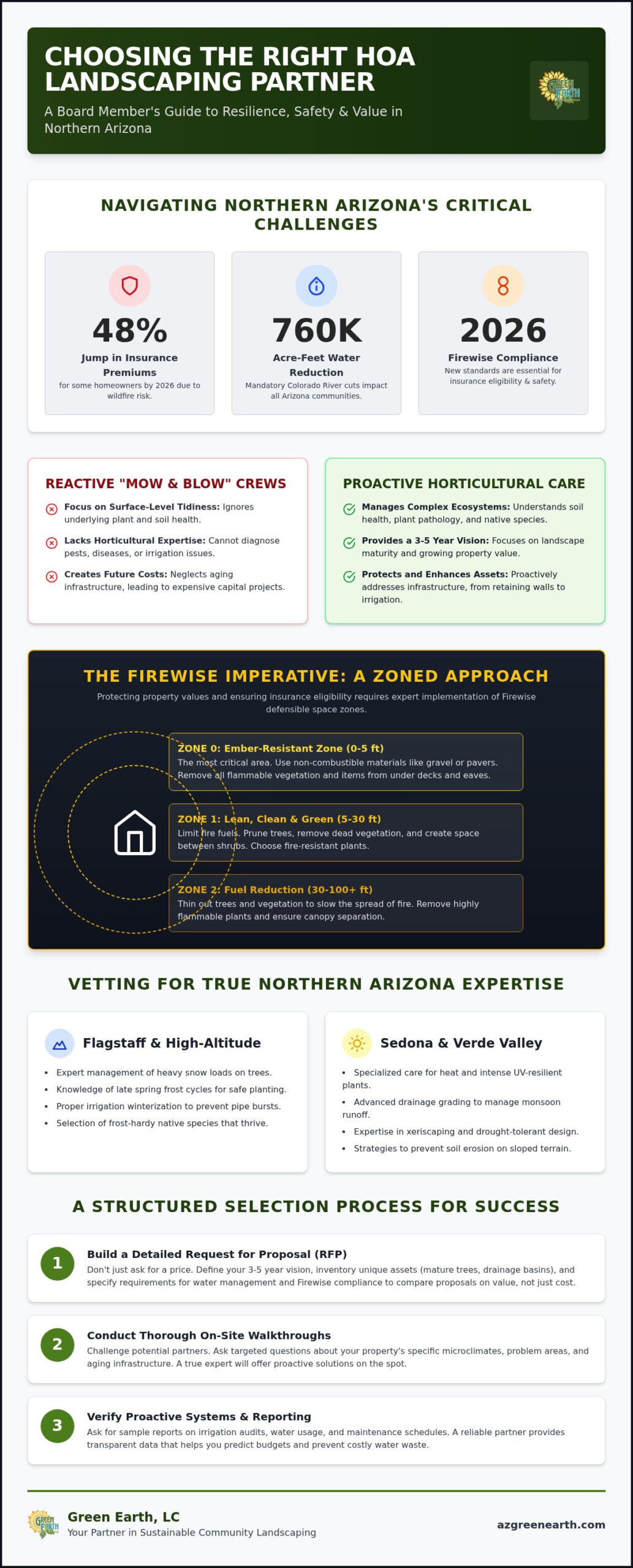
Did you know that some Arizona homeowners have seen their insurance premiums jump by 48% in 2026? This sharp increase is often tied directly to wildfire risk and whether a community meets the latest Firewise defensible space standards. As a board member, you’re likely tired of chasing contractors who offer poor communication while your water bills climb due to outdated irrigation. It’s frustrating to feel like you’re managing your landscaper’s schedule instead of leading your community toward a more resilient future.
This guide is designed to take the guesswork out of choosing an HOA landscaping company that acts as a true environmental steward. You’ll learn how to vet partners who understand Arizona’s mandatory water reductions and the technical requirements of ember-resistant zones. We’ll show you how to select a firm that provides transparent reporting and budget predictability while enhancing your curb appeal. We will walk through the specific vetting steps, from verifying Zone 0 compliance to ensuring your next contractor has the specialized knowledge to handle Northern Arizona’s unique terrain and climate.
Key Takeaways
- Learn to distinguish between basic maintenance and professional horticultural care to ensure your community’s unique aesthetic and safety goals are prioritized.
- Prioritize regional expertise when choosing an HOA landscaping company to successfully navigate Northern Arizona’s mandatory water reductions and diverse microclimates.
- Identify the specific proactive reporting and irrigation troubleshooting skills needed to prevent water waste and ensure long-term budget predictability.
- Verify that your landscaping partner is an expert in 2026 Firewise standards to protect property values and maintain insurance eligibility in high-risk zones.
- Master a structured selection process using detailed RFPs and site walkthroughs to find a visionary partner committed to your community’s ecological health.
Defining Your HOA’s Specific Landscaping Needs & Goals
Before you begin the process of choosing an HOA landscaping company, you must first define what success looks like for your specific property. Many boards fall into the trap of hiring “mow-and-blow” crews that focus solely on the surface. While these services might keep the grass short, they often lack the horticultural expertise needed to manage complex ecosystems. Professional horticultural care involves understanding soil health, plant pathology, and the specific needs of Northern Arizona’s native species. It requires a partner who looks beyond the next mow to the next decade.
A What is a Homeowner Association? resource clarifies that a board’s primary duty is to preserve, protect, and enhance the community’s assets. This starts with identifying aging infrastructure. Are your retaining walls showing signs of structural failure? Is your irrigation system leaking or inefficient? Addressing these issues early prevents small repairs from becoming six-figure capital projects. Setting a 3-to-5-year vision for landscape maturity ensures that your community doesn’t just maintain its appearance but actually grows in value. It’s about moving from reactive fixes to proactive stewardship.
Inventorying Your Community’s Unique Assets
Effective management begins with a comprehensive catalog of your common areas. This includes everything from the grand entrance that defines your curb appeal to the hidden drainage basins that prevent erosion. Evaluating the health of mature trees is vital; these are your most valuable natural assets and require years to replace if lost to neglect. High-traffic recreational zones also demand specialized turf management to remain lush and inviting under constant use.
Aligning the Board on Budget vs. Value
Boards must distinguish between routine maintenance expenses and capital enhancements. Routine care keeps the community tidy, but enhancements, like upgrading to smart irrigation or installing Firewise defensible space, are investments in long-term safety. When choosing an HOA landscaping company, look for a partner that helps you prioritize urgent needs, such as drainage grading to prevent property damage. A realistic RFP should reflect these actual community requirements, ensuring you compare proposals based on value rather than just the lowest bid.
Evaluating Regional Expertise and Northern Arizona Climate Knowledge
When choosing an HOA landscaping company, many boards overlook the sheer diversity of Arizona’s terrain. A contractor based in Phoenix might struggle to manage the unique frost cycles of Flagstaff, while a high-altitude specialist might not grasp the intense UV demands of the Verde Valley. True regional expertise means understanding these microclimates at a granular level. It’s the difference between a landscape that thrives and one that requires constant, expensive replacements. Your community deserves a partner who doesn’t just work in the area but understands its pulse.
Integrating desert landscape design Northern Arizona principles is essential for long-term resilience. This approach prioritizes native species that have evolved to survive our specific seasonal cycles and extreme temperature swings. These plants don’t just save water; they provide the aesthetic consistency residents expect. As water costs rise and mandatory reductions of 760,000 acre-feet of Colorado River water take effect across the state in 2026, drought-tolerant landscapes are a necessity for fiscal health. A knowledgeable partner will help you navigate these shifting regulations without sacrificing beauty.
High-Altitude vs. High-Desert Care
Flagstaff communities face unique challenges, including heavy snow loads and late spring frosts. Landscapers here must prioritize frost-hardy planting and ensure irrigation systems are properly winterized to prevent structural damage. Conversely, Sedona and the Verde Valley require heat-resilient shrubs that can withstand scorching summer temperatures. Vetting for expertise in drainage grading is equally critical. During the monsoon season, poorly managed runoff can lead to erosion and foundation issues. A partner who understands local topography can design systems that capture and redirect water effectively. This type of foresight is a hallmark of Sustainable Landscaping for HOAs, ensuring your community remains protected during extreme weather events.
The Value of a 47-Year Local Legacy
Decades of experience in the region provide a perspective that newer firms simply can’t match. A 47-year history means we’ve seen how different species react to record-breaking droughts and unusual freeze patterns. This legacy prevents costly mistakes, such as choosing shrubs that can’t handle local soil alkalinity. Established relationships with local nurseries ensure you get the best specimens available, while familiarity with local HOA regulations keeps your community in compliance. If you’re ready to work with a team that knows every acre of this land, our specialized regional maintenance can protect your property’s future.
The Proactive Maintenance Framework: Vetting for Reliability
Choosing an HOA landscaping company requires looking past shiny brochures to evaluate actual operational reliability. Many contractors promise “proactive” service, but few define what that looks like in practice. Reliability isn’t just about showing up; it’s about identifying a broken sprinkler head before it creates a sinkhole or spotting a pest infestation before it kills a mature juniper. Ask potential partners for specific examples of their proactive reporting. Do they provide digital site maps? Transparent photo reporting allows boards to see exactly what work was completed without having to walk the entire property themselves. It’s this level of detail that protects your community’s long-term assets.
Crew stability is another critical metric for any successful partnership. High turnover in the landscaping industry often leads to inconsistent care and missed details. A dedicated account manager who understands your community’s history is invaluable. They act as your single point of contact, ensuring that the long-term goals discussed in the RFP process aren’t lost during seasonal transitions. When a team knows your property’s unique challenges, they can anticipate needs rather than just reacting to complaints. Using technology like GPS tracking and digital work orders ensures every task is documented and every hour is accounted for.
Smart Irrigation and Water Stewardship
In a state where water is the most precious resource, your landscaper must be an expert in water management. This goes beyond simple scheduling. It requires deep technical knowledge of irrigation repair Flagstaff and advanced drip system troubleshooting. Demand evidence of water-saving results from previous contracts. A visionary partner will utilize electronic controllers that adjust for real-time weather data, preventing waste during monsoon rains. Seasonal adjustment schedules are mandatory in Arizona; if your contractor isn’t recalibrating your systems at least four times a year, you’re likely overpaying for water. Effective water stewardship is a blend of technical skill and environmental responsibility.
Communication Protocols for HOA Boards
Effective communication is the foundation of a successful partnership. Boards should expect regular site walkthroughs and attendance at monthly meetings to discuss progress and upcoming enhancements. Ask about emergency response times. When a main line breaks at 2:00 AM, you need a contractor who responds immediately to mitigate damage. Finally, look for billing transparency. “No-surprise” enhancement proposals should be detailed and separate from routine maintenance costs. This clarity prevents budget creep and fosters a relationship built on trust rather than constant negotiation. A reliable partner makes the board’s job easier by providing clear, actionable data at every turn.
Sustainability and Firewise Compliance: Essential Criteria
In the modern Arizona climate, sustainability is no longer a luxury or a marketing buzzword; it’s a fundamental requirement for fiscal and physical safety. When choosing an HOA landscaping company, you must look for a partner that treats environmental health as a core service rather than an optional add-on. Sustainable practices, such as xeriscaping and organic soil management, directly reduce long-term maintenance costs by creating a landscape that thrives with fewer inputs. This approach prioritizes integrated pest management (IPM) to address issues at their source, preventing the need for costly, broad-spectrum chemical applications that can damage local ecosystems.
Xeriscaping is particularly vital for Arizona communities facing mandatory water reductions. A visionary partner will help your board transition away from thirsty, non-native turf toward drought-tolerant designs that maintain high curb appeal. These landscapes are engineered to survive extreme heat while providing the aesthetic beauty residents expect. By focusing on soil health and native plant vigor, a professional firm ensures your community’s greenery remains a resilient asset rather than a mounting liability.
Firewise Defensible Space Certification
Wildfire risk is a primary concern for Northern Arizona communities, making firewise landscaping Cottonwood AZ a legal and safety necessity. Your contractor must demonstrate a deep understanding of the 2026 three-zone defensible space system. This includes maintaining Zone 0 as an ember-resistant area within five feet of structures and properly thinning Zone 1 to ensure at least 10 feet between tree crowns. Vetting for their ability to identify and remove “ladder fuels”—low-hanging branches or shrubs that allow fire to climb into the canopy—is critical. Proper Firewise maintenance isn’t just about safety; it’s increasingly a requirement for maintaining community insurance eligibility and protecting property values in high-risk zones.
Eco-Friendly Landscape Enhancements
Modern enhancements should focus on capturing every drop of moisture that falls on your property. Implementing professional drainage grading Arizona allows you to redirect monsoon runoff to thirsty plant beds rather than allowing it to erode foundations or wash into storm drains. Selecting low-water-use plants that provide year-round color ensures the community looks vibrant without excessive irrigation. These horticultural practices reduce chemical runoff and promote a healthier environment for residents and local wildlife alike. If you are ready to upgrade your community’s safety and sustainability, schedule a Firewise assessment with our expert team today.
The Selection Process: From RFP to Long-Term Partnership
The final phase of choosing an HOA landscaping company involves moving from theoretical vetting to practical comparison. A well-crafted Request for Proposal (RFP) is your most powerful tool during this stage. It ensures you aren’t just comparing bottom-line numbers, but the actual value and scope of service provided. By standardizing service frequencies, you prevent a situation where a lower bid hides a lack of necessary pruning or fertilization. Look closely at how each firm handles irrigation repairs and minor enhancements. A partner with in-house construction capabilities often provides better long-term value for projects like retaining walls or drainage grading than a firm that must outsource every minor repair. If you are looking for a provider with this type of comprehensive expertise in the Midwest, you can learn more about Yardworx Lawn & Landscape.
Checking commercial references is non-negotiable, but you must ask the right questions. Focus on multi-year contract retention. A company that has maintained the same community for five or ten years has clearly mastered the art of consistent, reliable service. Ask references about the firm’s response during the 2026 monsoon season or how they handled the mandatory water reductions. This feedback reveals how the contractor performs under pressure and whether they truly act as an environmental steward for their clients.
When reviewing bids, look for transparency. If a proposal falls significantly outside regional averages for Northern Arizona, it’s a signal to dig deeper into their service list. Are they including integrated pest management? Is Firewise clearing part of the routine? Standardizing these frequencies allows your board to make an “apples to apples” comparison. Pay attention to how they bill for costs like seasonal color changes or irrigation controller troubleshooting. A visionary partner will present a clear, predictable budget that aligns with your community’s 5-year goals for property value growth.
The Interview: Testing for ‘Visionary Partnership’
The site walkthrough is the ultimate test of a contractor’s expertise. Don’t just let them pitch you; ask them to show you. A great question to ask is: “What is the biggest hidden risk on our property right now?” An expert will point out things like “ladder fuels” near structures or failing drainage grading that could lead to foundation issues. This is also the time to verify their knowledge of high-altitude or high-desert plant health. Ensure the company is fully licensed, bonded, and insured for commercial work in Arizona. Finalizing the HOA landscape maintenance Arizona agreement is about more than just signing a contract; it’s the start of a partnership dedicated to your community’s ecological health and safety.
Securing Your Community’s Ecological Future
The process of choosing an HOA landscaping company is about more than finding a vendor; it’s about selecting a visionary partner who understands the unique challenges of Northern Arizona. By shifting your focus from basic maintenance to professional horticultural care, you ensure that your community’s assets are protected against the extreme temperature swings and shifting water regulations of 2026. Prioritizing Firewise defensible space and smart irrigation efficiency isn’t just a matter of aesthetics; it’s a critical strategy for maintaining property values and resident safety.
Your community’s landscape is its most valuable physical asset, and it deserves the attention of seasoned experts who act as responsible guardians of the local environment. We invite you to partner with the authoritative environmentalists at Green Earth, LC for your HOA today. With 47 years of Northern Arizona experience and award-winning sustainable designs, we provide the specialized knowledge in Firewise compliance and irrigation troubleshooting that your board requires. Together, we can transform your shared spaces into a resilient, beautiful environment that will thrive for decades to come.
Frequently Asked Questions
What is the difference between residential and HOA landscaping services?
HOA landscaping focuses on the collective value of common areas and recreational spaces rather than individual garden beds. While residential care is personal, HOA services require managing large-scale irrigation systems and complex drainage grading to protect shared infrastructure. When choosing an HOA landscaping company, boards should look for a partner capable of attending monthly meetings and providing the detailed documentation necessary to satisfy legal and financial audits for the entire community.
How often should an HOA landscaping company provide site reports?
A professional firm should provide comprehensive site reports at least once a month to coincide with board meetings. In regions like Flagstaff or Sedona, these reports become even more vital during the monsoon season or winter freeze cycles. Digital reporting with photo documentation allows boards to verify that tasks like irrigation controller troubleshooting or Firewise thinning are completed correctly. This transparency ensures accountability and helps the board maintain predictable budgets for long-term enhancements.
Why is Firewise landscaping important for Arizona HOAs?
Firewise landscaping is a critical safety requirement for Northern Arizona communities located in high-risk wildfire zones. Implementing these standards protects physical structures and helps maintain community insurance eligibility as providers increasingly require proof of defensible space. By managing Zone 0 to Zone 2, a qualified landscaper removes ladder fuels and creates ember-resistant barriers. This proactive approach is essential for communities in Cottonwood and Prescott to safeguard resident lives and property values.
Should we choose the lowest bid for our HOA landscape contract?
Selecting the lowest bid often leads to hidden costs and neglected infrastructure. Cheap “mow-and-blow” crews frequently overlook critical tasks like irrigation drip system repair or structural pruning, which leads to plant loss and high replacement fees later. Choosing an HOA landscaping company based on value ensures you have a partner who understands horticultural health. A slightly higher investment in a visionary partner prevents the 48% insurance rate spikes seen across Arizona in 2026.
What certifications should a professional HOA landscaper in Arizona have?
Any contractor working on your property must be fully licensed, bonded, and insured for commercial work in the state of Arizona. Beyond basic legal requirements, look for firms with a long-term local legacy, such as Green Earth, LC and its 47 years of experience in the Verde Valley. Expertise in sustainable design and specific 2026 Firewise standards is also vital. These qualifications ensure the team can handle complex technical tasks like drainage grading and smart irrigation management.
How can an HOA landscaper help us reduce our water bill?
An expert landscaper reduces water costs by optimizing your irrigation infrastructure and implementing drought-tolerant designs. This includes regular irrigation controller troubleshooting and drip system repairs to eliminate leaks that often go unnoticed in large common areas. With Arizona facing mandatory water reductions of 760,000 acre-feet in 2026, transitioning to xeriscaping and using smart weather-based controllers is the most effective way to lower utility bills while maintaining community curb appeal.
What is included in a standard HOA landscape maintenance contract?
A standard contract typically covers recurring tasks such as pruning, weed control, and irrigation system monitoring. It should also include seasonal cleanups and regular reporting on the health of mature trees and shrubs. Many boards in Sedona and Camp Verde also include Firewise maintenance and drainage inspections to ensure the landscape remains safe and functional. Professional contracts distinguish between routine maintenance and capital enhancements, such as new hardscape construction or retaining wall installation.
How do we transition to a new landscaping company without community disruption?
Successful transitions begin with a comprehensive site walkthrough and a detailed inventory of all landscape assets. When choosing an HOA landscaping company, ensure your new partner coordinates closely with the board to understand existing irrigation schedules and historical drainage issues. By establishing clear communication protocols early, the new team can address immediate safety concerns, like Firewise clearing, without disturbing residents. A phased implementation plan allows for a seamless handover that prioritizes long-term ecological health.
Recent Comments