
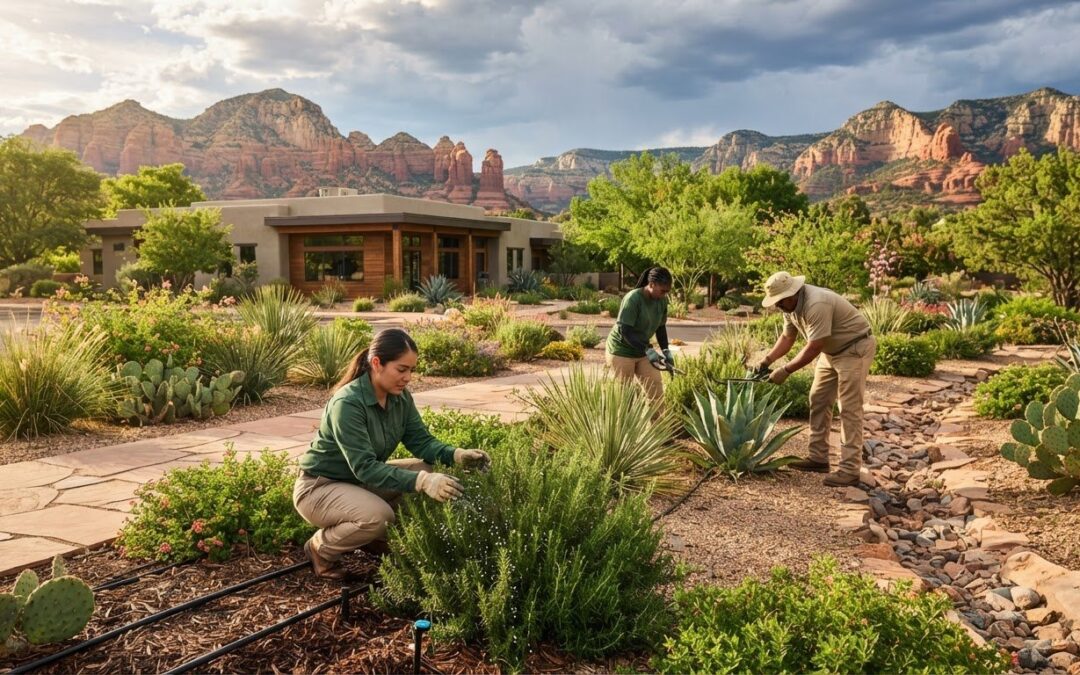
Treating outdoor property care as a routine mowing checklist is one of the costliest oversights a Northern Arizona facility manager can make. Professional commercial groundskeeping Verde Valley businesses rely on is fundamentally an exercise in proactive risk management. You likely know the distinct frustration of chasing uncommitted contractors, watching undetected drip line failures quietly inflate commercial water bills, or bracing for sudden summer storm washouts that damage curb appeal and disrupt customer footfall.
Keeping your exterior grounds pristine shouldn’t feel like an endless cycle of reactive repairs and unpredictable maintenance expenses. Discover how proactive commercial groundskeeping protects property value, ensures regulatory compliance, and masters the distinct microclimates of the Verde Valley. Ahead, we break down the essential scope of work commercial facilities need, exploring precision smart irrigation audits, Firewise defensible space strategies, and the dependable grounds care routines that keep your property resilient across every season.
Key Takeaways
- Understand why professional commercial groundskeeping Verde Valley properties require extends beyond routine mowing to protect physical assets across variable high-desert elevations.
- Discover how precision smart controller monitoring and low-flow drip irrigation repairs eliminate hidden water waste while keeping architectural plant palettes thriving.
- Learn how establishing Firewise defensible space buffers protects structural commercial assets from wildfire hazards and supports active corporate insurance policies.
- Explore proactive drainage grading solutions designed to direct severe monsoon runoff away from commercial building foundations and parking facilities.
- Identify critical contractor vetting criteria, including commercial-grade equipment fleet capacity and comprehensive commercial liability and workers’ compensation coverage.
What Defines Professional Commercial Groundskeeping in Verde Valley?
Professional exterior land care is an ongoing operational strategy, not merely cosmetic yard maintenance. For retail complexes, office parks, and civic facilities, what defines professional commercial groundskeeping centers on preserving infrastructure, maintaining clear sightlines, and stewarding local natural resources. Operating between 3,000 and 4,500 feet elevation presents unique physical demands that residential mowing services cannot handle. Unkempt turf or decaying foliage quickly undermines tenant satisfaction and deters customer footfall. Proactive maintenance protects capital investments against intense wind events, sharp temperature drops, and the relentless high-desert sun.
High-Desert Microclimates from Sedona to Camp Verde
Microclimates vary dramatically across the Verde Valley basin. Sedona facilities absorb intense radiant heat reflected from red rock canyon walls, while commercial centers in Camp Verde endure deep sub-freezing winter lows along the river basin. These temperature extremes demand tailored seasonal care. Native soils present another challenge: heavily calcified, alkaline conditions regularly lock out essential plant nutrients like iron and zinc. Effective commercial landscape maintenance relies on specialized soil conditioning and targeted aeration. Integrating drought-hardy native plants like desert willow, red yucca, and agave ensures commercial properties retain rich color and structural form without wasting excessive water during triple-digit heatwaves.
Commercial Facilities Requiring Specialized Landscape Protocols
Different commercial footprint types require distinct environmental and operational strategies:
- Retail Centers: Pedestrian-dense shopping corridors require hazard-free walkways, manicured entrance islands, and clear sightlines around ingress corridors to protect foot traffic and lower tenant liability.
- Corporate Campuses: Professional office centers thrive with functional exterior spaces, where shaded native plantings and stable hardscape pavers create calm environments for employee breaks and informal meetings.
- Industrial Business Parks: High-traffic logistics yards need resilient, low-water xeriscaping. Clean gravel beds, robust perimeter retaining walls, and well-managed drainage swales keep industrial operations accessible for heavy freight vehicles while keeping maintenance costs predictable.
- Sports and Recreational Facilities: Commercial sites featuring athletic surfaces demand tailored maintenance programs, where specialized service providers like X3 System illustrate how routine care and deep cleaning protect investments in artificial turf and running tracks.
Deploying specialized protocols across these distinct commercial footprints ensures that high-desert challenges never jeopardize facility safety or daily business operations.
Core Groundskeeping Services Every Verde Valley Business Requires
Executing professional commercial groundskeeping Verde Valley standards demand requires specialized horticultural science and methodical site monitoring. When managing high-profile facilities or corporate headquarters, properties need balanced, recurring care that preserves plant health while eliminating structural liabilities. Drawing from established multi-tenant protocols detailed in our guide to HOA landscape maintenance Arizona, commercial sites require structured attention across three primary domains: living foliage, structural masonry, and high-wear turf common areas.
Native Horticultural Pruning and Plant Health
Improper pruning methods quickly ruin high-desert flora. Shearing native plants into artificial geometric shapes depletes food reserves, triggers crown dieback, and invites wood-boring pests. For facility directors managing properties in other regions who need dependable exterior protection against seasonal pests, services like year round pest control Erie PA by Mosquito Assassin Pest Control LLC offer an effective example of proactive commercial pest management. Experienced crews practice selective crown thinning and directional pruning to accentuate natural growth habits. Light seasonal canopy thinning allows high-velocity spring winds to pass freely through trees without tearing mature limbs. Deadheading spent flower spikes on penstemons and organic fertilization in spring keep desert perennials blooming vigorously through autumn.
Hardscape Maintenance and Parking Lot Clearance
Functional hardscapes directly impact customer safety and legal liability. Commercial groundskeeping in the Verde Valley must address these high-traffic structural surfaces systematically:
- Trip-Hazard Elimination: Weekly high-velocity clearing removes loose aggregate, gravel, and fallen organic litter from walkways, building entrances, and ADA ramps.
- Structural Masonry Audits: Routine inspections detect settling, loose paver joints, or shifting retaining walls before minor grading movements turn into expensive structural failures.
- Pavement Expansion Protection: Timely weed elimination along asphalt seams and concrete joints stops aggressive taproots from widening fractures and degrading parking foundations.
Sustainable Turf Management and Soil Care
Maintaining vibrant, low-water turf in Northern Arizona requires disciplined cultural practices. Adjusting mower decks upward during triple-digit summer spells provides shade for root systems and decreases evaporation. Targeted core aeration relieves compaction in pedestrian courtyards, letting oxygen and moisture penetrate calcified clay layers. Applying organic humic amendments enhances water retention without washing nitrogen into sensitive regional waterways. These proactive practices align with the University of Arizona’s Firewise Guide for Arizona by keeping commercial property perimeters clean, healthy, and resistant to environmental stressors. For facility directors looking to enhance their exterior standards, partnering with an experienced local contractor like Green Earth, LC delivers four decades of continuous Northern Arizona field expertise to protect your commercial grounds year-round.
Water Conservation and Precision Commercial Irrigation Management
Outdoor water usage represents one of the largest ongoing utility expenditures for Northern Arizona commercial properties. In an arid climate characterized by high evaporation and persistent wind, inefficient watering systems quickly waste thousands of gallons while starving valuable landscape assets. Precision commercial groundskeeping Verde Valley businesses count on treats irrigation infrastructure as a sensitive hydraulic network requiring continual calibration. Incorporating field-tested diagnostics, such as those detailed in our overview of professional irrigation repair in Flagstaff, helps facilities overcome high-elevation pressure shifts and maintain dependable delivery across every commercial zone.
Smart Irrigation Controllers and Water Budgeting
Modern commercial properties cannot rely on static, seasonal timers. Smart evapotranspiration (ET) controllers track daily local weather conditions, automatically reducing runtime during cloudy spells or extending cycles during intense heat. Integrated commercial flow sensors monitor mainline hydraulics in real time. If a lateral pipe ruptures or an automated valve sticks open, the smart controller immediately isolates that specific zone, sending an instant alert to site managers and preventing localized structural flooding around building footings.
Commercial Drip System Auditing and Emitter Maintenance
Low-volume commercial drip systems are standard across the valley, yet they remain vulnerable to hidden operational failures:
- Mineral Calcification: Hard, mineral-laden regional water causes calcium bicarbonate scale to plug micro-emitters, quietly dehydrating specimen trees from the inside out.
- Pressure-Compensating Regulation: Extensive corporate parking islands require pressure-compensating emitters to deliver uniform flow across dramatic elevation gradients.
- Subsurface Damage Audits: Routine inspections catch feeder tubes chewed by ground squirrels or sliced during fiber-optic and utility repairs before plant root zones collapse.
Backflow Testing and Municipal Code Compliance
Verde Valley municipalities enforce rigorous commercial backflow prevention regulations to safeguard municipal drinking water from landscape chemical back-siphonage. Certified annual backflow testing is a strict legal mandate for every commercial facility. Proper seasonal winterization protects these exposed brass assemblies from overnight freezing temperatures, avoiding catastrophic emergency plumbing breaks. Professional groundskeeping teams log testing dates, static system pressure, and maintenance history, giving commercial property owners clear documentation during municipal compliance reviews.
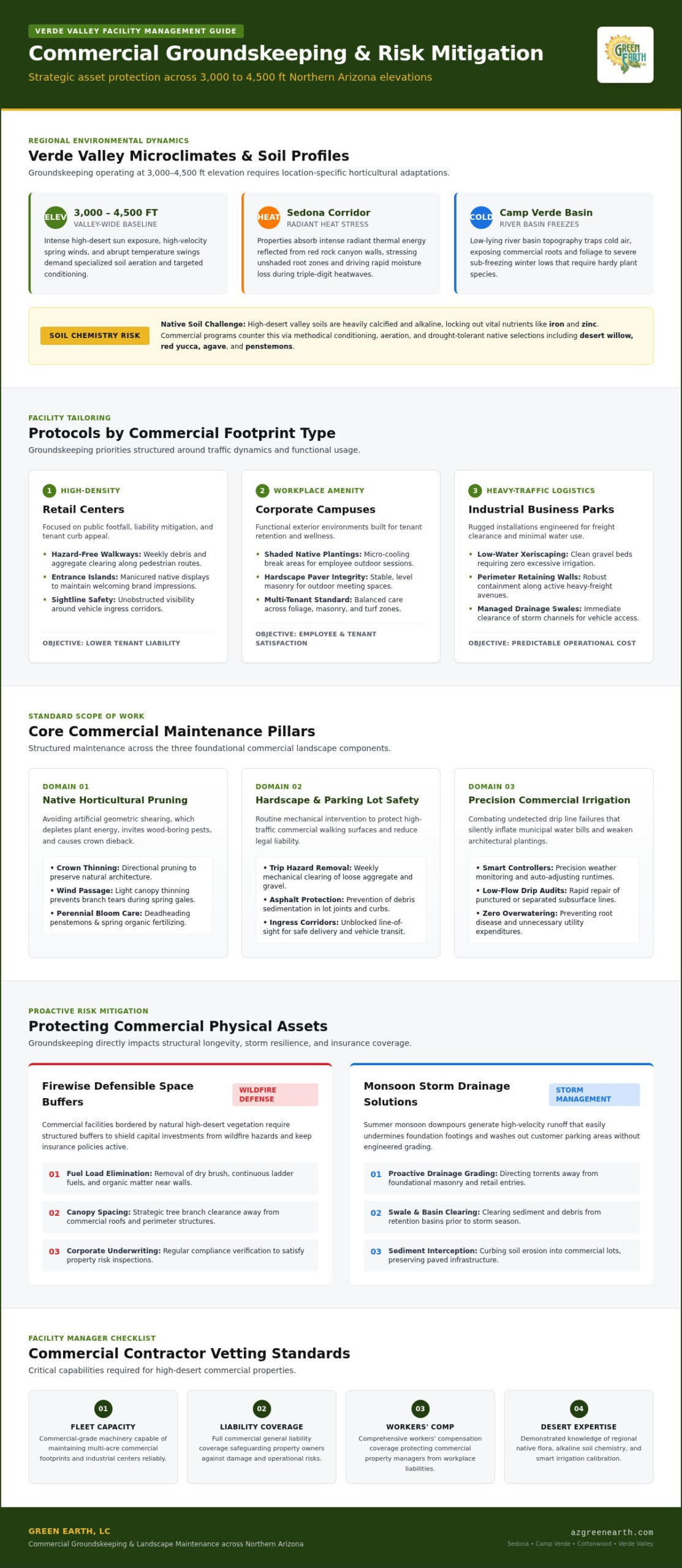
Property Risk Mitigation: Firewise Buffers and Monsoon Storm Drainage
Commercial facilities throughout Cottonwood, Clarkdale, and Camp Verde directly border volatile wildland-urban interface (WUI) zones. When wildfire seasons peak and summer storm clouds gather, landscape design transforms into your primary line of defense. High-standard commercial groundskeeping Verde Valley properties count on balances biological vitality with systematic risk reduction. Property managers who implement defensible buffers protect capital structures, satisfy strict commercial insurance mandates, and shield facilities from sudden weather emergencies.
Establishing Commercial Defensible Space Zones
Creating functional fire protection doesn’t require clearing every living plant down to bare dirt. By adopting regional standards outlined in firewise landscaping in Cottonwood, AZ, grounds crews structure perimeters into three distinct safety buffers:
- Zone 1 (0 to 5 Feet): This non-combustible perimeter surrounding structural walls demands total clearance of dry leaves, dead plant material, and flammable wood mulches. Replace organic materials with river rock or decorative decomposed granite.
- Zone 2 (5 to 30 Feet): Commercial layouts require deliberate horizontal and vertical plant separation. Pruning lower evergreen limbs removes dangerous “ladder fuels” that could otherwise carry a creeping ground fire into the upper canopy.
- Zone 3 (30 to 100 Feet): Thinning dense stands of native chaparral, juniper, and scrub oak reduces potential fire intensity along remote parking perimeters and loading docks without sacrificing visual privacy.
Monsoon Storm Runoff and Retention Basin Maintenance
Verde Valley summers bring violent monsoon downpours that drop torrential precipitation within minutes. Hardened desert soils cannot absorb water quickly, converting asphalt parking lots into high-velocity flood channels. Without routine clearance, retention basins and drainage grates choke on silt, weeds, and windblown tumbleweeds, causing water to back up directly into commercial entrances and foundation slabs. Applying engineered earthwork principles from our guide to drainage grading Arizona keeps water flowing safely off-site. Routine inspections clear bioswales, verify positive slope away from structural footings, and reinforce high-erosion curves with angular rip-rap stone to dissipate runoff energy before the next storm hits.
Protect your commercial facility against wildfire hazards and flash flood washouts by scheduling a comprehensive property safety evaluation with Green Earth, LC today.
How to Choose a Commercial Groundskeeping Contractor in the Verde Valley
Selecting an exterior property care provider is an important operational decision that directly influences your balance sheet, legal exposure, and corporate reputation. Many property managers mistakenly hire residential landscapers who lack the equipment capacity or field knowledge required for large footprints. Securing reliable commercial groundskeeping Verde Valley enterprises demand starts with thorough contractor vetting. Commercial facility managers need verified partners capable of aligning physical operations with modern environmental principles, such as those covered in our resource on desert landscape design Northern Arizona.
Before executing an agreement, commercial property owners should confirm five core qualifications:
- Commercial Fleet Capacity: Verify that the contractor deploys heavy-duty commercial mowers, specialized trenching tools, and debris hauling vehicles rather than undersized residential equipment.
- Comprehensive Insurance Coverage: Require written certificates of insurance showing substantial commercial general liability, full commercial auto protection, and statutory workers’ compensation.
- Documented High-Desert Longevity: Look for multi-decade regional experience managing alkaline caliche soils, riparian microclimates, and extreme high-desert temperature swings.
- Clear Operational Dispatch: Ensure the provider operates local dispatch centers to guarantee quick deployment during irrigation failures or monsoon damage events.
- Ecological Stewardship Credentials: Seek teams recognized for water conservation and low-impact maintenance that lower utility costs while protecting surrounding ecosystems.
Key Elements of a Commercial Service Level Agreement
A rigorous Service Level Agreement (SLA) removes ambiguity between facility managers and field supervisors. The contract should outline clear weekly task lists detailing which zones receive mowing, weeding, or plant trimming. It must specify guaranteed emergency response timelines for downed tree limbs or severed mainline pipes following major storms. Incorporating structured quarterly property walk-throughs ensures continuous transparency, allowing both parties to review water meter records and plan preventative repairs before problems multiply.
Why Decades of Local Verde Valley Experience Matters
Northern Arizona soil and weather patterns leave no margin for amateur guesswork. With over 47 years of continuous local operation since 1979, Green Earth, LC provides deep institutional knowledge of local environmental codes and microclimates. Recognized as a statewide runner-up for Best Sustainable Landscape Designer by Green Living Magazine, our team pairs deep environmental stewardship with commercial execution. Local dispatch out of Cornville ensures rapid response across Sedona, Cottonwood, and Camp Verde. Proactive commercial groundskeeping safeguards property value, maintains tenant satisfaction, and keeps long-term operating budgets predictable year after year.
Secure and Elevate Your Verde Valley Commercial Landscape
Professional property care in Northern Arizona requires moving far beyond reactive yard maintenance. As regional water standards evolve and seasonal weather shifts bring sudden monsoon downpours and wildfire threats, proactive commercial groundskeeping Verde Valley businesses invest in safeguards physical assets, protects tenant safety, and eliminates hidden operational overhead. Integrating methodical horticultural care with precision irrigation diagnostics and Firewise buffers keeps your commercial facility immaculate, compliant, and structurally secure.
Bringing over 47 years of regional experience serving Northern Arizona since 1979, Green Earth, LC provides the specialized high-desert know-how your facility demands. Recognized as a statewide runner-up for Best Sustainable Landscape Designer by Green Living Magazine, our crew delivers dedicated commercial maintenance, smart water auditing, and Firewise hazard reduction designed for lasting property resilience. Take the uncertainty out of facility land management. Partner with Green Earth, LC for expert commercial groundskeeping in the Verde Valley and give your commercial investment the dependable stewardship it deserves.
Frequently Asked Questions
What does a typical commercial groundskeeping contract include in the Verde Valley?
A comprehensive agreement covers routine turf mowing, native shrub pruning, weed management, seasonal irrigation diagnostics, and hardscape litter removal. Contracts also outline scheduled canopy thinning, smart controller programming, and emergency storm cleanup. High-standard agreements for commercial groundskeeping verde valley facilities incorporate Firewise fuel reduction and perimeter drainage checks to maintain tenant safety and satisfy municipal landscape codes across regional business corridors.
How often should commercial property irrigation systems be inspected in Northern Arizona?
Commercial drip lines and smart controllers should receive professional visual audits at least twice a month during peak heat from May through September. High desert temperatures, hard mineral buildup, and rodent chewing can rapidly disable emitters. Bi-weekly checks prevent silent plant dieback, while monthly reviews during cooler shoulder seasons confirm pressure regulation. Mandatory annual backflow assembly testing ensures ongoing municipal compliance.
Is Firewise defensible space maintenance required for commercial properties in the Verde Valley?
While Firewise certification is voluntary through the NFPA, local fire districts and corporate commercial property insurers increasingly enforce strict defensible space compliance. Maintaining a non-combustible Zone 1 perimeter within five feet of buildings and eliminating flammable brush ladder fuels within 30 feet protects physical structural assets. These measures keep active commercial insurance policies in good standing across wildland-urban interface boundaries.
How do high-desert seasonal changes impact commercial landscape maintenance schedules?
Elevation shifts between 3,000 and 4,500 feet create distinct transitional seasons that dictate operational priorities. Spring focuses on canopy thinning for windstorm preparedness and post-frost pruning. Summer requires raising mower deck heights and monitoring smart irrigation runtimes. Autumn centers on drainage basin clearing ahead of winter freeze protocols, which involve draining exposed irrigation lines and insulating backflow assemblies against sub-freezing river basin lows.
Can eco-friendly commercial groundskeeping practices reduce property water bills?
Yes, sustainable commercial groundskeeping verde valley programs significantly lower utility overhead through precision diagnostics. Replacing failing spray heads with low-flow, pressure-compensating drip emitters eliminates overspray and rapid surface evaporation. Weather-based smart controllers dynamically adjust runtimes based on daily temperatures and humidity, preventing overwatering while providing native architectural plantings with the precise hydration required to thrive.
What steps protect commercial landscapes from heavy Arizona monsoon storm runoff?
Protecting commercial facilities requires proactive drainage grading, clearing collection basins, and armoring high-velocity runoff channels. Prior to the summer storm season, grounds crews clear silt and organic debris from parking lot drop inlets, retention basins, and bioswales. Installing angular rip-rap stone along sloped channels dissipates heavy flood energy, preventing pavement washouts and protecting commercial building slabs from standing water.
Recent Comments