
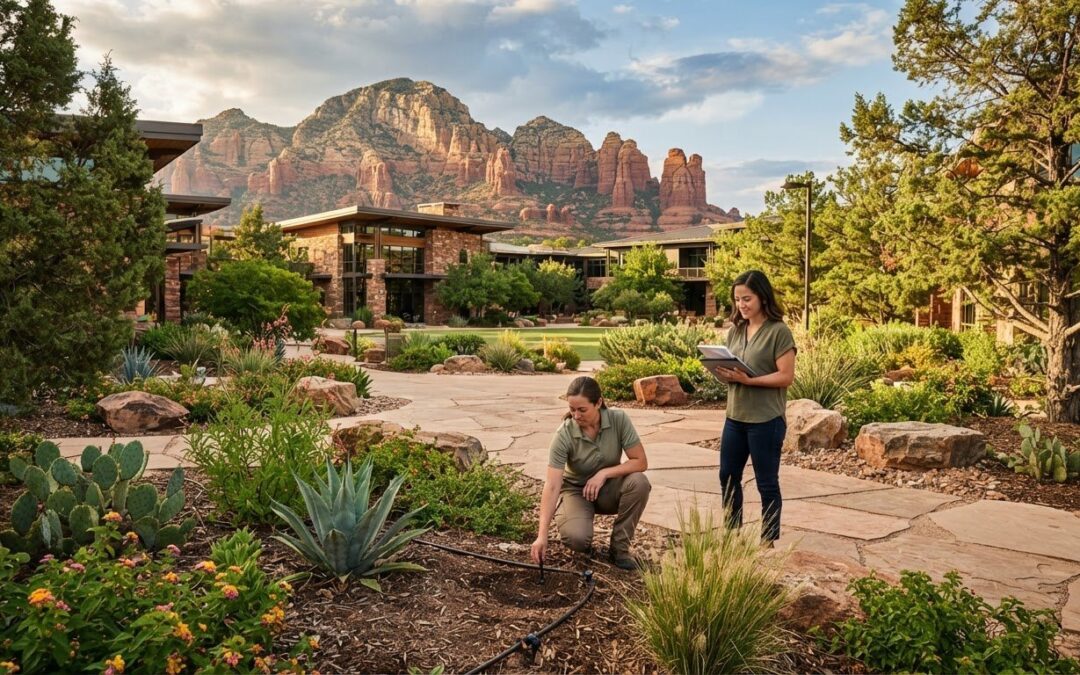
In the arid Southwest, commercial grounds care isn’t cosmetic maintenance; it’s active environmental risk engineering. If you manage retail centers, office parks, or corporate facilities, you already know how quickly grounds issues turn into operational headaches. Between sudden monsoon washouts, missed contractor visits, and staggering utility bills from undetected irrigation leaks, outdoor maintenance often feels like nonstop damage control. Elevating your standards with specialized commercial landscape management az means moving past generic mow-and-blow crews toward disciplined stewardship that respects Arizona’s fragile desert ecosystems and volatile weather patterns.
You shouldn’t have to sacrifice inviting curb appeal to control maintenance expenses and prevent costly tenant hazards. In this guide, discover how proactive commercial landscape management protects property value, slashes water waste, and mitigates climate liabilities across Arizona. We’ll walk through microclimate-specific horticultural care, smart drip irrigation technology, and structured budgeting strategies designed to keep your properties safe, sustainable, and consistently lease-ready through 2026 and beyond.
Key Takeaways
- Learn why comprehensive commercial landscape management az serves as vital exterior asset protection that safeguards real estate investments against harsh regional extremes.
- Discover how precision drip irrigation troubleshooting and smart controller scheduling cut commercial utility overhead while meeting Arizona water conservation standards.
- Protect your facilities from flash flooding, soil erosion, and wildfire exposure through engineered site grading, proper drainage, and Firewise defensible space practices.
- Evaluate prospective grounds contractors using a structured vetting framework focused on dual commercial licensing, microclimate horticulture, and transparent maintenance agreements.
- Achieve predictable operational grounds budgeting and sustained leasing appeal by partnering with established regional specialists who understand high-desert and multi-elevation environments.
What Is Commercial Landscape Management in Arizona?
Commercial landscape management in Arizona is the systematic preservation, environmental risk mitigation, and agronomic care of commercial exterior grounds to protect real estate value and maintain strict water efficiency. Unlike standard residential gardening, it coordinates biological cycles, irrigation mechanics, and environmental risk controls across business parks, retail spaces, and HOA communities.
Basic mow-and-blow maintenance crews frequently fail on desert commercial sites because they treat grounds care as a cosmetic routine. In an arid climate, scalping turf and trimming shrubs without understanding soil physiology quickly leads to root rot, dead plant material, and cracked surfaces. Modern commercial landscape management az moves far beyond cosmetic upkeep; it functions as dedicated environmental asset preservation, shifting properties toward sustainable water conservation and climate-resilient presentation.
Beyond Mowing: The Scope of Commercial Grounds Care
Effective grounds care looks past visible turf surfaces to nurture the underlying plant biology. Strategic plant health programs combine soil aeration, targeted micronutrient feedings, and calibrated pruning to ensure long-term vigor. Crews proactively clear walkways and parking lots of plant debris, ensuring tenant safety and preventing slip-and-fall liabilities.
Invasive weeds represent another operational liability. Contractors apply pre-emergent treatments on strict schedules before seasonal rains trigger seed germination, stopping disruptive roots before they breach parking lot asphalt or choke drainage paths. While desert protocols target arid conditions, commercial properties across different climates rely on similar tailored care; for instance, specialists like Performance Lawns, INC deliver structured weed control and fertilization programs to protect turf longevity. Structured maintenance preserves critical investments, safeguarding structural features like paver pathways and engineered retaining walls from avoidable root intrusion and shifting soil.
Managing Arizona’s Arid and High-Desert Microclimates
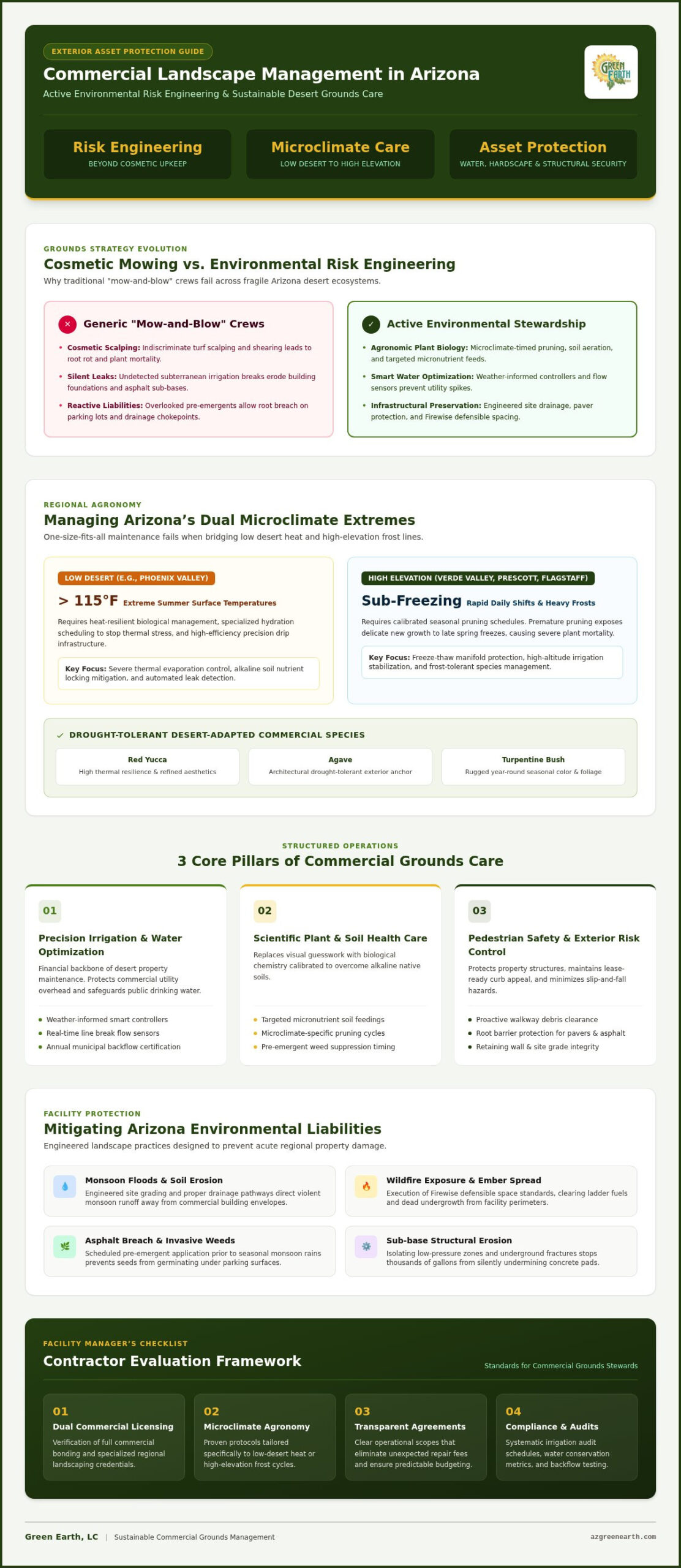
National maintenance providers often make the mistake of treating high-desert properties like low-desert Phoenix lawns. Regional geography demands specialized knowledge. Low-desert commercial properties face scorching summer heat above 115 degrees, while higher-elevation sites in the Verde Valley, Prescott, and Flagstaff navigate rapid daily temperature drops, heavy winter frosts, and freezing conditions.
These intense shifts dictate precise horticultural schedules. Pruning cold-sensitive shrubs too early in high-elevation commercial centers exposes new growth to late spring freezes, killing plant material. Implementing regional Xeriscaping principles with desert-adapted species like red yucca, agave, and turpentine bush creates drought-tolerant, resilient commercial sites that maintain refined aesthetics across every season.
Core Pillars of Sustainable Commercial Grounds Management
Sustainable commercial grounds care balances ecological resilience with rigorous fiscal discipline. When facilities managers invest in structured exterior maintenance, they aren’t merely funding curb appeal; they are establishing comprehensive operational protection. Successful commercial landscape management az rests on three interconnected disciplines: precision water optimization, scientific plant health care, and vigilant pedestrian hardscape safety.
Precision Commercial Irrigation and Water Optimization
Water stewardship forms the financial backbone of desert property maintenance. Automated irrigation systems pairing weather-informed smart controllers with real-time flow sensors detect line breaks before water bills spike out of control. Subterranean drip leaks can silently leach thousands of gallons under asphalt pads and building foundations, eroding structural sub-bases.
Routine commercial audits isolate low-pressure zones and line fractures immediately. If your facility contends with recurring freeze-thaw cycles or aging distribution manifolds, scheduling professional irrigation repair in Flagstaff stabilizes pressure imbalances while preserving sensitive root zones. Audits also ensure annual municipal backflow prevention testing stays compliant, protecting public drinking supplies from chemical and organic back-siphonage.
Arbor and Plant Health Care for Commercial Properties
Plant health care in desert soils requires proactive chemistry, not guesswork. Highly alkaline native soils lock away essential micronutrients, creating yellowing foliage and stunted canopies. Property managers can consult the University of Arizona’s sustainable landscaping guides to understand how targeted soil amendments, sulfur additions, and compost top-dressings release vital minerals naturally.
Plant structural maintenance also safeguards property visitors. Key practices include:
- Pruning lower branches to clear vehicular sightlines at main driveway exits and pedestrian crosswalks.
- Canopy thinning on desert trees like mesquite and ironwood, reducing wind drag to prevent catastrophic windthrow during intense monsoon gusts.
- Monitoring moisture levels around root collars to stop fungal rot before structural instability develops.
Hardscape Maintenance and Pedestrian Safety Protocols
Exterior walkways and communal courtyards demand the same rigorous attention as living turf and foliage. Shifting soil, thermal expansion, and shallow root intrusion lift commercial pavers, creating severe trip hazards and corporate liabilities. Implementing routine paver resets, leveling joints, and inspecting reinforced edges prevents injury risks across busy retail corridors.
Integrating professional hardscape construction in Cottonwood, AZ ensures structural walkways, retaining walls, and parking pads withstand shifting subgrades and heavy seasonal runoff. Inspecting perimeter retaining walls protects structural integrity, preventing structural fatigue along parking perimeters. For property teams seeking experienced guidance across these high-stakes disciplines, partnering with Green Earth, LC provides reliable exterior stewardship tailored directly to Arizona’s varied terrain.
Mitigating Arizona Environmental Liabilities on Commercial Sites
Operating commercial facilities in Arizona means managing intense environmental forces. Between violent summer monsoons and arid wildfire conditions, exterior grounds act as the first line of defense for physical structures. Proactive commercial landscape management az serves as technical risk engineering, safeguarding building foundations, parking lots, and tenant safety before natural hazards escalate into catastrophic insurance claims.
Monsoon Preparation and Stormwater Drainage Management
Summer monsoons unleash torrential rainfall across hard-baked soils, producing rapid sheet flow and localized flash flooding. Without cleared drainage corridors, surface runoff backs up into commercial entryways and undermines parking infrastructure. Managing this risk requires deliberate pre-monsoon site work:
- Re-grading retention basins and clearing dry well grates to restore municipal percolation rates.
- Armoring drainage swales with angular riprap stone to dissipate high-velocity water energy along curbs and asphalt edges.
- Clearing culverts, catch basins, and scuppers of built-up gravel and desert detritus before early July storms arrive.
Addressing structural runoff routes early protects subgrades from catastrophic failure. Facilities managers can explore specialized drainage grading in Arizona to ensure site contours divert seasonal storm volumes safely away from structural footings and subterranean utilities. Post-storm protocols require immediate grounds sweeps to clear accumulated silt from accessible walkways, preventing pedestrian hazards.
Wildfire Defensible Space and Firewise Compliance
Commercial business parks, medical complexes, and retail centers situated along the wildland-urban interface (WUI) face heightened wildfire threats. Desert brush, juniper stands, and dry native grasses can become combustible fuel ladders during peak pre-monsoon heat. Implementing disciplined fuel load reductions prevents wind-driven firebrands from igniting structural perimeters.
Property teams can review established best practices for firewise landscaping in Cottonwood, AZ to maintain structured defense buffers against open wildlands. Commercial grounds management establishes three distinct protection zones:
- Zone 1 (0 to 5 feet): Create an ember-resistant perimeter directly around foundations using non-combustible crushed rock, decomposed granite, and bare pavers rather than combustible wood mulch.
- Zone 2 (5 to 30 feet): Maintain lean, clean, and green defensible space by pruning low-hanging tree branches, removing ladder fuels, and grouping high-moisture succulents.
- Zone 3 (30 to 100 feet): Thin native shrub densities and thin brush stands to disrupt horizontal fire spread toward building perimeters.
Selecting fire-resistant succulents and deciduous desert flora around retail storefronts creates an attractive, sustainable buffer that actively reduces property liability.
How to Choose an Arizona Commercial Landscape Contractor
Selecting the right service partner for commercial landscape management az requires evaluating technical competence, operational transparency, and regulatory compliance. Property managers should rely on a structured five-step framework when vetting prospective grounds providers:
- Verify active commercial licensing and insurance coverage.
- Assess elevation-specific horticultural and irrigation diagnostic expertise.
- Review automated reporting systems and scheduled communication cadences.
- Evaluate sustainable practices supporting corporate ESG goals, such as low-emission battery gear.
- Audit past commercial contract retention across regional business parks and communities.
Any legitimate Arizona commercial landscape contractor must hold an active commercial or dual license in good standing from the Arizona Registrar of Contractors alongside comprehensive commercial general liability and workers’ compensation coverage.
Verifying Licensing, Insurance, and Safety Certifications
Never rely on verbal assurances. Always verify active licensing directly through the Arizona Registrar of Contractors database, confirming commercial classifications such as specialty commercial (C-) or dual (CR-) landscaping licenses without open disciplinary citations. Require certificates of insurance showing comprehensive commercial general liability, commercial auto, and workers’ compensation coverage. Prioritizing supervisors trained through the regional Smartscape program ensures your grounds team applies proven desert water conservation principles.
Evaluating Technology, Reporting, and Account Management
Transparent communication prevents unexpected site surprises. Leading contractors supply automated digital inspection reports complete with geotagged site photos, detailing completed punch-list tasks and flagging emerging irrigation faults. Property managers should also mandate structured monthly walk-throughs with their dedicated account manager to review ongoing service milestones. Clarifying documented response protocols for clearing downed branches or storm debris ensures rapid site recovery after severe weather events.
Customizing Scope for HOAs, Retail, and Office Parks
Every commercial property type presents distinct operational schedules and compliance demands. Community associations require clear, board-ready variance documentation, which property managers can explore in detail through HOA landscape maintenance in Arizona. Corporate campuses require quiet maintenance hours and low-noise electric equipment to protect business environments, while retail centers demand early-morning servicing before customer traffic peaks.
Aligning ongoing grounds agreements with your annual operating expense budgets eliminates surprise fees and maintains consistent property presentation year-round. Partner with Green Earth, LC to schedule a comprehensive commercial property audit and establish a dependable grounds management program built around your site’s operational needs.
Partnering with Green Earth for Sustainable Commercial Grounds
Commercial real estate demands grounds partners who view property maintenance through the lens of long-term value creation. Rather than dealing with fragmented subcontractors or distant corporate conglomerates, partnering with Green Earth, LC brings decades of proven regional stability. Recognized as statewide runner-up for Best Sustainable Landscape Designer by Green Living Magazine, our team delivers disciplined commercial landscape management az that transforms vulnerable commercial exteriors into resilient, predictable assets.
Decades of Local Expertise in Northern Arizona and the Verde Valley
Managing high-desert microclimates requires deep intimacy with regional geography. Founded in 1979, Green Earth brings over 47 years of dedicated experience across Sedona, Cottonwood, Camp Verde, Flagstaff, and Prescott. Our specialists understand how soil chemistry shifts between the red rocks of the Verde Valley and the volcanic subgrades of the high country, and how local municipal water districts enforce specific usage thresholds.
Because our leadership is based locally, commercial clients benefit from direct executive oversight and active quality control. Property directors avoid the frustration of call centers or out-of-state regional managers, receiving prompt communication and accountable site stewardship on every scheduled visit.
Comprehensive Sustainable Solutions from Maintenance to Construction
Our full-spectrum commercial capabilities allow facilities teams to consolidate routine grounds preservation and structural enhancements under one reliable partner. We combine ongoing commercial and HOA maintenance with advanced drip irrigation troubleshooting, Firewise defensible space clearance, site drainage grading, and paver hardscape construction. By deploying eco-friendly techniques that reduce synthetic chemical dependencies and maximize irrigation efficiency, we help clients meet corporate ESG initiatives while controlling utility overhead.
Transitioning your commercial property into our care follows a structured onboarding process:
- Baseline Site Audit: We conduct a comprehensive walk-through to map valve manifolds, inspect controllers, identify root intrusion risks, and evaluate drainage flow lines.
- Custom Scope Development: Our team establishes a transparent service schedule matched directly to your property layout, tenant activity, and operating expenditure budget.
- Proactive Execution: Dedicated crews initiate baseline corrections, stabilizing irrigation performance and restoring clean visual lines across all exterior corridors.
Ready to protect your property’s long-term value with seasoned regional specialists? Connect with our team today to schedule a commercial grounds consultation with Green Earth.
Engineer Resilient Commercial Grounds for Long-Term Value
Arizona commercial properties demand far more than superficial groundskeeping. Integrating precision drip irrigation audits with proactive monsoon drainage grading and Firewise fuel reduction transforms grounds care from an unpredictable operational expense into true asset risk engineering. Respecting elevation-specific horticultural needs keeps outdoor spaces vibrant, cuts water utility waste, and protects corporate facilities against environmental liabilities across every season.
Choosing the right partner makes all the difference. Backed by over 47 years serving Northern Arizona commercial properties since 1979, Green Earth, LC delivers specialized multi-elevation expertise from the Verde Valley to Flagstaff. Recognized as statewide runner-up for Best Sustainable Landscape Designer by Green Living Magazine, we bring disciplined, eco-friendly stewardship to office parks, retail centers, and HOA communities. It’s time to take control of your grounds budget and elevate your commercial landscape management az. Connect with our experienced team to Request a Comprehensive Commercial Landscape Audit and protect your real estate investment for years to come.
Frequently Asked Questions
How does commercial landscape management differ from residential landscaping services?
Commercial landscape management focuses on institutional asset protection, risk reduction, and public safety across larger acreage, whereas residential services prioritize personal outdoor living preferences. Commercial contracts demand strict liability insurance, formal safety compliance, ADA accessibility clearance, and structured reporting. Professional commercial landscape management az also integrates complex stormwater retention maintenance, commercial backflow prevention, and high-volume drip irrigation troubleshooting that single-family residential properties rarely require.
How often should commercial irrigation systems undergo formal water audits in Arizona?
Commercial properties should complete formal irrigation audits at least twice per year, timed directly before the spring growing season and ahead of peak summer heat. These assessments verify smart controller programming, evaluate distribution uniformity, inspect subterranean lateral lines for pressure loss, and test backflow prevention assemblies. High-traffic properties or those using reclaimed effluent water benefit from quarterly audits to catch emitter blockages before vegetative turf or native specimen plants suffer heat stress.
What are the essential licensing requirements for Arizona commercial landscape contractors?
Legitimate contractors must hold active specialty commercial (C-) or dual commercial and residential (CR-) licenses issued by the Arizona Registrar of Contractors. These classifications confirm the contractor passed mandatory trade examinations and business statutes testing. In addition to state trade licenses, commercial providers must maintain comprehensive commercial general liability insurance, commercial auto fleet coverage, and mandatory workers’ compensation policies to shield property owners from on-site injury liabilities.
How do commercial landscaping companies help properties meet local water conservation mandates?
Contractors achieve regulatory compliance by modernizing outdated spray head systems with weather-adjusting smart controllers, rain shutoff sensors, and precision pressure-compensating drip manifolds. They conduct turf-reduction conversions, replacing water-intensive non-functional grass with engineered xeriscapes, decorative decomposed granite, and native low-water vegetation. Additionally, experienced contractors configure commercial sites to harvest stormwater runoff naturally, helping clients avoid municipal excess-use surcharges and meet municipal water-efficiency thresholds.
Can proactive commercial landscape management lower overall property insurance premiums?
Yes, proactive grounds management directly targets conditions that prompt commercial insurance claims. Documented structural pruning keeps tree canopies away from roofs and power lines, reducing storm-related impact damage during microbursts. Routine paver leveling and walkway root inspections eliminate dangerous pedestrian trip hazards. Maintaining designated Firewise defensible space around structural envelopes also lowers underwriter risk ratings for wildfire exposure in wildland-urban interface zones.
What should be included in an emergency storm cleanup plan for commercial properties?
An emergency plan must outline clear response timelines, specialized equipment staging, and prioritized triage protocols immediately following summer monsoons or winter squalls. The primary priority is establishing safe access: clearing obstructed vehicular driveway entrances, unblocking pedestrian fire lanes, and roping off compromised tree limbs. Secondary recovery involves inspecting dry wells, clearing sediment out of clogged stormwater grates, and resetting lifted hardscape pavers across busy retail walkways.
How does commercial landscape management handle multi-elevation properties across Northern Arizona?
Handling properties across elevations from Cottonwood and Sedona up to Prescott and Flagstaff requires microclimate-specific horticultural programming. Low-valley properties contend with prolonged triple-digit summer heat, alkaline soil salts, and high evaporation rates. Higher-altitude properties face short growing seasons, heavy snowfall, and deep ground freezes. Disciplined contractors tailor seasonal pruning windows, fertilizer chemistry, and winter irrigation winterization blowouts specifically to the elevation of each individual business park. For facility directors managing sites in regions subject to severe winter weather, dedicated exterior specialists like Snow Removal Denver highlight how proactive seasonal plowing and clearing keep commercial access routes safe throughout harsh winter conditions.
Recent Comments