
The right drainage fix in Flagstaff may not start with a drain. If water pools beside your home, cuts channels through a planted area, or runs toward a patio, it’s natural to look for a quick way to move it. But the cause may be the slope, soil, a drainage feature, or a combination of factors. Choosing among drainage grading contractors Flagstaff property owners can rely on starts with finding out where the water comes from and where it goes.
Flagstaff’s monsoon runoff, rocky volcanic soils, and winter freeze-thaw cycles can influence how water moves across a site. A solution that ignores the conditions on your property may not address what you’re seeing. Before work is proposed, you deserve a clear explanation of the problem and the limits of any recommended approach.
This guide explains how grading and drainage work together, what a contractor should inspect, and what questions can help you compare proposals. You’ll learn how to match an approach to your property’s contours and water flow, and how to evaluate a local provider’s diagnosis, project scope, and intended water route.
Key Takeaways
- Pooling, eroding soil, and runoff channels are clues to investigate, not proof of a single drainage problem.
- Help a contractor assess your site by noting where water collects, when it happens, and whether the landscape has changed.
- Compare grading, swales, French drains, and erosion-control approaches based on your property’s conditions, not just the method name.
- When comparing drainage grading contractors flagstaff, ask how each proposal was developed, what it includes, and what limits the plan has.
- Green Earth, LC offers drainage grading as part of its landscape construction capabilities. Discuss your site conditions and project scope with the team.
Drainage Grading Contractors in Flagstaff: Recognize the Signs of a Site Problem
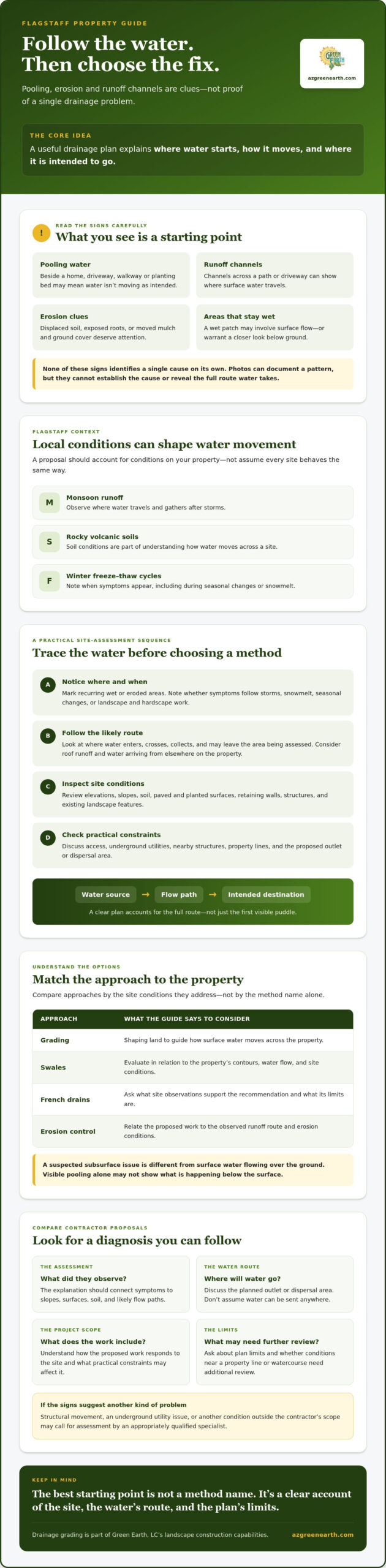
Pooling near a home, driveway, walkway, or planting bed can signal that water isn’t moving across the property as intended. Runoff channels, displaced soil, exposed roots, and landscape areas that stay wet may also deserve attention. In Flagstaff, these signs can become noticeable after a storm or as conditions change through the seasons. They’re useful clues, but none identifies a single cause on its own.
Grading is the shaping of land to guide how surface water moves across a property. The concept, described in this Grading in civil engineering overview, involves creating contours or slopes suited to the site. A grading concern usually involves water flowing over the ground. A suspected subsurface drainage issue involves water below the surface, where visible pooling alone may not reveal what’s happening.
What drainage and grading problems can look like on a Flagstaff property
Start by noting where water collects and where it travels afterward. A low spot beside a structure may hold water, while runoff crossing a driveway or path may leave a channel or carry soil into a planting bed. Erosion can expose roots or displace mulch and other ground cover. Record when you notice the symptoms, such as after storms, during seasonal changes, or following landscape or hardscape work. These observations give a contractor useful context.
Why a visible water problem needs a site-specific diagnosis
Water’s route matters as much as the first place it becomes visible. Slope, soil, paved areas, roof runoff, and water arriving from elsewhere on the property can interact. A wet patch might point to a surface-flow issue, but it may also warrant a closer look below ground. Photos can document what you see, but they can’t establish the cause or show the full route water takes across a site.
Ask drainage grading contractors flagstaff homeowners are considering to explain what they observed before recommending work. A useful assessment should connect symptoms to site conditions and distinguish surface-water flow from a possible subsurface concern. If signs point to structural movement, an underground utility issue, or another condition outside the contractor’s scope, ask whether assessment by an appropriately qualified specialist is needed. The goal is to understand the problem before selecting an approach, not to choose a method based on one symptom alone.
How Flagstaff Contractors Assess Drainage, Grading, and Runoff
A useful assessment follows the water before settling on a fix. The contractor should first ask where and when you notice the problem, then inspect the property’s elevations and likely flow paths. They should also identify practical constraints, such as nearby structures, access, or utilities, before discussing options. A drainage plan should explain both where water starts and where it is intended to go.
Before the visit, note recurring wet or eroded areas, when symptoms appear, and any changes you’ve made to the landscape. Photos taken after a storm can help show patterns, but they’re only part of the picture. When comparing drainage grading contractors flagstaff property owners should look for a clear explanation of how the site observations support the proposed work.
What a useful site assessment should examine
Ask the contractor to walk you through relevant slopes, surfaces, soil conditions, and runoff pathways. A paved area may shed water differently from a planted bed, while a retaining wall or building can influence its route. The assessment should also consider existing landscape features and where water may enter or leave the area being evaluated.
Clarify whether access, underground utilities, or conditions near a property line could affect the work. Discuss the proposed outlet or dispersal area rather than assuming a drain or regraded slope can send water anywhere. If the destination could affect another property or a defined watercourse, ask what further review may be needed.
Questions to ask about Flagstaff seasonal conditions
Ask how the proposal relates to water patterns you’ve observed on your property. If runoff is most noticeable after storms, describe where it travels and where it gathers. If you see a problem during snowmelt or freezing conditions, point out the location and timing. Don’t assume those conditions affect every site in the same way. Local soil and water information from the Coconino County Cooperative Extension can provide useful background, while a contractor should assess your property directly.
Before work is planned, ask which City of Flagstaff or Coconino County requirements may apply and which authority can confirm them for your project. A contractor should be clear about the limits of their assessment and when another specialist’s input may be appropriate.
Green Earth, LC offers drainage grading as part of its landscape construction work. To discuss your site conditions and project scope, contact the team and ask whether the project is a fit.
Comparing Drainage Grading Solutions for Flagstaff Properties
Once the water path and site constraints are understood, a contractor can compare possible approaches. Surface grading and swales guide water above ground; a French drain provides a route below ground; erosion-control work focuses on limiting soil movement. The right choice depends on the diagnosis, property layout, and a suitable place for water to go. No single feature suits every Flagstaff property, and a proposed method should not be treated as a guaranteed result.
| Approach | General purpose | Site factors and questions to confirm |
|---|---|---|
| Surface grading | Reshapes ground contours to guide surface runoff along a planned route. | Is there enough space to adjust the slope without affecting structures, paths, planting areas, or neighboring land? Where will the redirected water go? |
| Swale | Uses a shallow, shaped channel to collect and guide surface water where site conditions allow. | Can the channel fit the landscape and intended flow path? How will the route avoid concentrating water where it could create a new issue? |
| French drain | Provides a subsurface route for water; it isn’t a universal solution for visible pooling or runoff. | What evidence suggests an underground drainage approach is appropriate? Where will the system discharge, and how will it remain accessible for maintenance? |
| Erosion control | Helps address soil movement or recurring washouts, with the approach depending on the source and location of erosion. | Is the concern surface runoff, slope instability, or another condition? What work may be needed to restore affected landscape areas? |
When surface grading or a swale may be considered
Reshaping the surface can direct runoff away from a low spot and along a defined route if the site has room and a suitable destination. A swale is a shaped channel that may guide water through part of the property. Ask the contractor to explain where water will enter, how it will travel, and where it will leave the route. Confirm that the plan won’t simply shift the problem to another part of the site.
When a French drain or erosion-control work may be discussed
A French drain moves water below the surface, so the contractor should explain why it fits the observed conditions and identify a suitable discharge point. For erosion concerns, ask how the assessment accounts for recurring washouts or signs of slope instability. Clarify likely maintenance needs, access for future work, and whether the selected approach could require restoring disturbed landscape areas.
Ask drainage grading contractors flagstaff property owners are comparing to explain why their proposed method fits the site better than the alternatives. A clear proposal connects the diagnosis, the chosen approach, and the water’s intended destination.
How to Choose a Drainage Grading Contractor in Flagstaff
Choosing among drainage grading contractors flagstaff property owners are considering takes more than comparing method names. Look for a provider who can explain the site issue, connect the recommended work to observed conditions, and set out what the project includes. A French drain or regraded slope isn’t a plan by itself. The proposal should make the reasoning and scope clear.
What to look for in a contractor’s assessment and proposal
Use these steps to compare providers:
- Confirm relevant experience. Ask about experience with drainage grading and landscape construction projects similar in type and setting to yours. If you review examples, ask what the contractor’s role was and what conditions shaped the work.
- Discuss the diagnosis. The contractor should describe the observed water paths, relevant site constraints, and why the recommended approach fits your property. Ask what alternatives were considered and why they may not be appropriate.
- Review the full scope. Compare the work included, areas affected, restoration of disturbed landscaping, exclusions, access needs, and work sequence. Two proposals that name the same method may cover different tasks.
- Clarify communication. Confirm who will answer questions, how changes to the planned work will be discussed, and how you’ll be updated as the project progresses.
Ask which local requirements may apply and which City of Flagstaff or Coconino County authority can confirm them for your project. For broader background, see this Arizona drainage grading guide. It can help you prepare questions, but it doesn’t replace property-specific advice or confirmation of applicable requirements.
How to prepare for a Flagstaff drainage consultation
Bring notes or photos showing where water collects or flows and when you’ve observed it. Point out known utility locations, earlier landscape work, and areas that need to remain accessible. Mention planting beds, walls, or paved surfaces that the work may affect. These details help the contractor discuss the scope and sequence with the actual site in mind.
Before scheduling work, ask the contractor to address anything that remains unclear, including the intended water destination, restoration, exclusions, and possible constraints. A well-explained proposal makes it easier to compare providers on diagnosis and scope, not just on the label attached to a solution.
Green Earth, LC provides drainage grading as part of its landscape construction capabilities. To discuss your property conditions and project scope, contact Green Earth about drainage grading.
Green Earth’s Drainage Grading Services for Flagstaff and Northern Arizona
Green Earth, LC is a locally owned landscaping and construction company based in Cornville, serving Northern Arizona communities including Sedona, Camp Verde, Cottonwood, Flagstaff, and Prescott. Its capabilities include drainage grading, landscape construction, and irrigation services. The company has more than 47 years of experience serving the Verde Valley, bringing regional landscape experience without implying a specific number of Flagstaff projects.
Green Earth emphasizes sustainable practices in its landscape work. That commitment doesn’t guarantee a particular drainage result; the appropriate scope depends on the property’s conditions and project fit. For people comparing “drainage grading contractors flagstaff,” a useful next step is to discuss the site and ask how grading might relate to the surrounding landscape construction.
What Green Earth can discuss for a drainage grading project
Start a project conversation with what you’ve observed: where water collects or flows, when the issue tends to appear, and how you want to use the landscape. Share relevant site details, such as nearby paved areas, planting beds, or changes made to the property. This context can help frame the discussion, but it doesn’t replace an assessment.
Any recommended scope depends on site conditions and confirmed project fit. Drainage grading may be considered alongside broader landscape construction, but the proposed work should reflect the property rather than assume a particular feature or outcome. Ask what areas may be affected and how the grading plan relates to the existing landscape.
Plan the next step for a Flagstaff property
Before discussing your project, gather photos of affected areas, a short record of recurring symptoms and when they occur, and notes about access or known site constraints. If water concerns seem connected to an irrigation issue, Green Earth also offers irrigation services, which may be a separate but related need to discuss.
Green Earth serves Northern Arizona, including Flagstaff, but confirm that your specific project is a fit. Contact Green Earth to discuss your drainage grading project, share your site conditions, and ask about the work you have in mind.
Choose a Clear Path to Better Water Flow
Pooling or eroding soil is a reason to investigate, not a diagnosis. First, understand how water moves across your property. Then compare proposals by their reasoning, scope, and intended water destination. As you evaluate drainage grading contractors flagstaff property owners can consider, look for a provider who clearly explains the site conditions and the limits of the proposed work.
Green Earth, LC is a Cornville-based Northern Arizona landscaping and construction company with over 47 years of experience serving the Verde Valley. Drainage grading is among its services, and the company was a statewide runner-up in Green Living Magazine’s Best Sustainable Landscape Designer category. That recognition reflects a commitment to sustainable landscape practices, not a promise of a particular drainage outcome.
Discuss your site symptoms, project scope, and service fit directly with the team. Contact Green Earth to discuss drainage grading for your Flagstaff property and explore whether the project is a fit. A clear assessment and careful comparison can help you choose a practical next step for your landscape.
Frequently Asked Questions
How do I know if my Flagstaff property needs drainage grading?
Recurring pooling, runoff channels, soil movement, or water collecting near a building or hardscape can signal a drainage concern, but these signs don’t identify the cause by themselves. Note where water appears, when it happens, and how it travels across the site. A contractor can assess slope, surfaces, and drainage paths before discussing options. Photos taken after a storm may help show where water gathers or which areas it crosses.
What does a drainage grading contractor do?
A drainage grading contractor assesses how water moves across a property and may discuss reshaping land or other drainage approaches. The appropriate scope depends on site conditions, observed symptoms, and where water can be directed. Ask the contractor to explain the issue they observed, the proposed water route, what work is included, and whether further assessment may be needed. Green Earth, LC serves Flagstaff and other Northern Arizona communities, including Sedona, Camp Verde, Cottonwood, and Prescott.
Is a French drain always the best solution for yard drainage?
No. A French drain is one possible subsurface approach, but it may not address the source of every pooling or runoff problem. Depending on the diagnosis, a contractor may discuss surface grading, a swale, or another option instead. Ask why the suggested method fits your property, what alternatives were considered, and where collected water will go. The intended outlet matters, so don’t assume a drain alone resolves the full issue.
How do contractors assess drainage problems in Flagstaff?
Contractors may inspect slopes, surfaces, low areas, soil conditions, and the routes water takes across the property. They may ask when symptoms occur and whether landscaping or hardscape has changed. If you’ve noticed issues during storms, snowmelt, or freezing conditions, share those observations so the assessment can consider them where relevant. Before agreeing to work, ask the contractor to explain how the site findings support the proposed scope.
How much does drainage grading cost in Flagstaff?
Drainage grading costs depend on the property, access, amount of work, materials, drainage features, and any landscape restoration included. A reliable estimate requires a defined scope based on site conditions, so a general online range shouldn’t be treated as a quote for your yard. Ask each provider to spell out included work, exclusions, and conditions that could change the scope. Comparing those details gives you a clearer basis for evaluating proposals.
Can drainage grading prevent water from reaching my foundation?
Grading may help guide surface water away from a building when the site layout and water route allow, but it can’t guarantee that all water problems will be resolved. Grading alone may not address subsurface water or another underlying cause. Ask the contractor to explain the proposed path, its limitations, and whether further evaluation is appropriate. If you have concerns about structural damage, seek assessment from a qualified specialist rather than relying on grading advice alone.
Do I need a permit for drainage grading in Flagstaff?
Whether local requirements apply depends on the property and project scope, so don’t assume every grading or drainage job follows the same process. Ask the contractor which local checks may be relevant and what needs confirmation before work begins. Then verify requirements directly with the appropriate City of Flagstaff or Coconino County authority. Keep that confirmation tied to your specific project, especially if the proposed work could affect where water flows.
Recent Comments