
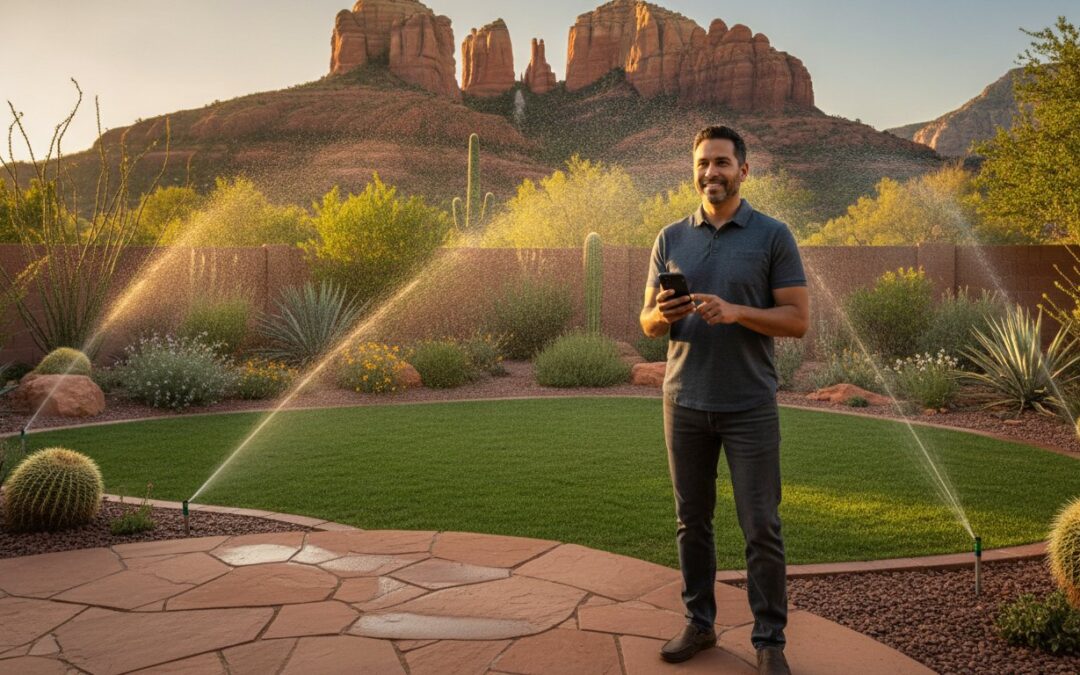
Imagine a humid August afternoon in Sedona. A sudden monsoon downpour is drenching your garden, yet your sprinklers are still running at full power because a rigid manual timer cannot sense the rain. This sight is all too common, but watching your water bill rise while the clouds do the work for you is a frustration no homeowner should face. Upgrading to smart irrigation controller Arizona technology has become an essential move for those who value both environmental stewardship and fiscal responsibility. In a region where municipal water rates in Prescott and Sedona are a constant concern, the old “set and forget” approach often leads to wasted resources and stressed plants.
Most Arizona residents agree that traditional irrigation systems lack the precision needed to handle our 100°F+ temperature spikes and seasonal storms. This 2026 guide will teach you how to replace those outdated components with intelligent, weather-responsive systems that prioritize plant health and water conservation. We will cover the transition process, the benefits of deep watering for desert flora, and how remote monitoring can simplify your landscape management. By modernizing your system, you can achieve a healthier yard and significantly lower your monthly utility costs.
Key Takeaways
- Discover why traditional clock timers are inadequate for Arizona’s volatile climate and how weather-responsive technology prevents water waste during monsoon season.
- Compare weather-based systems and soil-moisture sensors to determine which technology best serves your landscape’s unique Evapotranspiration needs.
- Learn how to navigate Northern Arizona’s microclimates by adjusting watering frequencies for different elevations, from Flagstaff’s peaks to the Sedona desert.
- Simplify the process of upgrading to smart irrigation controller arizona hardware by following a structured plan for wire mapping and electrical compatibility checks.
- Understand the value of professional calibration and troubleshooting to maximize your return on investment and achieve long-term landscape sustainability.
The High Cost of Static Timers: Why Arizona Homeowners are Upgrading in 2026
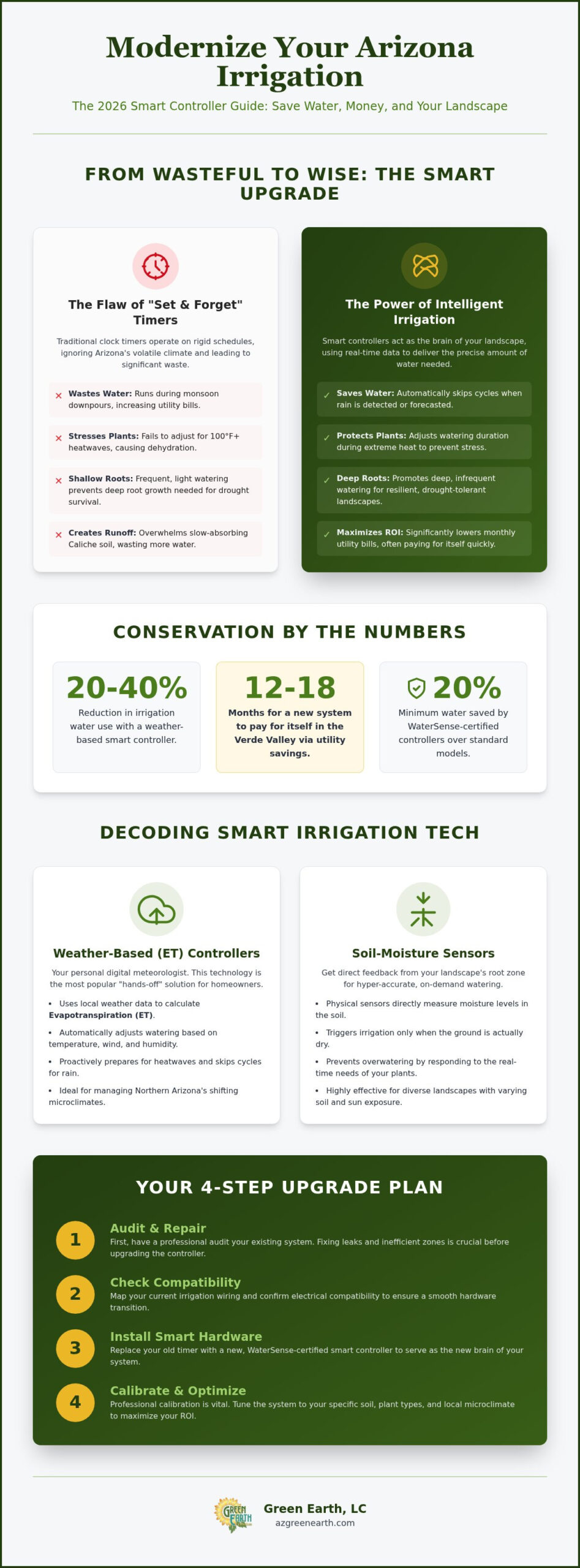
Think of a modern smart controller as an environmental computer for your landscape. While many people view these devices as simple upgrades, they actually serve as the brain of your entire outdoor ecosystem. Before diving into specific models, it’s helpful to understand what an irrigation controller is; it’s a device that manages the frequency and duration of water application to your plants. Traditional “clock” timers rely on rigid schedules that don’t account for the volatile Arizona climate. This static approach fails during our intense monsoon seasons or unexpected heatwaves, leading to significant water waste and plant stress.
Upgrading to smart irrigation controller Arizona technology has become a necessity rather than a luxury in 2026. With the federal government mandating significant water cuts from the Colorado River, municipal water alerts have become the new normal for residential areas. Homeowners in Sedona and Prescott are feeling the pressure of high water rates, making the financial ROI of an upgrade more attractive than ever. By shifting to an intelligent system, you stop paying for water that your landscape doesn’t actually need. This transition protects your investment in your greenery while aligning your home with essential conservation goals.
The “Set and Forget” Fallacy in Desert Climates
Traditional timers operate on a “set and forget” mentality that is inherently flawed in the desert. Static schedules often lead to shallow root systems because they provide frequent, light watering that never penetrates the deeper soil layers. When temperatures spike above 100°F, these plants lack the deep-water reserves needed to survive. Furthermore, Arizona’s caliche soil is notoriously difficult to manage; it absorbs water slowly, meaning that a rigid timer often causes significant runoff and pooling. To ensure you’re choosing a high-quality device, look for the WaterSense label. A WaterSense-labeled controller is independently certified to use at least 20 percent less water than standard models while maintaining performance standards.
Financial Incentives and Rebates for Arizona Residents
The cost of modernizing your system is often offset by aggressive local rebate programs. Cities like Scottsdale, Gilbert, and Prescott currently offer various incentives for homeowners who install WaterSense-certified technology. In the Verde Valley, most residents find that their new system pays for itself within 12 to 18 months through reduced monthly utility bills. Beyond the hardware, professional calibration is vital to ensure the system is tuned to your specific soil type and plant needs. If your current zones aren’t performing correctly, you may need a professional audit for irrigation repair Flagstaff before the new controller is installed. This ensures that your electronic upgrade isn’t just managing a leaking or inefficient pipe network.
Weather-Based vs. Soil-Moisture Sensors: Decoding Desert Irrigation Tech
When you decide on upgrading to smart irrigation controller Arizona systems, you’ll face a choice between two primary technologies: weather-based (ET) and soil-moisture sensors. Both aim to solve the same problem, but they approach it from different angles. Weather-based controllers act like a digital meteorologist for your yard. They use local weather data to calculate Evapotranspiration (ET), which is the combined amount of water lost through soil evaporation and plant transpiration. By understanding these variables, the controller determines the exact “water deficit” in your soil and adjusts the schedule accordingly.
Cloud-based weather data is the most common source for these systems, though some high-end units utilize onsite weather stations for hyper-local accuracy. This technology is particularly effective because it can reduce irrigation water use by 20 to 40 percent, according to state conservation data. For most homeowners, ET systems represent the most “hands-off” experience. They automatically adjust for Northern Arizona’s shifting humidity and wind speeds, addressing the critical watering frequency dilemma that many “clock” timers ignore. Desert plants generally thrive on deep, infrequent watering rather than the shallow, daily cycles common in cooler climates.
Weather-Based (ET) Controllers: The Hands-Off Choice
Modern ET systems rely on a dense network of local weather stations to provide precise data. In areas like Sedona or Prescott, where microclimates can vary significantly from one ridge to the next, Wi-Fi connectivity is the essential backbone of the system. This allows the controller to pull real-time updates and skip watering cycles during unexpected monsoon activity. The setup complexity is generally low. The software handles the heavy lifting once you input your plant types, soil texture, and sun exposure levels.
Soil-Moisture Sensors in Arizona Clay and Caliche
Soil-moisture sensors (SMS) take a more direct approach by measuring the actual water content in the root zone. While highly accurate, these sensors face unique challenges in the Verde Valley. Our rocky, caliche-heavy soils can make proper sensor placement difficult. If a probe is placed against a large rock or in a pocket of heavy clay, it may provide a false reading that starves your plants or floods the zone.
SMS technology is often the preferred choice for high-value turf or specialized garden beds where precision is paramount. However, these systems require more maintenance than ET controllers. Buried sensors can drift in accuracy over time or suffer damage from shifting soil. If you find your system isn’t responding correctly to local conditions, seeking professional irrigation controller troubleshooting can ensure your sensors are calibrated for our unique geological profile.
Navigating Northern Arizona Microclimates: Tech Selection for Sedona to Flagstaff
Northern Arizona presents one of the most diverse climatic challenges in the country. A homeowner in Flagstaff at 7,000 feet deals with a vastly different ecosystem than a neighbor in Camp Verde at 3,100 feet. When upgrading to smart irrigation controller arizona hardware, your selection must account for these elevation-driven variables. In the high country, freeze protection is a non-negotiable feature. Modern systems include sensors that automatically shut down lines when temperatures drop below freezing, protecting your pipes from catastrophic bursts. Conversely, in the lower deserts, managing the intense monsoon season requires sophisticated “Rain Skip” or “Saturation Skip” logic. These features use hyper-local data to pause schedules when the ground is already saturated, preventing the waste of precious resources.
Understanding how a controller work within these microclimates is essential for long-term plant health. For Sonoran Desert flora, “Watering Frequency” is often the most critical setting. Most native plants prefer deep, infrequent watering that mimics natural rainfall patterns. A smart controller allows you to fine-tune these intervals with precision that manual timers simply cannot match. This ensures that your landscape receives exactly what it needs to thrive without contributing to the water waste issues currently facing our state.
Flagstaff and High-Altitude Considerations
High-altitude gardening in Flagstaff means working with a significantly shorter growing season. Smart technology helps you maximize this window by adjusting water delivery based on the rapid shifts in spring and fall temperatures. One of the most valuable tools for mountain residents is the automated winterization alert. These notifications remind you to drain your lines before the first hard freeze hits. For more specific insights on selecting plants that thrive in these conditions, explore our guide on desert landscape design Northern Arizona to align your tech settings with your flora.
Sedona and Verde Valley Heat Management
In the Verde Valley and Sedona, heat management and soil topography are the primary concerns. Many Sedona properties are sloped, which often leads to water runoff before it can soak into the thirsty earth. Utilizing a “Cycle and Soak” feature allows the controller to break a long watering session into smaller increments. This gives the soil time to absorb the moisture, which is especially important when dealing with the high-alkalinity water common in our region. When upgrading to smart irrigation controller arizona systems, ensure your drip irrigation frequency is calibrated for native shrubs, which require less frequent but more thorough saturation during the summer peaks.
The Step-by-Step Upgrade Process: Retrofitting Your Existing System
Upgrading to smart irrigation controller arizona technology involves more than just swapping a box on the wall. It’s a precise retrofit that requires a clear understanding of your current electrical and hydraulic infrastructure. Before you disconnect a single wire, verify that your system operates on the standard 24V AC power. Most modern controllers require this specific voltage to communicate with your valves. If your property still utilizes high-voltage legacy valves, you’ll need to update those components to ensure compatibility with your new digital brain.
The physical installation starts with documentation. Take a high-resolution photo of your current wiring configuration. Label each zone wire with tape, and identify the common wire. The common wire serves as the essential return path for the electrical circuit, effectively closing the loop for every individual valve in your multi-zone system. Once labeled, mount the new controller, reconnect the wires according to your map, and prepare for the software integration.
Evaluating Your Existing Infrastructure
A smart controller is only as effective as its connection to the cloud. Before mounting your hardware, use your smartphone to test the Wi-Fi signal strength at the installation site. Thick garage walls or metal enclosures can create dead zones that lead to connectivity drops. If the signal is weak, consider a Wi-Fi extender or a different mounting location. This is also the ideal time to inspect your valves for leaks or worn diaphragms. Even the most advanced controller can’t fix a physical leak in a legacy valve.
Programming for Success: Inputting Landscape Data
Accuracy during the software setup is what separates a truly efficient system from a wasteful one when upgrading to smart irrigation controller arizona hardware. You must perform a “Zone Audit” by walking each zone while it’s running. This allows you to input precise data regarding plant types, sun exposure, and soil composition. Pay close attention to the difference between “Slope” and “Soil Type” settings; slope triggers shorter cycles to prevent runoff, while soil type dictates how long the system waits between those cycles to allow for absorption. Finally, configure your system’s Monsoon Mode. This setting uses local data to override schedules when summer storms provide natural irrigation, saving thousands of gallons of water annually. If you encounter technical hurdles during the installation, consider professional irrigation troubleshooting to ensure your system is calibrated correctly.
Maximizing Your ROI: Sustainable Irrigation Management with Green Earth, LC
Investing in the latest technology is only half the battle for Northern Arizona homeowners. While upgrading to smart irrigation controller arizona hardware provides the necessary tools, professional calibration ensures those tools perform at peak efficiency. Data consistently shows that professionally managed systems often save 20% more water than DIY setups. This discrepancy exists because a seasoned technician understands how to synchronize the controller’s digital inputs with the physical realities of your specific landscape. At Green Earth, LC, we view ourselves as your visionary partner, transforming your water conservation goals into a functional, thriving reality through disciplined craftsmanship and 47 years of local expertise.
Our approach goes beyond simple installation. We specialize in complex irrigation controller troubleshooting to identify electronic or hydraulic bottlenecks that a standard app setup might miss. For larger properties, we integrate this smart technology into comprehensive HOA landscape maintenance Arizona programs. This ensures that community-wide water usage remains within municipal limits while maintaining the aesthetic standards of the neighborhood. A sustainable landscape partnership provides long-term value, protecting your property investment against the rising costs of water in the Verde Valley.
Professional Audits and Ongoing Calibration
Smart systems are not “set and forget” devices. Seasonal check-ups are necessary to account for the physical changes in your garden as plants mature and soil settles. During these audits, we also evaluate how your watering patterns interact with your property’s topography. For example, we use smart tech data to manage drainage grading Arizona issues, ensuring that excess moisture doesn’t compromise your foundation during heavy monsoon cycles. This holistic view of water management reduces the environmental footprint of your home and prevents costly structural repairs down the road.
Custom Solutions for Sedona and Cottonwood Properties
Every landscape requires a tailored strategy, particularly when integrating new technology with structural elements. We specialize in configuring smart controllers to complement hardscape construction Cottonwood AZ projects, ensuring that moisture levels are perfectly balanced near pavers and retaining walls. This precision is also vital for managing firewise defensible space zones. By maintaining proper hydration in specific buffer zones, you create a more resilient property without wasting resources. Ready to save? Contact Green Earth, LC for a professional irrigation upgrade today and let our experts calibrate your system for maximum sustainability.
Securing the Future of Your Northern Arizona Landscape
Modernizing your property’s water management is a proactive step toward ecological responsibility and significant utility savings. By transitioning from rigid manual timers to weather-responsive systems, you ensure your plants receive precise hydration during intense heatwaves and monsoon rains. Upgrading to smart irrigation controller arizona technology allows you to monitor your yard remotely while meeting the strict municipal water alerts of 2026. This shift from “timer-thinking” to environmental responsiveness is essential for any homeowner committed to long-term sustainability.
At Green Earth, LC, we bring over 47 years of Northern Arizona landscaping expertise to every project. As a Statewide runner-up for Sustainable Landscape Design, we possess the specialized knowledge of Verde Valley microclimates needed to calibrate your system for peak performance. We’re ready to help you transform your outdoor space into a functional, beautiful reality that respects our local resources. Upgrade Your Arizona Irrigation System with Green Earth, LC today and enjoy a more resilient, thriving landscape for years to come.
Frequently Asked Questions
Do I need a special permit to upgrade my irrigation controller in Sedona?
Typically, you don’t need a special building permit for a simple electronic swap in Sedona. Most residential upgrades are classified as minor maintenance. However, if your project involves running new high-voltage electrical lines or significant plumbing modifications, you should consult the Sedona Community Development Department. Our team at Green Earth, LC ensures that every installation remains compliant with local water conservation standards and existing landscape regulations.
Will a smart controller work with my existing drip irrigation system?
Smart controllers are fully compatible with the 24V AC solenoid valves used in most Northern Arizona drip systems. These devices are particularly beneficial for drip irrigation because they allow for precise timing and “Cycle and Soak” settings. This prevents the runoff common in our heavy clay soils. When upgrading to smart irrigation controller arizona technology, our technicians verify your existing drip emitters are functioning correctly to maximize the efficiency of the new hardware.
How much can I actually save on my Arizona water bill by upgrading?
Upgrading to a smart irrigation controller can reduce your outdoor water usage by 30 to 60 percent. According to regional data, a typical home in Gilbert with 2,000 square feet of landscape can save 20,000 to 30,000 gallons of water annually. In Phoenix, a 40 percent reduction on a standard 15,000 gallon monthly bill can result in significant annual savings. These financial benefits help the technology pay for itself within 18 months.
What happens to my smart controller if the Wi-Fi goes out?
Your system will not stop working if the Wi-Fi signal drops. Most modern smart controllers store the active watering schedule locally on their internal memory. The device will continue to execute the last programmed routine until the internet connection is restored. While you won’t receive real-time weather updates or be able to make remote adjustments during an outage, your plants in Prescott or Cottonwood will remain hydrated and protected.
Is it better to hire a professional or DIY my irrigation upgrade?
While many homeowners attempt a DIY installation, professional calibration from Green Earth, LC typically saves 20 percent more water. We specialize in irrigation controller troubleshooting, which involves diagnosing hidden electrical issues or valve inefficiencies that a standard app setup cannot detect. Our 47 years of experience in the Verde Valley ensures your system is tuned specifically for local soil profiles and microclimates, providing a much higher return on your investment.
Does a smart controller help with Arizona’s monsoon season?
Smart controllers are exceptionally helpful during Arizona’s monsoon season. Features like “Rain Skip” or “Saturation Skip” use hyper-local weather data to pause your watering schedule automatically when a storm hits. This prevents the common sight of sprinklers running during a downpour. By accounting for natural rainfall, the system protects your landscape from overwatering and reduces the waste of municipal water, which is critical given the current Colorado River water mandates.
What are the best smart irrigation controller brands for Northern Arizona in 2026?
In 2026, the top-rated brands for Northern Arizona properties include Rachio 3, Hunter Hydrawise, and the Rain Bird ST8. These models are favored for their robust Wi-Fi connectivity and their ability to integrate with local weather stations near Flagstaff and Sedona. Prices for these units generally range from $130 to over $500 depending on the number of zones. We recommend selecting a model with WaterSense certification to qualify for various municipal rebate programs.
Can I manage multiple properties with one irrigation app?
You can easily manage multiple properties through a single interface. Most leading smart irrigation apps allow you to register several controllers under one account. This is a perfect solution for residents who own a primary home in Sedona and a seasonal property in Flagstaff. You can monitor soil moisture levels, adjust schedules for heatwaves, and receive leak alerts for all your Northern Arizona locations directly from your smartphone or tablet.
Recent Comments