
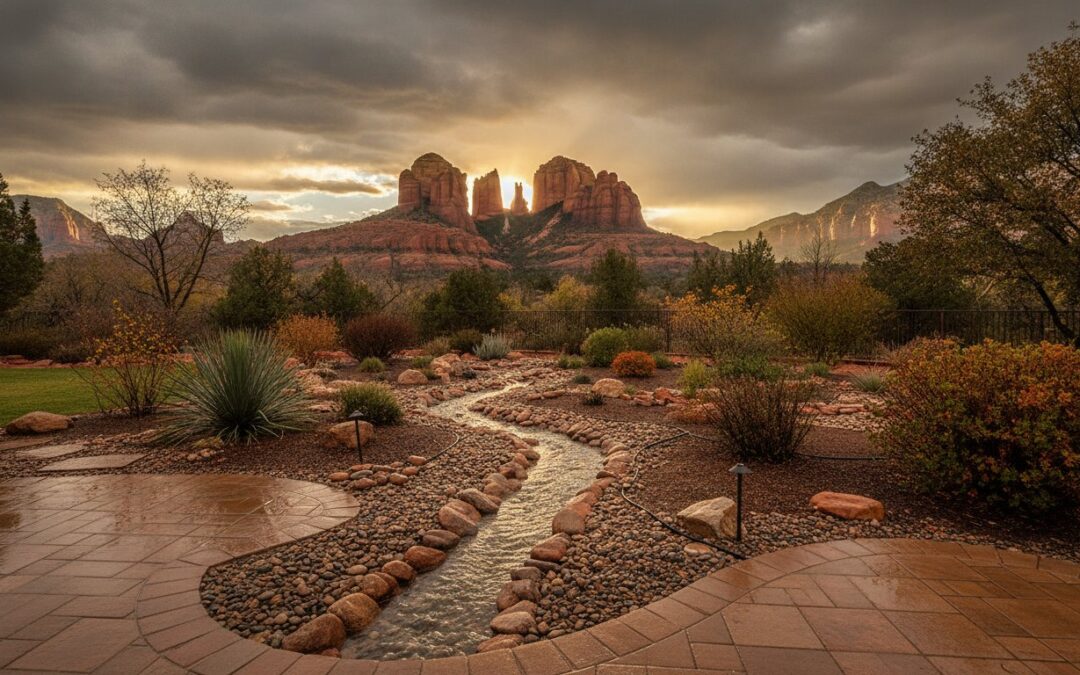
In the high desert of Sedona, a single July monsoon storm can deliver more water to your property in thirty minutes than your landscape typically receives in three months. If you have watched red silt wash across your expensive pavers or felt the anxiety of standing water pooling against your foundation, you are not alone in your concern. Managing these powerful seasonal deluges requires a specialized approach to yard drainage solutions Sedona residents can rely on to protect their homes and the surrounding environment.
You deserve a property that remains dry and stable without sacrificing the iconic beauty of our red rock vistas. We promise to show you how to master high-velocity runoff through professional drainage strategies that prioritize both structural integrity and ecological health. In this guide, we will preview the latest grading techniques, erosion control methods, and natural-looking drainage designs that will keep your foundation secure and your landscaping pristine through the 2026 monsoon season and beyond.
Key Takeaways
- Discover why Sedona’s intense monsoon cycles require high-capacity redirection systems to manage rapid surface runoff effectively.
- Identify critical property threats like caliche soil layers and poor grading that cause water to pool against your home’s foundation.
- Compare the most effective yard drainage solutions Sedona homeowners use, including sub-surface French drains and decorative dry creek beds.
- Learn the professional steps for mapping water flow and sizing infrastructure to withstand major 100-year storm events.
- Understand how expert drainage grading preserves the delicate high-desert ecosystem while maintaining the aesthetic integrity of your landscape.
Why Sedona Landscapes Need Specialized Yard Drainage Solutions
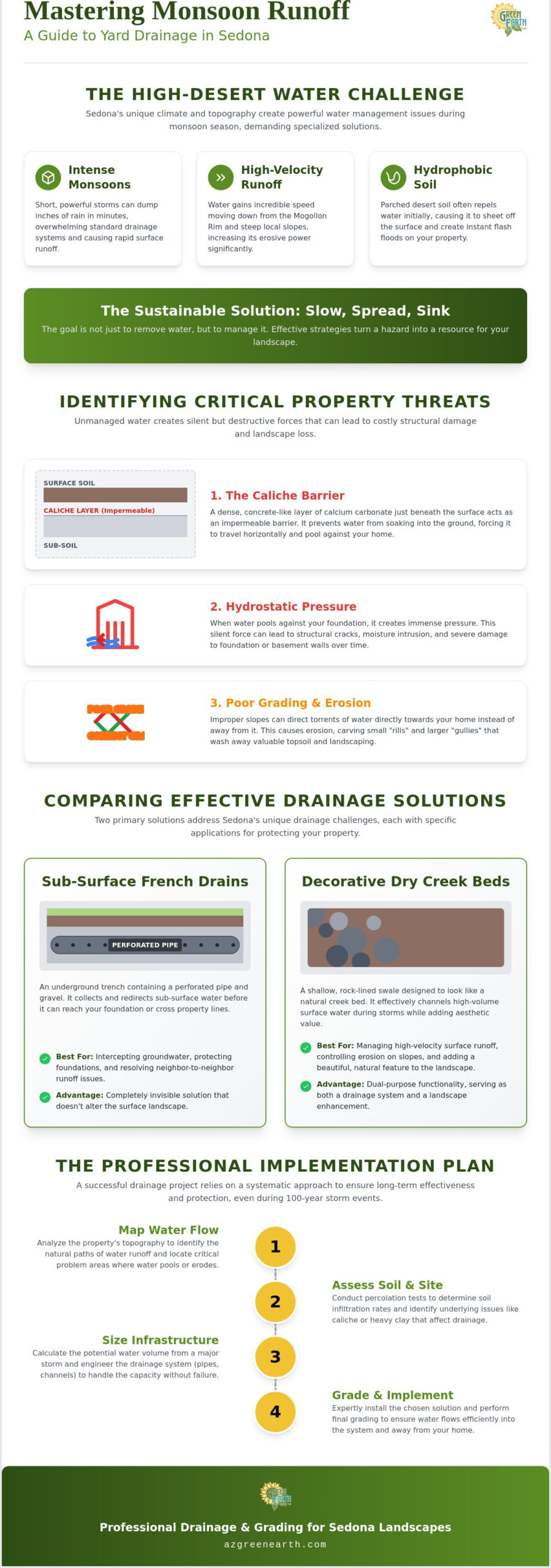
Yard drainage is the strategic redirection of surface and sub-surface water to protect your property’s structural and aesthetic value. In Sedona, this isn’t just about preventing puddles; it’s about managing the “Monsoon Factor.” Between July and September, our region experiences short, intense bursts of rain that can dump inches of water in minutes. Because we sit at the base of the Mogollon Rim, this water gains incredible velocity as it moves down from the higher elevations, turning a gentle rain into a destructive force. Neglecting proper yard drainage solutions Sedona homeowners require leads to more than just a muddy yard. It can cause foundation cracks, saturated soil that kills native plants, and the permanent loss of expensive desert landscaping. Without a proactive plan, the red rock terrain we love becomes a conduit for significant property damage.
The High-Desert Water Challenge
Our parched desert soil often suffers from hydrophobicity, where the ground actually repels water during the first few minutes of a storm. Instead of soaking in, the water sheets off the surface, creating instant flash floods on your property. Sustainable design principles emphasize the need to “slow, spread, and sink” this water. By integrating these strategies into your outdoor living space construction Arizona projects, we can turn a potential hazard into a resource for your plants. This methodical approach prevents the soil from becoming a slick slide and ensures your yard remains stable during the heaviest downpours. We focus on ensuring that water doesn’t just leave your property, but that it moves in a way that respects the delicate local ecosystem.
Sedona’s Unique Topography and Drainage
The steep slopes found in areas like West Sedona present a specific challenge because they accelerate erosion at an alarming rate. When water moves quickly over a slope, it carries away the topsoil and decorative rock that define your landscape. This rapid movement often leads to neighbor-to-neighbor runoff issues, which can become legal liabilities. Arizona law generally prohibits property owners from diverting water in a way that causes damage to adjacent parcels. When we design yard drainage solutions Sedona clients can trust, we account for these legal and topographical nuances. Many systems incorporate a French drain to capture sub-surface water before it migrates across property lines. Proper grading ensures that your home stands on firm ground while your neighbors remain protected from your property’s runoff.
Identifying Common Drainage Issues in Northern Arizona’s High Desert
Effective yard drainage solutions Sedona homeowners can rely on must first address the unique geological makeup of our region. One of the most significant obstacles we face is “caliche,” a dense, concrete-like layer of calcium carbonate found just beneath the surface. This layer acts as an impermeable barrier, preventing rainwater from infiltrating the ground. During a heavy monsoon, this lack of absorption forces water to travel horizontally across your property at high speeds. If your landscape isn’t graded to handle this volume, you will likely see water pooling within 10 feet of your foundation. This standing water creates hydrostatic pressure, a silent force that can exert immense weight against your foundation or basement walls, eventually leading to structural cracks and moisture intrusion.
Visual cues often reveal these issues before they become catastrophic. You might notice “rills,” which are small, shallow channels carved into the soil by running water. While they look minor, they quickly evolve into “gullies,” deeper trenches that can undermine walkways and destroy mature landscaping. If you are concerned about how your property handles runoff, you can request a professional site assessment to identify these vulnerabilities before the next storm season arrives.
Soil Composition and Infiltration Rates
Sedona’s soil is a complex mix. While some areas feature red rock sandy loam, which offers decent drainage, other pockets near the Verde Valley contain heavy clay that expands when wet. You can test your property’s performance with a simple percolation test: dig a hole 12 inches deep, fill it with water, and track how long it takes to empty. If the water remains after several hours, your soil’s natural infiltration is insufficient. Standard drainage designs often fail here because they don’t account for the high silt levels in our runoff, which can quickly clog traditional systems that aren’t specifically engineered for the high desert.
Structural Warning Signs
Your home and hardscape features often “talk” to you about drainage problems. Look for efflorescence, a white, powdery salt deposit that appears on stone or brick. Seeing this on a retaining wall installation Northern Arizona project is a clear indicator that water is trapped behind the structure without proper outlet points. Other signs include doors or windows that suddenly stick or fail to align, often caused by the swelling of expansive clay soils beneath the foundation. Finally, never ignore standing water that lasts more than 48 hours. In our climate, these pools become primary breeding grounds for mosquitoes, transforming a drainage issue into a localized health risk.
Comparing Effective Drainage Solutions for Sedona Properties
Choosing the right intervention depends on whether you’re battling visible surface runoff or invisible sub-surface saturation. While some yard drainage solutions Sedona properties utilize are hidden beneath the earth, others are designed to become a celebrated part of your landscape’s aesthetic. The choice between a French drain and a surface drain often comes down to the source of your water trouble. Surface drains, such as catch basins and channel drains, are essential for capturing high-volume runoff from driveways and patios before it can reach your foundation. Conversely, sub-surface systems are designed to manage water that has already entered the soil, preventing the heavy saturation that leads to the structural risks discussed earlier.
For many homeowners, the dry creek bed offers the perfect marriage of function and form. By utilizing native river rock and boulders, we can create a naturalistic channel that guides monsoon runoff safely away from your home. Unlike a standard plastic pipe, a well-constructed dry creek bed won’t clog with red silt and actually adds to the rugged beauty of the high desert. When gravity alone isn’t enough to move water away from low-lying areas, we may integrate a professional-grade sump pump system. These are particularly useful for properties with “bowl” topographies where natural exit points are non-existent, ensuring that even the most stubborn pooling is managed effectively.
Natural and Sustainable Drainage Features
Sustainable water management focuses on treating runoff as a resource rather than a waste product. Bioswales are shallow, vegetated basins that use native grasses and shrubs to filter pollutants and encourage deep-root absorption. To stabilize areas prone to high-velocity flow, we often employ rip rap; these are large, angular stones that break up water energy and prevent soil loss. Additionally, installing permeable pavers for your walkways and patios allows water to permeate through the joints. This significantly reduces the total volume of surface runoff your property generates while maintaining a high-end, functional outdoor space.
Engineered Sub-Surface Systems
When aesthetics must be paired with high-capacity engineering, sub-surface systems provide a discrete solution. A modern French drain consists of a perforated pipe nestled in a bed of clean gravel and wrapped in professional-grade filter fabric to prevent silt intrusion. One of the most critical components of any system is downspout diversion. By “daylighting” your gutters at least 20 feet from your foundation, you eliminate the primary source of basement and crawlspace moisture. For properties facing extreme monsoon volumes, multi-flow systems utilize stacked drainage panels to move significantly more water than a single traditional pipe could ever manage during a peak storm event.
How to Implement a Professional Drainage and Grading Plan
Implementing the yard drainage solutions Sedona properties require is a methodical exercise in engineering and land management. It isn’t just about digging a trench; it’s about understanding the unique hydraulics of the high desert. Effective yard drainage solutions Sedona owners invest in are built on five critical phases of execution to ensure long-term stability and performance.
- Step 1: Mapping the Flow. We begin by identifying the highest and lowest points of the property. This watershed analysis determines how water enters from the Mogollon Rim or neighboring parcels.
- Step 2: Calculating Runoff Volume. Systems must be sized for “100-year” storms. We calculate the potential volume to ensure pipes and swales can handle peak monsoon intensity without overflowing.
- Step 3: Corrective Grading. We reshape the land to establish a minimum 2% slope away from all structures. This quarter-inch drop per foot is the industry standard for preventing foundation saturation.
- Step 4: Installation of Hardscape Elements. Drains are integrated with existing features, such as a retaining wall installation Northern Arizona project, to provide hidden exit points for trapped moisture.
- Step 5: Final Stabilization. The newly graded soil is secured using native mulch, river rock, or drought-tolerant plants to prevent the next rain from washing away the work.
If you’re ready to secure your property against the next monsoon season, contact our grading specialists for a custom design plan tailored to your land.
The Importance of Laser Grading
Precision is the difference between a dry yard and a disaster. “Eyeballing” a slope often leads to drainage failure, especially in relatively flat yards where water tends to “pond” in hidden low spots. We utilize laser-leveling technology to ensure every inch of the grade directs water exactly where it needs to go. For larger estates, we employ specialized Bobcat services for heavy earthmoving, while hand-grading is used in delicate desert landscapes to protect the root systems of mature junipers and agaves.
Permitting and Local Regulations
Sedona has specific ordinances regarding how and where water can be discharged. City codes, often detailed in the “Design Review, Engineering, and Administrative Manual,” generally prohibit the direct discharge of concentrated runoff onto public streets or into neighbor’s yards without proper mitigation. We also work closely with local HOAs to ensure that all drainage infrastructure meets community aesthetic standards. Maintaining professional documentation of these improvements is vital for property resale and insurance purposes, as it proves the home is protected against flood-related liabilities.
Sustainable Drainage Management with Green Earth, LC
Managing high-desert runoff requires more than just moving dirt; it demands a deep respect for the land’s natural contours and ecological health. At Green Earth, LC, we’ve spent over 47 years perfecting the yard drainage solutions Sedona homeowners need to survive the unpredictable monsoon cycle. As the statewide runner-up for Best Sustainable Landscape Designer, our team approaches every project with the mindset of an authoritative environmentalist. We don’t just solve a technical problem. We transform your drainage challenges into functional landscape features that enhance your property’s beauty while protecting its structural integrity. It’s this commitment to excellence and environmental stewardship that has made us a community fixture since 1979.
We invite you to schedule a professional site evaluation before the next monsoon season arrives. By assessing your property’s unique topography and soil composition now, we can implement a proactive plan that prevents erosion and foundation damage before it starts. Our goal is to provide you with a dry, stable foundation and a landscape that feels like a natural extension of Sedona’s iconic red rock environment.
Why 47 Years of Local Expertise Matters
Local knowledge is indispensable when dealing with the specific weather patterns of Northern Arizona. “Out-of-town” contractors often miss the nuances of Verde Valley weather, such as the way a storm cell can stall against the Mogollon Rim and dump concentrated volumes of water on a single neighborhood. We’ve built our reputation on a history of reliable service from Cornville to Flagstaff, and we understand how these microclimates impact your property’s drainage needs. Homeowners seeking landscaping Flagstaff AZ solutions face similarly demanding high-altitude drainage and runoff challenges that require the same depth of regional expertise. Over the decades, we’ve also established deep relationships with local suppliers, ensuring we have consistent access to the highest quality native rock and materials that blend perfectly with our local terrain. This localized expertise allows us to design systems that are both technically superior and aesthetically appropriate for the region.
The Green Earth Design Philosophy
Our philosophy is rooted in the belief that water should be treated as a resource rather than a waste product. We specialize in custom solutions that capture and slow runoff, allowing it to nourish your landscape instead of eroding it. This holistic view often involves integrating drainage with other essential property protections, such as firewise landscaping Cottonwood AZ. By coordinating your defensible space with your grading and drainage plan, we create a comprehensive shield for your home. Whether we are installing a complex multi-flow system or a simple dry creek bed, our focus remains on long-term sustainability and professional craftsmanship. Contact Green Earth, LC for a drainage consultation today and ensure your property is ready for whatever the 2026 monsoon season brings.
Secure Your Landscape Against the Next Monsoon
Effective water management is the most critical investment you can make to protect your home’s foundation and the natural beauty of your red rock environment. By identifying hidden issues like caliche barriers and implementing precise laser grading, you ensure that even the most intense 100-year storms move safely through your property. We’ve explored how a combination of engineered sub-surface systems and aesthetic features like dry creek beds provide the high-capacity yard drainage solutions Sedona residents need to navigate our unique high-desert terrain.
As local Verde Valley experts since 1979, Green Earth, LC brings 47+ years of Northern Arizona experience to every project. We are proud to be the statewide runner-up for Best Sustainable Landscape Designer; this means your drainage plan will be as environmentally responsible as it is effective. Don’t wait for the first storm clouds to gather over the Rim to address your runoff concerns. Our team is ready to help you transform your property into a stable, sustainable sanctuary.
Request Your Sedona Drainage Evaluation today and gain peace of mind for the seasons ahead.
Frequently Asked Questions
What is the best yard drainage solution for Sedona’s red rock soil?
The most effective approach for our region combines surface redirection, such as dry creek beds, with engineered sub-surface systems. Because Sedona’s red rock soil often contains caliche layers that prevent natural absorption, a hybrid system ensures that high-volume monsoon runoff is channeled away before it can saturate the ground or damage your foundation.
How much does a French drain cost to install in Sedona?
While specific project costs depend on the length and depth of the trench, national averages in May 2026 for French drain installations typically range from $1,650 to $12,250. Excavating through Sedona’s caliche or red rock requires specialized equipment and expertise, which may influence the final investment compared to regions with softer soil.
Does my HOA allow dry creek beds for drainage?
Most Sedona HOAs not only allow but encourage dry creek beds because they utilize native river rock and blend seamlessly with the high-desert aesthetic. These features are viewed as sustainable landscape elements that manage water without the industrial look of concrete channels, provided the stone colors and sizes meet specific community design guidelines.
Can I redirect my yard runoff into the street or a neighbor’s yard?
You cannot legally redirect concentrated runoff directly onto public streets or into a neighbor’s yard if it causes damage or erosion. The City of Sedona’s engineering standards and Arizona common law require property owners to manage their own stormwater effectively, ensuring that any diverted water follows natural drainage ways or is mitigated on-site through proper grading.
How do I know if my foundation issues are caused by poor yard drainage?
Foundation issues often manifest as sticking doors, misaligned window frames, or visible cracks in the stem wall. If you notice white, powdery salt deposits on your foundation or see water pooling within 10 feet of your home after a storm, it’s a strong indicator that poor yard drainage is undermining your structure’s stability.
What is the difference between grading and a French drain?
Grading refers to the physical reshaping of the land’s surface to create a specific slope that directs water away from structures. A French drain is an engineered sub-surface system consisting of a perforated pipe and gravel that captures and moves water that has already soaked into the soil, providing an extra layer of protection beyond surface grading alone.
How often should I maintain my yard drainage system?
We recommend inspecting your yard drainage solutions Sedona systems at least twice a year, specifically before and after the monsoon season. You should clear debris from catch basins, ensure dry creek beds haven’t silted over, and check that downspout outlets remain unobstructed to ensure the system performs at peak capacity during heavy rains.
Will a drainage system ruin my desert landscaping aesthetic?
A professionally designed drainage system actually enhances your desert landscaping by adding texture and visual interest. By using locally sourced river rock, boulders, and native vegetation, we can create functional swales that look like natural desert washes, hiding the necessary engineering beneath a beautiful, sustainable exterior that complements the red rocks.
Recent Comments