
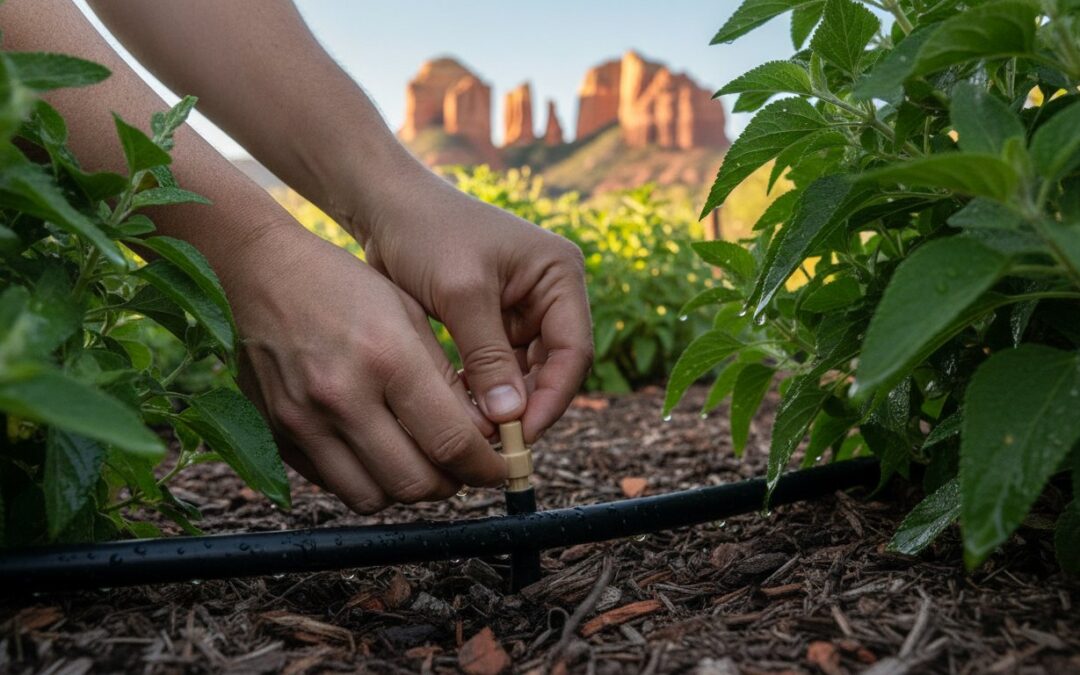
With Arizona facing a 512,000 acre-feet reduction in its Colorado River entitlement this year, a leaking emitter in Sedona or a frozen line in Flagstaff is no longer just a minor nuisance; it’s an ecological and financial liability. You’ve likely noticed the visible stress on your landscape or felt the sting of a fine for non-compliance with Flagstaff’s strict 2026 watering schedule. It is frustrating to watch your garden struggle while your utility bills climb, particularly when our regional climate seems determined to degrade your irrigation components through intense UV exposure and alpine freezes.
This guide provides the expertise you need to master drip system repair Northern Arizona, offering professional strategies to diagnose leaks, replace damaged lines, and protect your investment against seasonal extremes. We will walk through essential troubleshooting steps tailored for both the Verde Valley’s heat and the high-country cold. By understanding these specialized maintenance requirements, you can stop water waste, avoid municipal penalties, and restore the long-term health of your outdoor sanctuary.
Key Takeaways
- Identify the warning signs of “invisible leaks” and pressure imbalances that cause plant stress and inflated utility bills across the high desert.
- Master the specialized techniques for drip system repair Northern Arizona, accounting for Flagstaff’s freezing winters and the intense UV degradation found in the Verde Valley.
- Learn why the backflow preventer is essential for your home’s safety and how to troubleshoot critical components like lines and emitters.
- Follow a structured, step-by-step framework to fix line breaks using professional tools such as punch tools and “goof” plugs.
- Discover how upgrading to smart controllers and scheduled professional maintenance can save up to 30% on your water bills while protecting the local environment.
Identifying Common Drip System Failures in Northern Arizona
A functional irrigation network is the lifeline of any sustainable landscape. In our region, a drip system failure occurs whenever the precise delivery of water is interrupted by clogs, physical line breaks, or internal pressure imbalances. Understanding What is Drip Irrigation and how it functions as a pressurized system is the first step toward effective maintenance. While traditional sprinklers announce their failures with dramatic geysers, drip systems are far more subtle. Issues often simmer beneath the surface, making drip system repair Northern Arizona a task that requires both technical knowledge and keen observation.
One of the most persistent challenges for homeowners is the “Invisible Leak.” Because poly-tubing is often buried beneath layers of decorative rock or organic mulch, a puncture can waste hundreds of gallons of water for weeks without ever creating a surface puddle. This silent waste is particularly damaging during the Tier 1 shortage conditions we face in 2026. You might only realize there is a problem when your monthly utility bill shows an unexpected spike or when a specific area of your yard remains inexplicably damp long after the timer has shut off.
Recognizing plant stress markers is another vital skill for local residents. In the Verde Valley, a thirsty Agave will show deep wrinkling or yellowing at its base. Conversely, in the higher elevations of Flagstaff, a Ponderosa Pine might exhibit needle browning that starts at the tips. These biological cues often point to a failure in the irrigation line long before the plant reaches a point of no return. Additionally, many properties in rural Northern Arizona rely on well water, which is frequently rich in minerals. Over time, these minerals create a white, crusty scale that slowly chokes off the flow of water to your landscape.
Signs of Emitter and Micro-tubing Clogs
Clogs are the most frequent cause of localized plant stress. You can often spot salt and calcium deposits forming a white ring on the emitter head itself. To verify a clog, perform the “Dry Ring” test by clearing away mulch and checking if the soil directly under the emitter is moist after a cycle. If the plant is showing uneven growth or one side of a shrub looks thinner than the other, it is a clear signal that the micro-tubing is partially blocked and requires immediate attention.
Pressure Problems and Regulator Failure
Pressure issues can sabotage even the most well-designed layout. If your pressure regulator fails on the high side, you will notice emitters popping off the main line or poly-tubing that seems to geyser at the joints. Low pressure is equally problematic; it typically manifests as tail-end failure, where the emitters furthest from the water source fail to drip at all. Using a simple pressure gauge at the end of a zone can help you diagnose if your regulator is maintaining the 20 to 30 PSI required for peak performance.
Essential Components and Troubleshooting Framework
A reliable irrigation network is only as strong as its weakest component. The anatomy of a Northern Arizona drip system begins at the backflow preventer, moves through the control valves, and extends through a network of distribution lines to the emitters. The backflow preventer is arguably the most vital safety element in this sequence. It acts as a one-way gate, ensuring that irrigation water, which may contain fertilizers or soil-borne pathogens, never siphons back into your home’s potable water supply. In our region, these units are highly susceptible to the freeze-thaw cycles of the high country, making them a primary focus during any drip system repair Northern Arizona inspection.
The irrigation controller serves as the system’s command center. Beyond managing schedules, modern controllers are excellent diagnostic tools for identifying electrical shorts or solenoid failures. If your system isn’t responding, consulting a comprehensive irrigation controller troubleshooting Arizona guide can help you determine if the issue is a simple wiring glitch or a more complex mechanical failure. Understanding the synergy between these electrical and mechanical parts is key to maintaining a healthy landscape.
Homeowners in the Verde Valley often ask about the longevity of poly-tubing versus PVC. While PVC is remarkably durable for pressurized mainlines, flexible poly-tubing is the standard for lateral distribution. However, poly-tubing is more prone to failure in our climate due to intense UV exposure. Without proper burial or thick mulch coverage, the plastic becomes brittle and prone to cracking within just a few seasons. If you suspect a component has failed beyond a simple fix, seeking professional irrigation drip system repair ensures your landscape remains resilient and water-efficient.
Inspecting Valves and Backflow Preventers
Testing for “valve weeping” is a critical part of any drip system troubleshooting guide. If you see a constant trickle at an emitter when the system is off, the valve’s internal diaphragm is likely worn or stuck. For residents in colder zones like Flagstaff, inspecting the backflow preventer for hairline cracks is a post-winter necessity. Even a tiny fracture can lead to catastrophic failure once the ground thaws and pressure is fully restored.
Evaluating the Mainline and Lateral Poly-tubing
Soil in Northern Arizona is notorious for shifting, which often leads to “crimping” in buried lines. This restriction chokes off water flow to entire zones. Additionally, local wildlife, particularly packrats, find drip lines to be an attractive source of moisture. They can chew through lateral lines in a single night, creating significant leaks. Regular inspections should also focus on UV degradation. If the tubing feels “crunchy” or looks grey and chalky, it has lost its structural integrity and requires replacement to ensure long-term sustainability.
Flagstaff vs. Sedona: Climate-Specific Repair Challenges
Northern Arizona is a land of environmental extremes. Managing a landscape in this region means accounting for 100 inches of annual snowfall in Flagstaff while simultaneously preparing for 100-degree summer days in the Verde Valley. This geographical diversity dictates that drip system repair Northern Arizona must be approached with a strategy specific to your elevation. While a homeowner in Sedona might struggle with rapid evaporation, a resident in Prescott is likely dealing with the aftermath of a deep-earth freeze that has compromised buried components.
The timing of your irrigation also varies wildly between high-altitude and high-desert zones. High-country landscapes often require a shorter, more intense watering season, whereas the lower elevations demand a consistent, year-round approach to combat the arid climate. Recognizing these differences is the first step toward a resilient and sustainable outdoor space. Whether you are dealing with frozen manifolds or sun-damaged tubing, your repair strategy must respect the local weather patterns.
High-Altitude Hazards in Flagstaff and Prescott
In the alpine climates of Flagstaff and Prescott, the primary threat is the expansion of freezing water. Repairing freeze-shattered valves has become a common spring ritual for many who overlook the necessity of a professional blow-out. These systems require deep-earth winterization to ensure that no residual moisture remains in the lateral lines or the backflow preventer. Ice expansion can exert enough force to crack heavy-duty brass fittings, making winter preparation the most important maintenance task of the year.
A “Safe System Activation” is critical after the final frost. Rushing to turn on the water before the ground has fully thawed can lead to pressure surges that burst brittle pipes. For those managing delicate high-country gardens, seeking specialized irrigation repair Flagstaff ensures that your system is calibrated for the unique stressors of an alpine environment. Proper activation involves a slow pressurization of the lines to check for leaks without causing a water hammer effect.
Heat and UV Stress in Sedona and Cottonwood
Descend into Sedona or Cottonwood, and the challenges shift from ice to fire. The intense UV radiation of the high desert is a relentless enemy of poly-tubing. Over time, sun-bleached lines lose their flexibility and crack, leading to significant water loss. Replacing these with UV-resistant alternatives or ensuring they are properly buried is a core component of high-desert maintenance. If you’re tackling these tasks yourself, consulting a DIY guide to drip irrigation can help you select materials that stand up to the Arizona sun.
Heat expansion also plays a role, often causing leaks at manifold connections where different materials expand at varying rates. To maximize efficiency, consider thick mulching over drip lines. This simple act protects the tubing from the sun and prevents the rapid evaporation that can undermine the 30% to 50% water savings typically offered by drip systems. Keeping the lines cool and covered is the best way to extend the life of your equipment in the Verde Valley.
Step-by-Step Guide: How to Repair a Drip System Line
Mastering the mechanics of drip system repair Northern Arizona allows you to act quickly when a line fails, preventing both landscape loss and unnecessary water waste. Before you begin any physical work, you must prioritize safety and system integrity. Start by shutting off the main water supply at the backflow preventer or the dedicated irrigation shut-off valve. Once the supply is off, run a manual cycle for one minute to bleed the remaining pressure from the lines. This simple step prevents water from spraying while you work and ensures a clean, dry environment for your repairs.
Gathering the correct tools is essential for a professional finish. You’ll need a dedicated tubing cutter for square, burr-free cuts, a punch tool for inserting new emitters, and a variety of “goof” plugs and barbed couplers. Having these on hand prevents the frustration of multiple trips to the hardware store. If your system requires more than basic maintenance, or if you encounter a complex manifold issue, professional irrigation drip system repair services can provide the specialized equipment and expertise needed for high-pressure zones.
Fixing Punctures and Line Breaks
- Step 1: Clear away all decorative rock, mulch, and soil from around the break. Dirt is the enemy of a drip system; even a few grains can clog downstream emitters once the water is turned back on.
- Step 2: For clean breaks, use a barbed coupler to join the two ends. If the line is stretched or badly damaged, cut out the compromised section and use a mending sleeve with a small piece of new poly-tubing to bridge the gap for a leak-proof seal.
- Step 3: Secure the newly repaired section with galvanized landscape staples. This prevents the line from shifting due to thermal expansion or soil movement, which are common in our high-desert climate.
Replacing Clogged Emitters and Micro-tubing
Removing a calcified emitter requires care to avoid tearing the main distribution line. If the emitter is stuck, use pliers to gently twist it out rather than pulling straight up. When moving an emitter to accommodate a plant’s growing root zone, use a “goof plug” to seal the old hole permanently. Micro-tubing is the quarter-inch distribution line that delivers water from the mainline to individual plants, and it typically has a lifespan of three to five years in the intense Arizona sun before it becomes brittle and requires replacement.
After completing your repairs, re-pressurize the system slowly. Open the main valve halfway to allow air to escape without causing a water hammer effect. Walk the entire zone to check for secondary leaks that may have been masked by the primary break. This methodical approach ensures your landscape remains a vibrant, water-efficient sanctuary.
Sustainable Solutions and Professional Maintenance
Professional maintenance is not merely a matter of convenience; it is a vital investment in long-term water conservation and landscape resilience. While the troubleshooting steps outlined in previous sections empower you to handle minor issues, a holistic approach to drip system repair Northern Arizona ensures your entire irrigation network operates at peak efficiency. The Green Earth, LC philosophy merges 47 years of localized expertise with the latest eco-friendly technology. We view every landscape as a delicate ecosystem that requires a disciplined, forward-thinking approach to remain beautiful and functional amid the Tier 1 shortage conditions of 2026.
One of the most impactful upgrades available today is the transition to “Smart” irrigation controllers. These devices use real-time local weather data to adjust watering schedules automatically. By skipping cycles during humid days or increasing duration during a dry spell, these systems can save homeowners up to 30% on their monthly water bills. This level of precision is particularly valuable in our region, where a sudden afternoon monsoon can render a scheduled watering cycle unnecessary and wasteful.
Sometimes, patching a line is no longer a sustainable strategy. If your system is over 15 years old or has suffered extensive UV degradation and rodent damage, you may need to stop patching and consider a full drip system redesign. A modern, professionally designed layout uses higher-quality materials that are better suited for the high-altitude freezes of Flagstaff and the intense heat of the Verde Valley. Recognizing when the infrastructure has reached the end of its lifespan is a critical part of responsible land management.
When to Call a Certified Irrigation Technician
While DIY repairs are effective for lateral lines, certain failures require professional intervention. Signs of a mainline failure, such as a significant drop in pressure across all zones or a large area of saturated ground near the water source, often require trenching and specialized equipment. Additionally, troubleshooting complex electrical faults in the solenoid valves or the controller wiring can be daunting for the average homeowner. If you find yourself facing a total system shutdown, consulting a guide on drip irrigation repair Arizona can help you decide when to call in a certified technician for a comprehensive overhaul.
Eco-Friendly Upgrades for Northern Arizona
To further enhance your system’s efficiency, consider integrating pressure-compensating emitters. These are essential for properties with uneven terrain, as they ensure every plant receives the same amount of water regardless of its elevation on a slope. Another excellent addition is a rain sensor, which prevents the system from activating during our intense monsoon seasons. For more advanced tips on maximizing your landscape’s potential, explore our resources on desert irrigation system repair to ensure your outdoor sanctuary remains a model of environmental integrity.
Protecting Your Landscape Investment for the Long Term
Maintaining an efficient irrigation network is a continuous commitment to environmental stewardship in our unique region. By recognizing the early signs of component fatigue and adapting your maintenance routine to the specific demands of the Flagstaff alpine or the Sedona high desert, you protect both your property value and our precious local water resources. Proactive troubleshooting prevents minor leaks from becoming major liabilities during the 2026 water shortage. Mastering the basics of drip system repair Northern Arizona ensures that your outdoor sanctuary remains resilient, regardless of the seasonal extremes we face.
While basic repairs are often manageable for the homeowner, complex issues require the precision of a seasoned expert. Green Earth, LC has served the community for over 47 years, and we are proud to be the statewide runner-up for Best Sustainable Landscape Designer. Our expert technicians specialize in both desert and alpine irrigation, ensuring your system is calibrated for maximum efficiency and longevity. Schedule your professional drip system audit with Green Earth, LC today to verify your system’s health and performance. Your landscape is a vital part of our natural world, and with the right care, it will continue to thrive for generations.
Frequently Asked Questions
How much does drip system repair cost in Northern Arizona?
The cost of irrigation repairs depends on the project scope, the quality of replacement materials, and the accessibility of the damaged lines. Factors such as the number of zones affected and whether the issue involves a simple emitter replacement or a complex mainline break will influence the total investment. It is best to have a professional technician assess your specific site to provide an accurate estimate based on the unique terrain of your property.
Can I use a regular garden hose to repair a drip irrigation line?
No, you should never use a garden hose to repair a drip line because the materials and diameters are completely incompatible. Drip systems rely on specific poly-tubing or PVC pipes designed to fit barbed connectors and maintain precise internal pressure. Attempting to use a garden hose will result in immediate leaks and pressure imbalances that can undermine the health of your landscape and lead to significant water waste.
How often should I check my drip system for leaks in Sedona?
You should perform a visual inspection of your system at least once a month during the Sedona growing season. The intense UV radiation in the high desert can cause exposed tubing to become brittle and crack much faster than in other climates. Regularly checking for unusually damp soil or signs of plant stress helps you identify “invisible leaks” before they impact your utility bill or the vitality of your xeriscaping.
What is the best way to winterize a drip system in Flagstaff?
The most effective method for winterization in Flagstaff is a professional air blowout to remove all residual moisture from the lines. Because water expands as it freezes, any liquid left in the lateral lines or the backflow preventer can cause catastrophic structural failure during a deep-earth freeze. This methodical process ensures your system remains protected throughout the winter and is ready for a safe activation once the spring thaw arrives.
Why is my drip system making a whistling sound?
A whistling sound typically indicates that water is moving through the lines at an excessively high velocity or that air is trapped within the pipes. This often happens if the pressure regulator is failing or if the system was recently turned back on after a period of inactivity. If the sound persists, it could signal a vibration in the valve’s internal diaphragm or a partial blockage that is forcing water through a narrow opening.
Is it better to repair or replace an old drip system?
Repair is the best choice for isolated punctures or clogged emitters, but a full replacement is often more sustainable if the distribution lines have become brittle from years of UV exposure. If you find yourself frequently performing drip system repair Northern Arizona on the same zone, the infrastructure has likely reached the end of its functional life. Upgrading an old system can improve your overall water efficiency by 30% to 50%.
How do I find a buried drip line leak without digging up the whole yard?
You can pinpoint a buried leak by looking for “hot spots” of unusually lush vegetation or soil that feels soft and spongy compared to the surrounding area. Professional technicians specializing in drip system repair Northern Arizona also use acoustic sensors or moisture probes to locate breaks with minimal disruption to your landscape. These advanced tools allow for precise repairs that protect your hardscape and existing plant root systems.
Can I add more emitters to my existing drip system?
Yes, you can add emitters as long as the total flow rate of the new additions does not exceed the capacity of your mainline or the valve. Adding too many emitters can lead to a significant drop in pressure, which prevents the emitters at the end of the line from functioning correctly. It is essential to calculate the total gallons per hour (GPH) of your existing zone before expanding the network to ensure uniform water delivery.
Recent Comments