
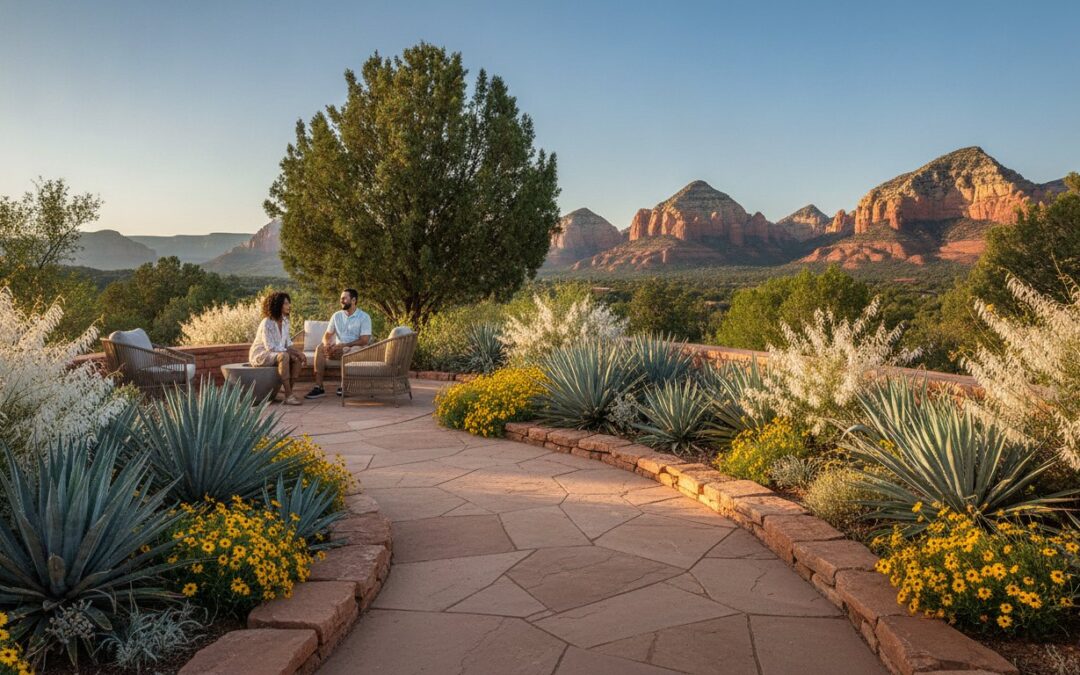
With 89% of Arizona currently under active drought conditions as of July 2026, maintaining a traditional lawn has shifted from a luxury to a significant financial liability. You shouldn’t have to choose between a parched, lifeless yard of bare rocks and a monthly water bill that makes you wince. It’s exhausting to watch expensive plants succumb to a sudden Northern Arizona frost or an intense summer heatwave after you’ve invested so much effort into your curb appeal.
The good news is that sustainable beauty is within reach. This guide will show you how to master drought tolerant landscaping Arizona by creating a resilient, high-desert sanctuary that thrives on minimal moisture while actually increasing your property value. We’ll explore the latest 2026 municipal rebate programs, Firewise safety principles, and the specific plant palettes that turn a water-wise yard into a lush, colorful masterpiece. You can achieve a yard that survives the unique challenges of our local climate while providing the peace of mind that comes with true environmental stewardship.
Key Takeaways
- Understand why drought tolerant landscaping Arizona strategies are essential for long-term resilience in our shifting high-desert climate.
- Learn to apply the seven core principles of xeriscaping, from strategic hydro-zoning to enhancing native soil with specific organic amendments.
- Identify top-performing native plants like the Arizona Cypress and Apache Plume that provide vibrant color and texture with minimal water use.
- Discover how integrating pavers and Firewise defensible space creates a safer, low-maintenance foundation for your sustainable outdoor living area.
- Explore the critical role of professional irrigation repair and smart controller management in ensuring your landscape’s health and longevity.
The Reality of Arizona Drought: Why Water-Wise Landscaping Is Essential
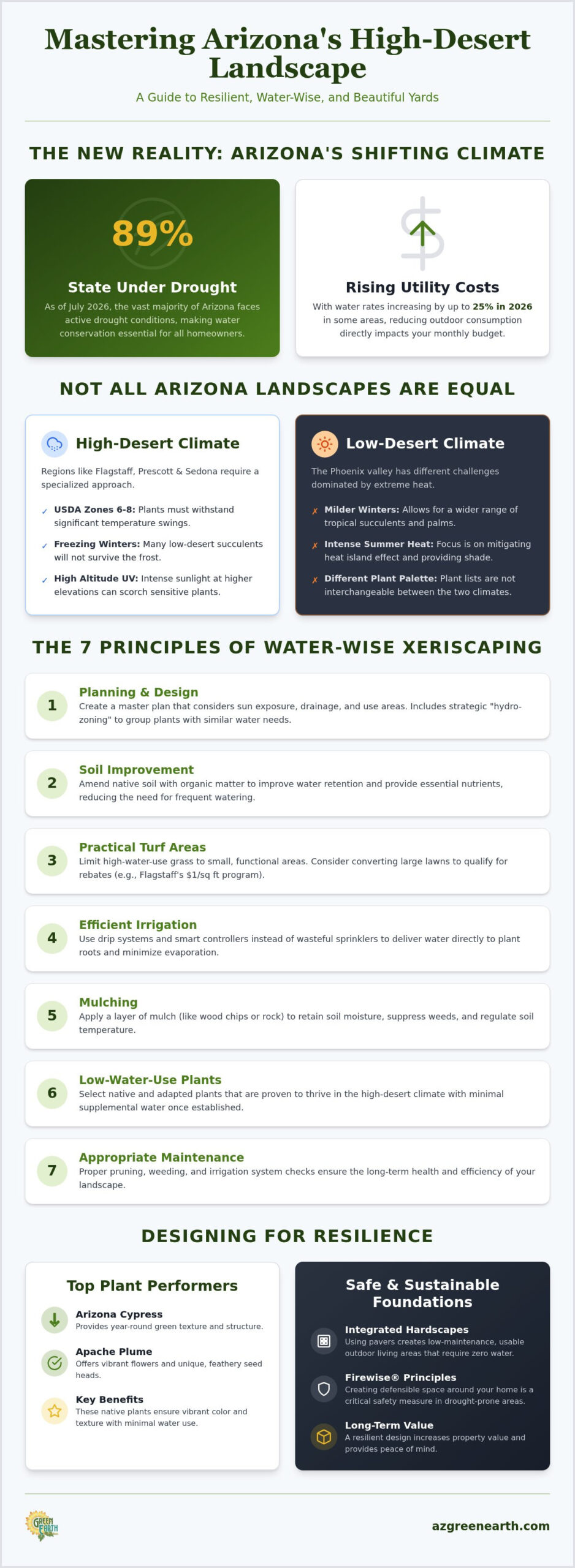
Arizona’s climate is undergoing a significant transformation, and the long-term drought that began in 2000 has become a permanent fixture of our regional identity. According to data from July 2026, approximately 89% of the state remains under active drought conditions. This reality makes drought tolerant landscaping Arizona a necessity rather than just an aesthetic choice for homeowners. Many people mistakenly equate this approach with “zero-scaping,” envisioning a lifeless expanse of gravel and bare rocks. However, true water-wise design is about life, color, and texture. It utilizes The Seven Principles of Water-Wise Xeriscaping to create vibrant environments that respect our limited water resources while remaining lush and inviting.
The economic incentives for sustainable design are equally compelling. With residential water rates in areas like Gilbert increasing by 25% in 2026, reducing outdoor consumption is the most direct way to manage rising utility costs. A professionally executed landscape also serves as a long-term investment in your property. High-quality curb appeal that remains resilient during extreme heatwaves significantly increases property value. It offers potential buyers the reassurance of a beautiful yard without the burden of excessive maintenance or high water bills.
High-Desert vs. Low-Desert: A Critical Distinction
Our local regions, including Sedona, Flagstaff, and Prescott, face environmental challenges that differ vastly from the Phoenix valley. While low-desert plant lists often feature tropical succulents, these species rarely survive our Northern Arizona winters. We primarily design for USDA Hardiness Zones 6 through 8, where temperatures frequently drop well below freezing. Altitude also plays a major role; the increased UV intensity in Flagstaff can scorch plants that might otherwise thrive in the filtered light of lower elevations. Success in these regions requires a deep understanding of local microclimates and soil conditions to ensure long-term plant health.
The Environmental Impact of Your Yard
A sustainable yard does much more than save money; it restores the local ecosystem. By selecting native plants, you create essential corridors for high-desert pollinators and local wildlife that are often displaced by urban sprawl. Strategic canopy placement and the use of natural groundcovers also help mitigate the urban heat island effect, cooling your home and neighborhood naturally. Drought-tolerant landscaping is the intentional balance of ecological health and professional design tailored specifically for the high-desert environment.
The Seven Principles of Water-Wise Xeriscaping
Successful water management starts with a blueprint, not a shovel. Implementing drought tolerant landscaping Arizona requires a systematic approach that goes beyond simply removing grass. We utilize a design framework that maximizes every drop of moisture while maintaining the lush aesthetic homeowners desire. This methodology transforms your yard into a functional ecosystem, ensuring that your outdoor space remains resilient even as water rates in municipalities like Gilbert or Sedona continue to climb in 2026. By following these established principles, you can reduce waste without sacrificing the vibrant beauty of your high-desert home.
Hydro-Zoning Your Northern Arizona Property
Precision is the cornerstone of a water-wise yard. We organize landscapes into three distinct hydro-zones to ensure plants receive exactly what they need. Zone 1 includes high-use areas near the home where you might want slightly higher water needs for a cooling effect or a small patch of functional turf. Zone 2 acts as a transition area with moderate drought tolerance. Zone 3 covers the perimeter, featuring exclusively native, non-irrigated plants that blend into the natural high-desert horizon. Referencing Top Drought-Tolerant Plants for Northern Arizona Landscapes can help you select species that fit perfectly into these specific zones.
Efficient irrigation is the next step in this progression. Moving away from traditional sprinklers toward precision drip systems minimizes evaporation and delivers hydration directly to the root zone. For those in Flagstaff, taking advantage of the $1 per square foot grass conversion rebate available for the 2026 to 2027 cycle makes this transition even more financially sound. If your current setup is underperforming, our team can provide expert irrigation drip system repair to restore peak efficiency.
The Role of Mulch and Soil Health
Native soil in our region is often heavy with clay or volcanic rock, which can hinder root growth. Proper soil improvement involves adding specific organic amendments that help retain moisture and provide nutrients. Applying a thick layer of mulch is equally critical; it protects roots from the intense 2026 summer heat and the sharp winter frosts common in the Verde Valley. We often recommend organic wood mulch for garden beds to build soil health over time, while inorganic rock mulch provides a stable, wind-resistant cover for more exposed areas. You can find more details on managing these elements in our guide to sustainable landscaping Arizona. Proper grading also ensures that monsoon rains are directed toward your plants rather than running off into the street, encouraging deep root hydration and long-term stability.
Top Drought-Tolerant Plants for Northern Arizona Landscapes
Selecting species for drought tolerant landscaping Arizona requires a discerning eye for winter hardiness and seasonal shifts. While tropical cacti dominate the southern part of the state, Northern Arizona properties demand plants that endure heavy snow and biting spring winds. We prioritize native and desert-adapted varieties that evolved alongside our local wildlife. This ensures your garden remains a functional habitat through every season. By choosing plants that naturally thrive in our local soil, you reduce the need for chemical fertilizers and excessive irrigation, creating a yard that is as healthy as it is beautiful.
Native Trees for High-Altitude Shade
The Arizona Cypress is an exceptional choice for homeowners seeking structural windbreaks and year-round privacy. Its blue-green foliage provides a dense screen that withstands the high-velocity gusts common in the Verde Valley. For a more delicate aesthetic, the Desert Willow offers orchid-like blooms that attract hummingbirds while requiring very little supplemental water. This tree is particularly valued for its airy canopy, which provides dappled shade without blocking out the winter sun. The Pinyon Pine stands as a resilient cornerstone of Northern Arizona desertscapes, providing essential structure and a deep sense of place for high-altitude properties.
Flowering Shrubs and Groundcovers
Visual interest doesn’t have to vanish when the blooms fade. The Apache Plume is a drought-resistant powerhouse that transitions from delicate white flowers to feathery, pink seed heads that persist for months. For year-round texture, hardy shrubs like the Manzanita and Fernbush provide reliable structure and evergreen or semi-evergreen interest. Those seeking a meadow aesthetic without the high water bill can utilize Blue Grama grass as a water-wise alternative to traditional lawns. This native grass requires significantly less mowing and maintains a soft, natural appearance that complements the rugged terrain.
In higher elevations, selecting the right species is critical for survival. You can find more details on choosing plants for specific microclimates in our guide to landscaping Prescott AZ. We also recommend cold-hardy Yuccas and Agaves, such as the Parry’s Agave, which maintains its architectural form even under a blanket of snow. We often layer these with vibrant perennials like Penstemon, Agastache, and Desert Marigold to create a tapestry of color that shifts with the months. Agastache, often called hyssop, is particularly prized for its aromatic foliage and spiked blooms that stay vibrant even during the peak 2026 summer heat. This layered approach ensures that your landscape is both ecologically responsible and visually stunning throughout the entire year.
Designing for Resilience: Hardscapes, Drainage, and Firewise Zones
Resilience in the high desert isn’t just about what you plant; it’s about the foundation you build. A successful drought tolerant landscaping Arizona project begins with structural elements that don’t require a single drop of water. Hardscapes, such as patios and walkways, serve as the backbone of the yard, reducing the total square footage that requires irrigation. This “hardscape first” strategy is a long-term investment that pays dividends in both water savings and reduced maintenance. By prioritizing these permanent features, you create a functional outdoor environment that remains beautiful even during the most restrictive water cycles of 2026.
Integrating Hardscape and Softscape
Integrating these features requires a balance between utility and aesthetics. For homeowners in the Verde Valley, professional hardscape construction Cottonwood AZ allows for the creation of outdoor living rooms that replace thirsty turf. We recommend using permeable pavers that allow rare but intense rainwater to recharge the local water table rather than causing erosion. Complementing these with strategically placed boulders and river rock adds significant visual depth and curb appeal without increasing your monthly utility bill. These elements provide a permanent structure that anchors the more delicate plant life in your garden.
In Northern Arizona, we must design for the extremes of our monsoon season. Proper drainage and grading are essential to prevent foundation damage and soil loss during heavy downpours. By sculpting the land, we can direct runoff toward planting beds, effectively harvesting rainwater for your trees and shrubs. Retaining walls also play a critical role here, creating level terraces that slow down water flow and encourage deep infiltration. This is vital for plant health during the dry months between seasons. Homeowners throughout the region can explore our comprehensive approach to water wise landscaping Verde Valley properties rely on to manage both drought conditions and seasonal monsoon runoff effectively.
Firewise Landscaping in Northern Arizona
Safety is another pillar of resilience. In our fire-prone high-desert environment, drought tolerance must go hand-in-hand with defensible space. Our approach to firewise landscaping Cottonwood AZ emphasizes the 0 to 5 foot “non-combustible zone” immediately surrounding the home. In this area, we prioritize gravel, stone, and cold-hardy succulents over woody shrubs or organic mulch. We also focus on removing ladder fuels, which are low-hanging branches or tall grasses that could allow a ground fire to climb into the tree canopy. To ensure your yard is both beautiful and safe, it’s best to consult with experts who understand these local nuances. You can explore our full range of services, including professional Firewise defensible space planning, to protect your property and the surrounding ecosystem.
Implementing Your Sustainable Landscape with Green Earth, LC
Planning a water-wise yard is a complex undertaking that requires more than just a list of plants. It demands a partner who understands the intricate relationship between high-desert soil, shifting weather patterns, and structural integrity. At Green Earth, LC, we bring 47 years of local experience to every project, ensuring that your vision for drought tolerant landscaping Arizona becomes a functional reality. Our status as a statewide runner-up for Best Sustainable Landscape Designer reflects our commitment to excellence and environmental stewardship in the Verde Valley and surrounding regions.
From Design to Installation
Our process is deeply collaborative, whether we are working on intimate residential gardens or large-scale commercial landscapes. We don’t believe in one-size-fits-all solutions. Instead, we analyze your property’s specific micro-climate, considering factors like wind exposure in Cottonwood or the unique snow loads found in Flagstaff. This level of detail extends to our construction phase, where we prioritize professional grading and drainage to manage monsoon runoff effectively. By integrating these foundational elements early, we ensure your landscape is built to last for decades. You can learn more about our specific approach to desert landscape design Northern Arizona to see how we balance aesthetics with ecological responsibility.
Maintaining Your Investment
A sustainable landscape is a living investment that requires ongoing care to reach its full potential. Even the most efficient systems can develop issues over time, leading to silent water waste and plant stress. Regular seasonal checks of your drip system are essential to identify leaks or clogs before they become costly problems. For those living in higher altitudes, our specialized irrigation repair Flagstaff services ensure your system is winterized correctly and performing at peak efficiency during the dry summer months.
Expert maintenance also includes strategic pruning, which is critical for both plant health and Firewise safety. We remove deadwood and maintain proper spacing to prevent the ladder fuels mentioned in previous sections from compromising your property. Our team handles the technical details of irrigation controller troubleshooting and soil health management, allowing you to enjoy a vibrant, resilient yard without the stress of constant upkeep. We take pride in being a long-term guardian of your outdoor space, providing the professional authority and local warmth that only a seasoned community fixture can offer.
Cultivating a Resilient Future for Your High-Desert Home
Transitioning to a water-wise yard is a meaningful investment in the longevity of your property and the health of our local ecosystem. By embracing the principles of xeriscaping, you can enjoy a vibrant landscape that defies the challenges of our 2026 climate. We have explored how the right mix of cold-hardy native plants, strategic hardscape foundations, and precision irrigation creates a sanctuary that is both beautiful and fire-safe. Implementing drought tolerant landscaping Arizona doesn’t mean sacrificing color; it means choosing a smarter, more intentional path toward sustainable beauty.
Green Earth, LC brings 47+ years of Northern Arizona experience to every project. As award-winning sustainable design experts, we specialize in creating environments that balance high-altitude aesthetics with technical excellence in Firewise defensible space and irrigation efficiency. We’re ready to help you transform your outdoor space into a thriving, low-maintenance reality that honors the natural spirit of the Verde Valley and beyond.
Schedule your sustainable landscape consultation with Green Earth, LC today to begin your property’s transformation. You have the power to create a lasting legacy of beauty and conservation right in your own backyard.
Frequently Asked Questions
Does drought-tolerant landscaping mean I can’t have any green plants?
No, this approach actually emphasizes vibrant, green growth through the use of desert-adapted and native species. You can achieve a lush look by selecting plants like the Arizona Cypress or various hardy shrubs that maintain their foliage year-round. These plants provide the same cooling effect and aesthetic appeal as traditional gardens while requiring significantly less supplemental moisture to thrive in our high-altitude environment.
How much water do native Arizona plants actually need once established?
Established native plants generally require very little supplemental water, often surviving solely on seasonal rainfall during normal years. During extreme 2026 summer heatwaves, a deep watering once or twice a month is usually sufficient to maintain their health. This efficiency is a core benefit of drought tolerant landscaping Arizona, as these species have evolved to survive the long dry spells common in the Verde Valley and surrounding regions.
Can I still have a small area of grass in a water-wise landscape?
Yes, you can incorporate small, functional turf areas by using the principle of hydro-zoning to manage water use efficiently. We recommend limiting grass to high-use spaces near the home and choosing water-thrifty varieties like Blue Grama. This approach allows for the recreational benefits of a lawn while ensuring the rest of your property remains focused on conservation and environmental sustainability.
What are the best drought-tolerant plants for high altitudes like Flagstaff?
The best plants for high-altitude regions like Flagstaff are those that can withstand both drought and intense winter cold, such as Pinyon Pine and Apache Plume. Other excellent choices include the Fernbush and various cold-hardy Penstemons. These species are specifically adapted to the shorter growing seasons and colder temperatures of USDA Zones 6 and 7, ensuring they remain resilient throughout the entire year.
How does hardscaping help with water conservation in Arizona?
Hardscaping reduces your overall water demand by replacing irrigable softscape with functional, non-living surfaces like pavers, stone, or boulders. By utilizing permeable materials, you also allow rainwater to soak into the ground rather than running off into the street. This structural foundation creates a beautiful outdoor living space that requires zero irrigation, making it a cornerstone of successful drought tolerant landscaping Arizona.
Is firewise landscaping the same as drought-tolerant landscaping?
While they are different concepts, they are highly complementary and should be designed together for maximum property resilience. Drought-tolerant design focuses on water efficiency, while Firewise principles focus on reducing fuel loads and creating defensible space. Many native plants, such as succulents and certain low-resin shrubs, fit perfectly into both categories, helping you build a yard that is both water-wise and fire-resistant.
What is a drip irrigation system and why is it better for desert plants?
A drip irrigation system is a network of tubes that delivers water directly to the root zone of each plant through small emitters. This method is superior for desert environments because it virtually eliminates water loss from evaporation and wind drift. By providing slow, targeted hydration, drip systems encourage deeper root growth and prevent the surface runoff often associated with traditional overhead sprinklers.
How often should I maintain my drought-tolerant yard in Northern Arizona?
You should perform basic maintenance seasonally, focusing on irrigation system checks, light pruning, and mulch replenishment. While these landscapes require less frequent care than traditional lawns, regular inspections of your drip emitters are vital to prevent silent water waste. Engaging a professional for annual Firewise thinning and structural pruning ensures your investment remains healthy, safe, and visually appealing throughout the changing seasons.
Recent Comments